Before and after cleaning: real examples in Portugal

This page showcases six real mini-cases of before and after, with practical guidelines to assess whether a cleaning result is genuine or just well-photographed. The demand for cleaning services in Portugal has increased by approximately 27% at the beginning of 2026 compared to the previous year, with the national average price around €12 per hour.
Here you will find:
- Six visual examples of common transformations: kitchen, bathroom, sofa, floor, windows, and oven.
- Criteria to distinguish a marketing photo from a real result.
- Indicative prices by type of service in Portugal, with regional variation.
- A verified case documented by Cleaning Point in Lisbon.
Professional tip: Before requesting a quote, save this page as a visual reference. Comparing it with the portfolio of the professional you are evaluating will save you surprises after the service is done.
Key findings
A genuine cleaning transformation depends more on the accumulation time of dirt and the actual scope of the service than on the photograph used to showcase it.
| Point | Details |
|---|---|
| Compare accumulated dirt, not just photos | Grease or limescale that has built up over months or years rarely disappears in a single session. |
| Confirm the type of service | Recurring cleaning and deep cleaning cover very different tasks; request a written list. |
| National average price is around €12/hour | Prices rise in Lisbon and Porto and for specialized services like upholstery or post-construction. |
| Be wary of results that are too perfect | Similar lighting and absence of personal items in the photos are signs of staging. |
| Cleaning Point documents real cases in Lisbon | The portfolio shows verified transformations, with a checklist and a fixed team per visit. |
Index
- Gallery of before and after: six real mini-cases
- What each type of cleaning includes (and what is usually left out)
- How much it costs: indicative prices in Portugal
- How to know if a before and after photo is genuine
- How to take good before and after photos (and what to ask before booking)
- Verified case: cleaning documented by Cleaning Point in Lisbon
- Team perspective: what really changes with professional cleaning
- Easy bookings for the cases you saw here
- Sources
- Frequently asked questions
Gallery of before and after: six real mini-cases
Each cleaning transformation tells a different story, depending on the initial state and the time invested. Here are six typical scenarios that anyone in Portugal recognizes from their own home.
Kitchen with accumulated grease. Moderate to extreme dirt, with hardened grease on high cabinets and behind the stove. The intervention involved alkaline degreaser and prolonged mechanical action on vertical surfaces. Visible result in 2 to 3 hours, but old stains on porous wood rarely disappear completely, although the surface looks visibly cleaner.
Bathroom with thick limescale. Moderate level, common in areas with hard water like Lisbon and Setúbal. Specific acidic remover and stiff-bristled brush at the shower base and tile joints. In 45 to 60 minutes, the glass becomes transparent again; heavily degraded joints may require replacement, not just cleaning.
- Fabric sofa with daily use stains: steam cleaning combined with specific upholstery product; light to moderate level; visible result but old textures of the fabric do not always return to a new appearance.
- Wooden floor with shoe marks and accumulated dust: vacuuming followed by neutral wood product; light level; immediate and uniform result, one of the most visually rewarding cases.
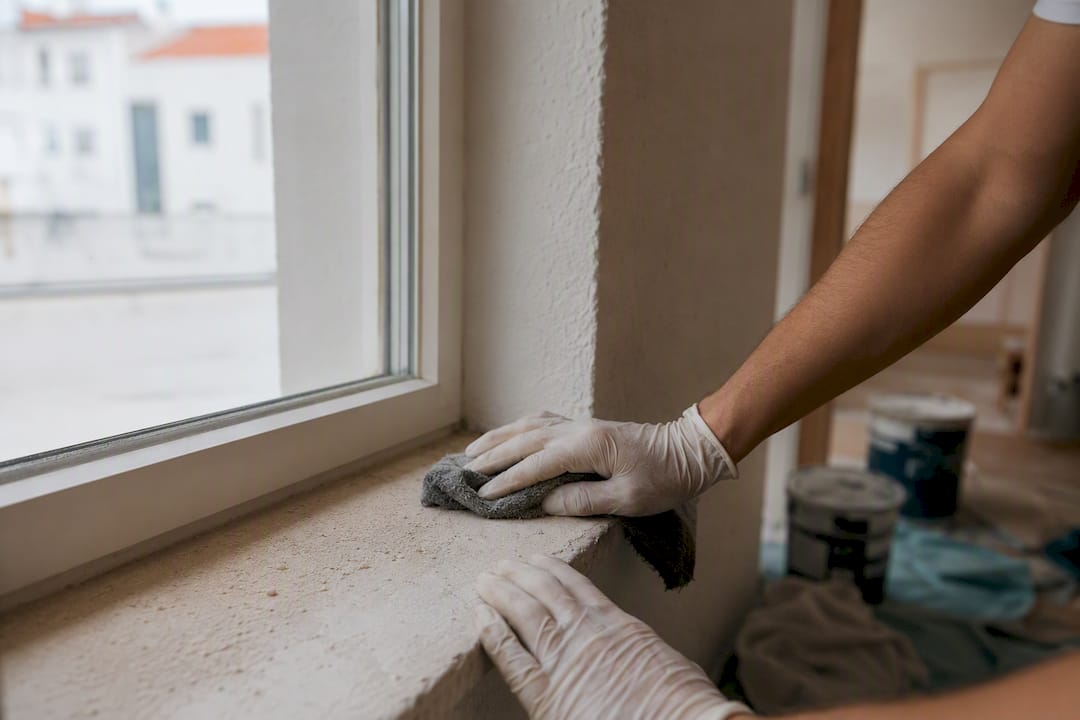
- Windows with urban pollution film: professional window cleaning with squeegee and microfiber cloths; moderate level, more visible on high floors next to busy avenues; total transparency usually requires two passes.
- Oven with carbonized grease: high-concentration degreaser and prolonged action time, sometimes with steam machine; extreme level when there are months of accumulation. Here the expression "before and after" is more dramatic, but complete removal of burned stains on the inner glass is not always possible in a single session.
In these examples, the factor that most influences the final result is not the product used, but the accumulation time of dirt. A month-old oven grease comes off easily; the same grease with a year requires two visits.
What each type of cleaning includes (and what is usually left out)
Before comparing before and after photos, it's worth understanding what type of service is behind each image. Recurring cleaning and deep cleaning produce very different results, and comparing the two without this distinction creates false expectations.
- Recurring cleaning (maintenance): dusting, vacuuming, mopping floors, cleaning kitchen and bathroom surfaces, making beds. Does not include degreasing cabinets or cleaning behind appliances.
- Deep cleaning: everything that maintenance covers, plus baseboards, inside cabinets, degreasing in the extractor and oven, accumulated limescale, and corners usually ignored. Specialized companies describe this process as a pre-assessment followed by systematic intervention room by room, with a detailed checklist.
- Post-construction cleaning: removal of construction dust, paint, and cement residues on hard surfaces. Generally does not include removal of debris or structural repairs.
- Upholstery cleaning: specific treatment for sofas, armchairs, and mattresses, usually charged separately per item.
- Window cleaning: inside and outside of glass, frames, and sills; does not include repair of seals or replacement of broken glass.
Common exclusions for almost all types: deep mold treatment, pest extermination, and plumbing or electrical repairs are outside the scope of normal cleaning.
Professional tip: Always request the checklist in writing before booking. A clear list avoids disputes about "this should have been included" at the end of the service.
How much it costs: indicative prices in Portugal
Prices vary significantly depending on the type of service and region, but there are clear patterns in the Portuguese market. The national average price is €12 per hour, with an average response rate of 64% among contacted professionals.
- General domestic cleaning: between €12 and €25 per hour, depending on the region and the professional's experience.
- Complete T2 apartment: usually between €80 and €180 per session, according to the same market data.
- Post-construction cleaning: charged per square meter, between €5 and €12/m2.
- Specialized deep cleaning: can exceed €20/hour when involving upholstery, specific machines, or extreme dirt.
There is also geographical variation worth knowing. Lisbon concentrates most requests, followed by Porto, and it is in these two cities that prices tend to be higher due to high demand. Between 2025 and 2026, prices rose on average by €1/hour nationally, with districts like Braga and Guarda registering even higher increases of around €3/hour. If you book with little notice during a high-demand period, it is normal to pay a bit more than these averages.
How to know if a before and after photo is genuine
Not every before and after image represents a real result. Some are staged to sell, not to inform. There are simple signs that separate the two.
In a genuine photo, the lighting is usually inconsistent between the "before" and "after" because they were taken on different days or hours with variable natural light. In a marketing photo, the light is almost always perfect and identical in both moments, suggesting a studio or careful editing.
- Pay attention to the angle: genuine photos rarely have perfectly identical framing because the person cleaning is not a professional photographer.
- Check for "staging": personal items missing in the "after" (books, clothes, products) that have no relation to cleaning indicate artificial preparation of the scene.
- Look at shadows and reflections: inconsistencies between them throughout the image point to staging or digital retouching.
- Be wary of perfect results on very damaged surfaces: an oven with years of carbonized grease rarely looks immaculate in just one session. If the photo suggests this, there may have been a replacement of parts, not cleaning.
Professional tip: Ask the professional for photos with date and time, or consult a portfolio that shows various stages of the work, not just the final result. This is much harder to simulate than two isolated photos.
How to take good before and after photos (and what to ask before booking)
If you want to document your own transformation, or simply compare proposals rigorously, follow these steps:
- Always photograph from the same point, with the phone in the same position and height.
- Use constant natural light, ideally at the same time of day in both photos.
- Record the date and time in your phone notes, along with details like "window open" or "direct sunlight".
- Take a general photo and another detail shot (for example, the inside of the oven and the closed door).
- Avoid moving objects between the two photos, except those that are part of the cleaning itself.
Before booking the service, there are questions worth asking:
- What products and machines will be used for this specific cleaning?
- What is the estimated time for the entire job?
- What is included and what is left out of the task list?
- Can you show me real photos of previous work, with various stages?
Verified case: cleaning documented by Cleaning Point in Lisbon
In an apartment in Lisbon, Cleaning Point documented a complete deep cleaning after months without intensive maintenance: accumulated grease in the kitchen, limescale in the bathroom, and dense dust on high surfaces.
The team followed the usual room-by-room cleaning checklist, with these main steps:
- Complete degreasing of the kitchen, including inside cabinets and extractor.
- Removal of limescale in the bathroom, with attention to joints and shower glass.
- Cleaning of baseboards, switches, and surfaces usually ignored in daily maintenance.
- Vacuuming and final washing of all floors.
The work took the equivalent of a full team in one morning, with an immediate visible result in the areas of greatest accumulation. The Cleaning Point portfolio includes other similar cases, documented with real photos and not marketing setups.
Team perspective: what really changes with professional cleaning
The biggest difference between domestic cleaning and professional cleaning is not the product used, but the time dedicated to areas that no one cleans on a daily basis: behind appliances, inside cabinets, baseboards. That is where the accumulated dirt lies that no quick weekend cleaning resolves.
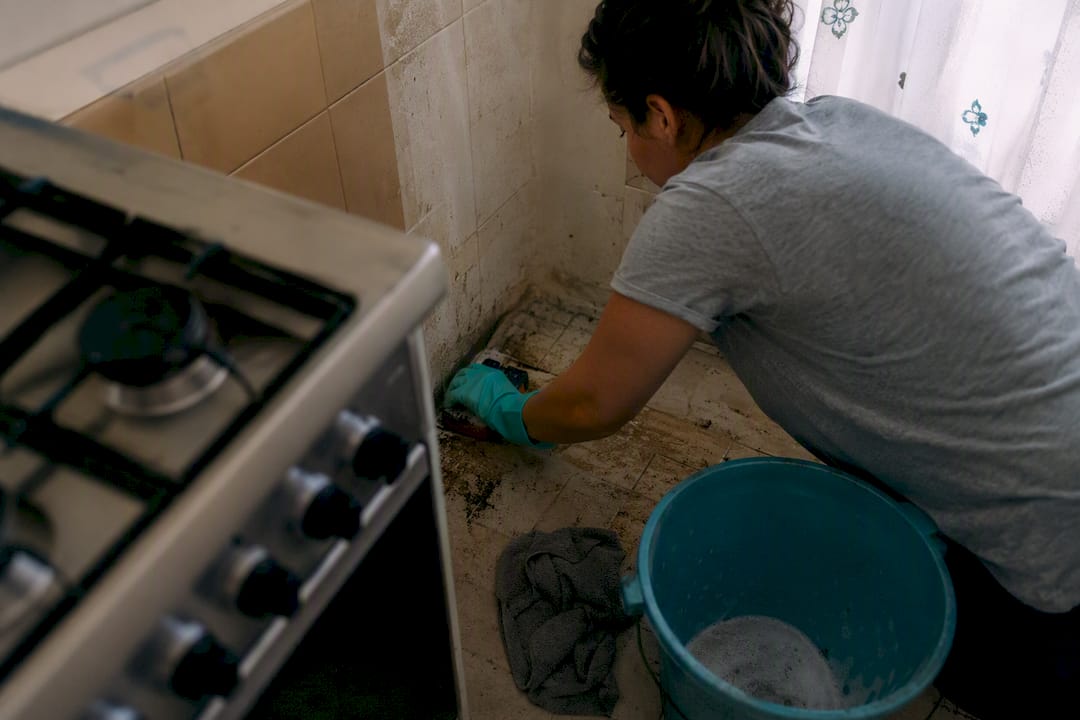
For families with small children or pets, a quarterly deep cleaning is usually sufficient between regular maintenance. Signs that it’s time: persistent smell that doesn’t go away with ventilation, visible grease on vertical kitchen surfaces, or limescale that no longer comes off with common products. Extras like upholstery cleaning only make financial sense when visible wear has already reduced the value of the furniture or property, as happens before a sale or rental.
Easy bookings for the cases you saw here
Cleaning Point addresses exactly the scenarios shown in this gallery, without you having to negotiate price per item or explain everything again at each visit. If your oven, upholstery, or bathroom limescale resembled any of the mini-cases above, that’s the right starting point to request a quote.
The Signature Deep Cleaning precisely covers the most demanding scenarios in the gallery, kitchen with accumulated grease, bathroom with thick limescale, carbonized oven, with a fixed team and detailed checklist at each visit. For ongoing maintenance after the initial cleaning, the Regular Home Care prevents dirt from accumulating to the point where you need another heavy intervention. Prices are transparently described on the clear pricing page, with no surprises, with no hidden costs after the service is done. To get started, book a cleaning and receive a quote tailored to the actual state of your home, not to a generic table.
Sources
For those who want to delve deeper before deciding, these sources help confirm prices and scope of service:
- Domestic cleaning services: demand increases and price rises — idealista/news
- Cleaning in Portugal 2026: €12 to €25 per hour | Prummo
- Domestic cleaning companies | Cleaning prices - Zaask
- Residential Deep Cleaning | Gira Clean Portugal
Frequently asked questions
How much does an hour of cleaning cost in Portugal?
The national average price is around €12 per hour, but prices vary between €12 and €25 depending on the region and type of service.

What does a deep cleaning include?
A deep cleaning includes degreasing the kitchen, removing limescale, cleaning baseboards and inside cabinets, in addition to the usual maintenance tasks, generally following a structured checklist room by room.
How much does a deep cleaning of a T2 apartment cost?
A general cleaning of a T2 usually costs between €80 and €180 per session, depending on the initial state and region.
What is post-construction cleaning?
It is the cleaning done after renovation works, focused on removing construction dust and residues, usually charged per square meter between €5 and €12/m2.
How do I know if the before and after photos are real?
Look for inconsistent lighting between the two photos, slightly different angles, and absence of perfect retouching, signs that indicate the cleaning was not staged for marketing.


