Sticky floor after a party: how to clean without damaging the flooring
If the floor is sticky after the party, the first step is to resist the temptation to pour more product. Pick up debris, sweep or vacuum thoroughly, and wipe with a cloth only using clean, warm water that is well wrung out. In most cases, the sticky feeling is a film of poorly rinsed detergent, not new dirt, and this first pass resolves more than half of the problem before any extra product.
In summary:
- Unremoved residual water and excessive use of detergent can leave the floor sticky hours after cleaning.
- Using the correct method of sweeping, vacuuming, and mopping with warm water and little chemical solution prevents permanent stains.
- Neutral pH products are recommended for daily cleaning on ceramics, vinyl, and laminate, avoiding damage and sticky residues.
- Reusing water or mixing different products increases the risk of creating adhesive films and hard-to-remove stains.
- Professional services are recommended in cases of deep stains, ingrained grease, or risk of damage to delicate flooring.
Index
- Immediate actions before dirt sets in
- Cleaning by flooring type: safe and effective instructions
- Products available in Portugal and practical dosages
- If the floor remains sticky: diagnosis and correction
- Prevention before and during the party
- Common causes of sticky floors after a party
- How to remove gum, drink resin, and candle wax remnants
- How to dry the floor without creating new sticky areas
- Damage that repeated sticky floors can cause over time
- When to consider a professional service
- How Cleaning Point solves the problem after the party
- Sources
- Frequently asked questions
Immediate actions before dirt sets in
The first ten minutes after the last guest leaves determine whether you will clean in twenty minutes or spend the next afternoon scrubbing dried stains. The order of operations is as important as the products used.
- Pick up solid debris first. Cups, straws, peels, and napkins stick to the floor if wet before being picked up.
- Sweep or vacuum the entire surface. Dust, crumbs, and dry sugar turn into a sticky paste upon first contact with water, so sweeping first is essential in any post-event cleaning.
- Prepare two buckets. One with the diluted cleaning solution, the other with only clean water to rinse the cloth between passes.
- Do a first gentle wash. A well-wrung microfiber cloth, warm water, broad movements, without soaking the joints or baseboards.
This sequence avoids the most common mistake: spreading spilled drink with a dry cloth, which creates a thin, even layer of sugar that dries even harder to remove than the original stain.
Cleaning by flooring type: safe and effective instructions
Each material reacts differently to excess water or product, and using the wrong method can leave permanent stains or dull the finish.
- Ceramics and porcelain: apply a degreaser diluted in warm water, let it act for a minute on the greasiest areas, and consult how to remove oil stains from flooring to ensure effective cleaning, then rinse with a second cloth using only water. Grout absorbs product easily, so do not leave the solution in prolonged contact.
- Wood and laminate: use the minimum amount of water possible. A well-wrung cloth with diluted neutral detergent is enough, never soaked, because moisture seeps into the joints and warps the boards over time.
- Vinyl: neutral detergent or a mild degreaser works well. Vinyl tolerates more water than wood but still requires complete drying to avoid dull spots.
- Natural stone and marble: avoid any acidic product, including vinegar. Use specific stone cleaners, with neutral to slightly alkaline pH, and rinse several times. Acids corrode the polish and leave the surface dull irreversibly.
Professional tip: always use the minimum recommended dose on the label and finish each area with a cloth dampened only in clean water. This simple gesture removes the chemical residues that remain on the surface and are the most common cause of the floor remaining sticky after being "cleaned".
The sticky feeling after mopping almost always results from surfactants that were not completely removed. Water evaporates, but the chemical compound remains, and this film attracts dust and grease much faster than a truly clean floor.
Products available in Portugal and practical dosages
Choosing the right product avoids two things: leaving residual film and damaging the flooring unnecessarily.
For daily use, especially after parties on ceramics, vinyl, or laminate, neutral pH detergents are the safest option. Many brands sold in Portugal already have ecological certification, which reduces sticky residues and is more environmentally friendly without losing effectiveness.
- Normal dirt: neutral detergent diluted as per the label, usually between 30 and 50 mL per 3 to 5 liters of water.
- Ingrained grease or heavy spills of alcoholic beverages: alkaline degreaser, increasing the recommended dose in situations of high dirt.
- Light stains on ceramics or vinyl (never on natural stone): vinegar diluted in water, in the approximate ratio of one part vinegar to four parts water.
A real example of applicable dosage in the Portuguese market is the citrus-based floor detergent, which recommends 45 mL per 3 liters of water for normal use, increasing to 100 mL per 5 liters when dirt is more intense.
Never mix different products in the same bucket, especially dish detergent, bleach, and disinfectants. These combinations create pastes that increase stickiness instead of resolving it. And change the water in the bucket whenever it becomes cloudy: continuing to wash with dirty water only redistributes dirt throughout the house.
If the floor remains sticky: diagnosis and correction
When the floor continues to stick even after the first wash, the problem is rarely a lack of product. It is almost always the opposite.
- Do the clean cloth test. Wipe a small area with a cloth dampened only in water. If the cloth comes out with foam or a whitish residue, it confirms a film of poorly rinsed product.
- Repeat rinsing with clean water, without adding more detergent, until the cloth comes out without residues.
- In still greasy areas, use a small amount of mild degreaser, let it act for a minute, and rinse immediately.
Avoid homemade recipes with excess baking soda or concentrated vinegar on stone and grout. They may seem like quick solutions, but they corrode joints and dull polished surfaces over time.
Prevention before and during the party
Reducing cleaning work starts long before the first guest arrives.
- Designate specific areas for food and drink, away from carpets and high-traffic areas, and use disposable protective mats in those spots.
- Prepare a quick cleaning kit before the event: microfiber cloths, two buckets, mild degreaser, and neutral detergent already on hand in an easily accessible room.
- If you have helpers or catering service, ask them to pick up spills immediately instead of leaving it until the end of the night. A drink absorbed for three hours requires three times the cleaning effort compared to cleaning it in the first few minutes.
Common causes of sticky floors after a party
Three causes explain the vast majority of cases, and it is rarely a lack of cleaning.

The first is excessive product. Using more detergent than necessary does not clean better; it creates a layer that attracts dust and becomes sticky as it dries. The second is reusing the same washing water throughout the house, which spreads dirt instead of removing it, especially after already cleaning areas with spilled drinks.
The third is the combination of sugary drinks with grease from snacks and appetizers. Sugar dries, forming a thin and transparent film, almost invisible until you walk on it barefoot. Add drops of olive oil or butter from canapés, and you get a mixture that sticks to both feet and cloth at the same time.
It is also worth mentioning spills of wine, beer, or soft drinks that seep into the grout joints or grooves of laminate before being cleaned. They stay there, dry partially, and become sticky again with the ambient humidity the next day, giving the false impression that the floor was never really clean.
How to remove gum, drink resin, and candle wax remnants
Solid or semi-solid remnants require a different approach than normal washing, as they react poorly to the heat of hot water.
For candle wax or melted cork, first let it harden completely. Rub an ice cube wrapped in a cloth over it until the wax becomes rigid and brittle, then scrape with a plastic spatula, never metallic on vinyl or wood floors. The final residues come off with a cloth dampened in warm water.
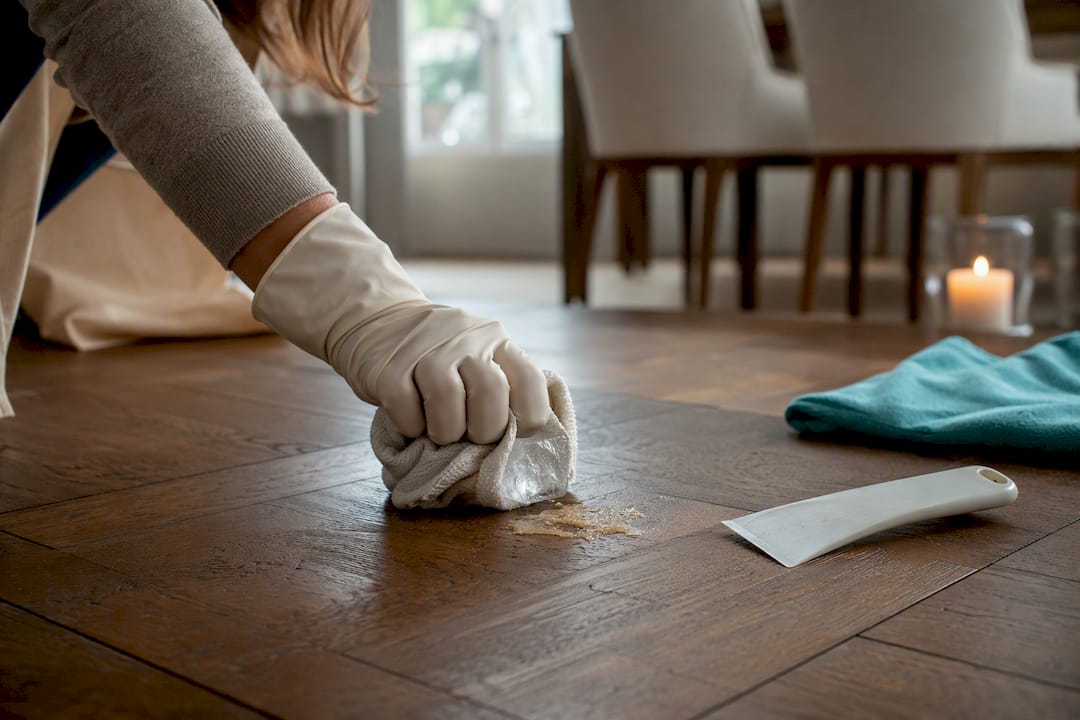
Chewing gum also responds well to cold. Direct ice on the stain for one to two minutes makes the gum rigid enough to pop off in one piece, without rubbing and without spreading it around the floor.
For residues of cork stoppers or bottle labels stuck to the floor by dried liquid, first soften with a warm, damp cloth for a few minutes before gently scraping. Never use a knife or sharp object on glazed ceramics, as it permanently scratches the surface.
In all these cases, the final step is always the same: a clean cloth only with water to remove any product or melted ice residue that could dry sticky again.
How to dry the floor without creating new sticky areas
Poor drying is one of the most frequent reasons for the floor becoming sticky again hours after appearing clean.
After the final rinse, wipe with a dry or absorbent microfiber cloth in single movements, without going back over the same area multiple times with the same side of the cloth, as this only redistributes moisture with dissolved residues. On ceramics and vinyl, air drying is usually sufficient if the room is ventilated by opening windows or using a fan directed to speed up evaporation.
On wood and laminate, complete drying is even more critical: residual moisture between the boards not only leaves a sticky feeling but can warp the material over time. Always wipe with a dry cloth immediately after the damp cloth, without waiting for it to dry on its own.
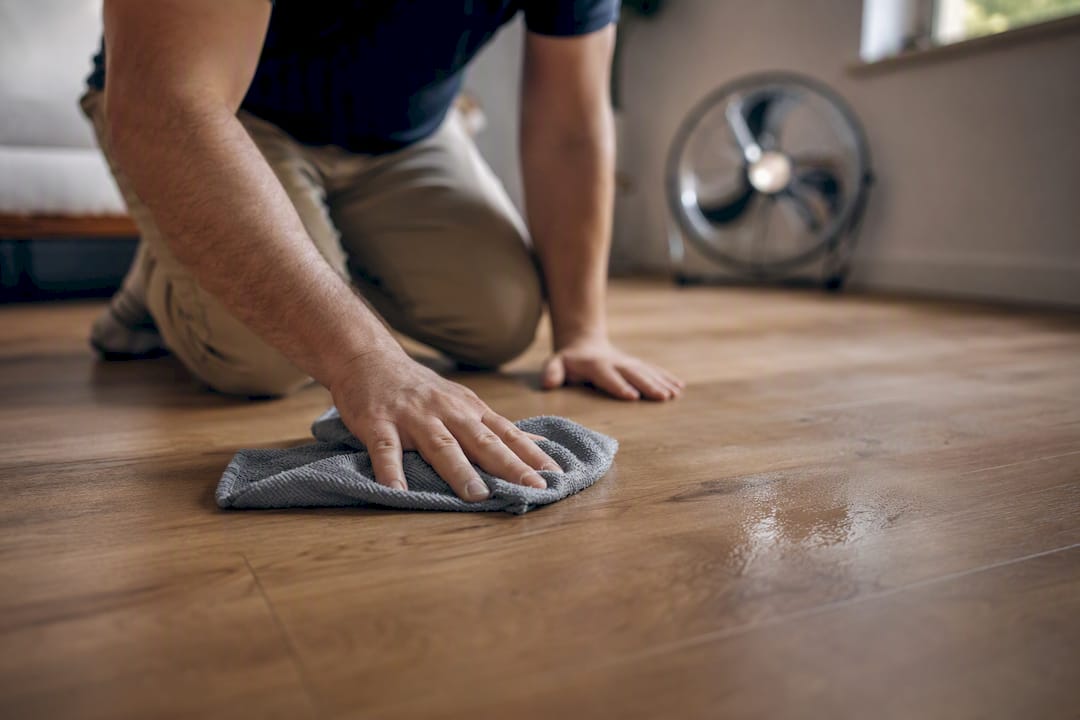
Avoid walking on the floor with socks or slippers before it is completely dry, as fabric particles get stuck in the residual moisture and create small rough or sticky localized areas. If you are in a hurry, prioritize drying well the high-traffic areas, such as entrances and hallways, even if that means leaving less used corners to dry on their own later.
Damage that repeated sticky floors can cause over time
An occasional sticky floor is not serious. The problem arises when the residual film accumulates party after party without being corrected.
In ceramics and porcelain, accumulated chemical residues over months darken and make the grout more porous, absorbing even more dirt and becoming harder to clean with each cycle. In wood and laminate, the combination of residual moisture with poorly rinsed products can dull the protective varnish and, in more extreme cases, contribute to warping of the boards at the joints.
Vinyl tends to yellow or lose its original shine when unsuitable products remain in prolonged contact with the surface without rinsing. Natural stone and marble are the most vulnerable: repeatedly using acidic products, even in small quantities, gradually corrodes the polish until the surface loses its shine permanently, damage that can only be corrected with professional polishing.
None of this damage appears after a single party. It is the repetition of cleaning mistakes, especially excessive product and insufficient rinsing, that transforms an occasional sticky floor into a structural flooring problem.
When to consider a professional service
Not all sticky floors can be resolved with a cloth and bucket. Extensive spills, ingrained grease, or real risk of damage to stone or wood require equipment and technical products that a normal home does not have. In such cases, a professional team combines the right products, checklists, and discretion, without the wear of repeating the cleaning alone the day after the party.
— Taras
How Cleaning Point solves the problem after the party
After a party at home, the last thing you want is to spend the next morning on your knees testing products on the floor. Professional services handle the complete recovery of the flooring, whether ceramic, wood, vinyl, or natural stone, using a fixed team, detailed checklists, and products suitable for each material, without the risk of damaging a surface through trial and error.

The post-party intervention includes deep cleaning of the most affected areas, sanitizing surfaces, and recovering specific stains from drinks or grease, available as part of the signature deep cleaning for those who want the house completely restored and not just the floor. Before contacting, it is worth having the type of flooring, the approximate size of the affected area, and a quick description of what was spilled on hand, as this speeds up the diagnosis and budget. For those who prefer to resolve it now, the next step is simple: schedule a visit and let the team assess the space in Lisbon before the next party turns into another lost morning scrubbing the floor.
Sources
For those who want to better understand the chemistry behind the sticky feeling, the article from Correio Braziliense about detergent residues explains the mechanism in detail. For practical dosages of products sold in Portugal, the datasheet for the citrus-based floor detergent is a good starting point.
- Mistakes when washing the floor that leave it sticky and make dirt return faster - Super Rádio Tupi
- What does it mean when the floor becomes sticky after mopping? - Correio Braziliense
- Post-Party Cleaning Products Guide - Blog da Loja do Profissional
- Citrus Floor Detergent 0.85LT – EcoX
Frequently asked questions
Why does the floor remain sticky even after washing?
It is almost always excess detergent that was not rinsed, leaving a thin film that attracts dust and grease to the surface.
Can I use vinegar to clean a sticky floor after a party?
Yes, diluted in water in a ratio of approximately one part vinegar to four parts water, but never on natural stone or marble, as the acid corrodes the polish.
How much detergent should I use to avoid leaving the floor sticky?
Follow the dosage on the label, usually between 30 and 50 mL per 3 to 5 liters of water for normal use, increasing only in high dirt situations, as recommended by the citrus detergent manufacturer.
How to remove candle wax from the floor without damaging the flooring?
Harden the wax with an ice cube wrapped in a cloth, scrape with a plastic spatula, and finish with a damp cloth using only water.
When is it worth calling a professional team instead of cleaning alone?
When the spill is extensive, involves ingrained grease, or there is a risk of damage to stone or wood, a team like Cleaning Point has the technical products and experience to recover the surface without worsening the problem.