How to Get Rid of Tobacco Smell at Home for Good

Open windows in opposite positions, remove ashtrays and butts immediately, and wash all clothing, curtains, and bedding that have been exposed to smoke. The tobacco smell does not disappear on its own because nicotine and tar particles cling to porous surfaces, fabrics, and walls. Ventilating resolves the air in the room in 15 to 30 minutes, but does not address what has already infiltrated the sofa upholstery or curtains.
For quick relief, follow this order:
- Cross ventilation (15 to 30 minutes): open at least two windows on opposite sides of the house to create airflow.
- Source removal (5 minutes): empty and wash ashtrays, remove butts and cigarette ends from pots or hidden corners.
- Washing clothes and bedding (30 to 90 minutes): machine wash at the appropriate temperature for the fabric, with an extra cycle if the smell persists.
- Vacuuming carpets and upholstery (20 to 40 minutes): use a vacuum cleaner with a HEPA filter, if you have access to one.
These steps address the surface smell, but not third-hand smoke, which infiltrates porous surfaces and can persist for weeks or months. If the odor returns a few hours after ventilating and cleaning, the problem is no longer in the air; it is in the materials.
Professional tip: to determine if the smell comes from the space itself or an external source (duct, neighbor), close the windows and doors for a while and check areas near outlets, baseboards, and vents to identify odor sources. If the smell is stronger in these spots than in the middle of the room, the source is outside your home.
Index
- How to eliminate tobacco smell at home, step by step
- Clothing and textiles: the right method for each type of fabric
- How to remove hair and hand odors
- Cars, small bathrooms, and ducts: where the smell hides
- Products and devices that work, and those to avoid
- When to hire professional cleaning
- How Cleaning Point addresses tobacco smell in Lisbon
- Perspective: what really works on the ground
- When home efforts are no longer enough
- Summary: essential steps to eliminate tobacco smell
- Sources
- Frequently asked questions
How to eliminate tobacco smell at home, step by step
The right order saves time: first, the correct process is to air out, then remove odor sources, clean deeply, and finally neutralize what remains. Skipping steps usually means cleaning twice.
- Air out the entire house with opposite windows open for at least 30 minutes, three times a day, for the first three days.
- Remove all active sources: ashtrays, butts, tobacco packaging, and any object with visible residues.
- Clean hard surfaces (smooth walls, doors, baseboards, switches) with a damp cloth and a solution of warm water with white vinegar, in a ratio of one part vinegar to three parts water.
- Vacuum carpets, rugs, and upholstery with a HEPA filter vacuum, focusing on areas near sofas and chairs where people usually smoke.
- Sprinkle baking soda on carpets and upholstery, let it sit overnight, and vacuum again.
- Wash curtains and bedding that are within reach of smoke, even if they seem clean.
- Assess walls and ceilings: if they have turned yellow or the smell persists when touching the wall, applying a sealing primer before painting is usually the only definitive solution.
Vinegar and baking soda are effective against odors on the surface, but do not penetrate deeply into some porous materials. In these cases, the impregnation is structural, not superficial.
Signs that you need to paint or replace materials: wallpaper or plaster turns yellow even after washing, the smell returns on humid days, or you smell the odor when pressing your face directly against the material.
Professional tip: always clean from the most smoked room to the least smoked, and ventilate between each room before closing the door. This prevents pushing particles from a cleaned room into another that has not yet been treated.
Clothing and textiles: the right method for each type of fabric
The most effective method depends on the fabric: cotton and durable synthetics can be machine washed in hot water, wool and silk require dry cleaning, and fixed upholstery needs on-site treatment. Trying to apply the same solution to everything is the most common mistake.
For machine-washable clothing:
- Wash at the temperature recommended by the label, as heat helps release volatile compounds from the fabric.
- Add half a cup of white vinegar to the rinse cycle, without mixing with bleach detergent.
- Repeat the wash if the odor persists after drying. Drying does not remove the smell; it only temporarily hides it.
- Air dry outdoors and in sunlight whenever possible: ultraviolet light helps break down some of the compounds responsible for the odor.
Wool coats, blazers, and delicate items generally require professional dry cleaning, as water can shrink or deform the fiber without eliminating the deeper odor.
Heavy curtains, sofas, and mattresses that do not fit in the machine require a different approach: sprinkle baking soda, let it sit overnight, vacuum, and then steam with dry steam, which reaches high temperatures without soaking the fabric. If you have access, an enzymatic spray specifically for tobacco odors (not just an air freshener) breaks down the molecules responsible for the smell instead of masking them.
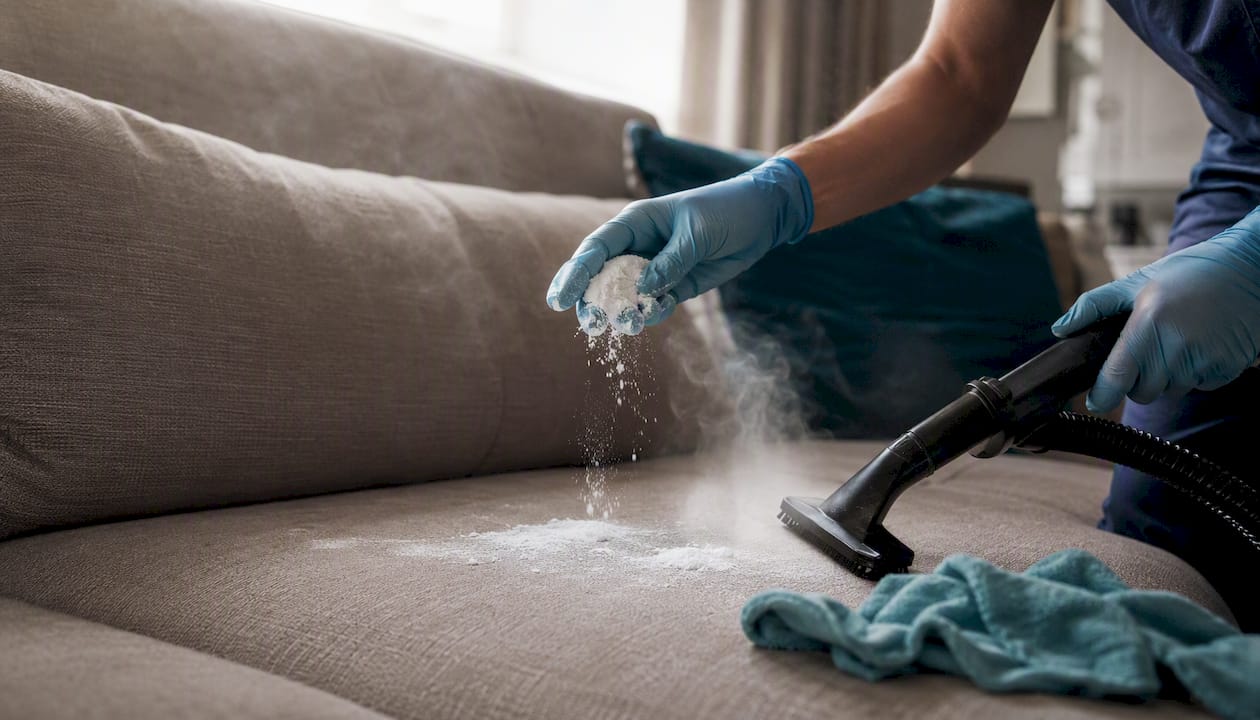
Professional tip: if the smell persists after washing and steaming, it is likely that there is deep impregnation. At this point, replacing the item or hiring professional upholstery cleaning is usually cheaper than continuing to try at home.
How to remove hair and hand odors
Washing hair with clarifying shampoo and hands with neutral soap removes most of the smell in a few minutes, as skin and hair retain smoke very superficially, unlike porous fabrics.
For hair, a clarifying shampoo may be more effective at removing odors, but frequent use can dry out the scalp. If you occasionally leave a smoky environment, a quick rinse with water and a little diluted apple cider vinegar (one tablespoon per cup of water) neutralizes the odor without damaging the hair.
For hands, wash with soap and scrub well, where tar accumulates. A solution of vinegar diluted in warm water, applied with a cloth, removes residues that soap alone does not catch.
Small personal items, such as hats, bags, or phone cases, respond well to:
- Airing outdoors for several hours.
- Baking soda placed inside the item (in a closed bag or box) for 24 hours.
- Professional cleaning for leather items or materials that cannot get wet.
Professional tip: if the smell in your hair persists after washing, do not repeat the shampoo immediately. Let it air dry, smell again, and only reapply if you still smell the odor. Repeated washes in succession dry out the scalp without resolving the issue faster.
Cars, small bathrooms, and ducts: where the smell hides
In small spaces, the smell concentrates because there is less air volume to dilute it and more nearby surfaces to absorb it. Before any solution, always check obvious sources: hidden ashtrays in drawers, butts behind upholstery, or residues stuck to ventilation grilles.
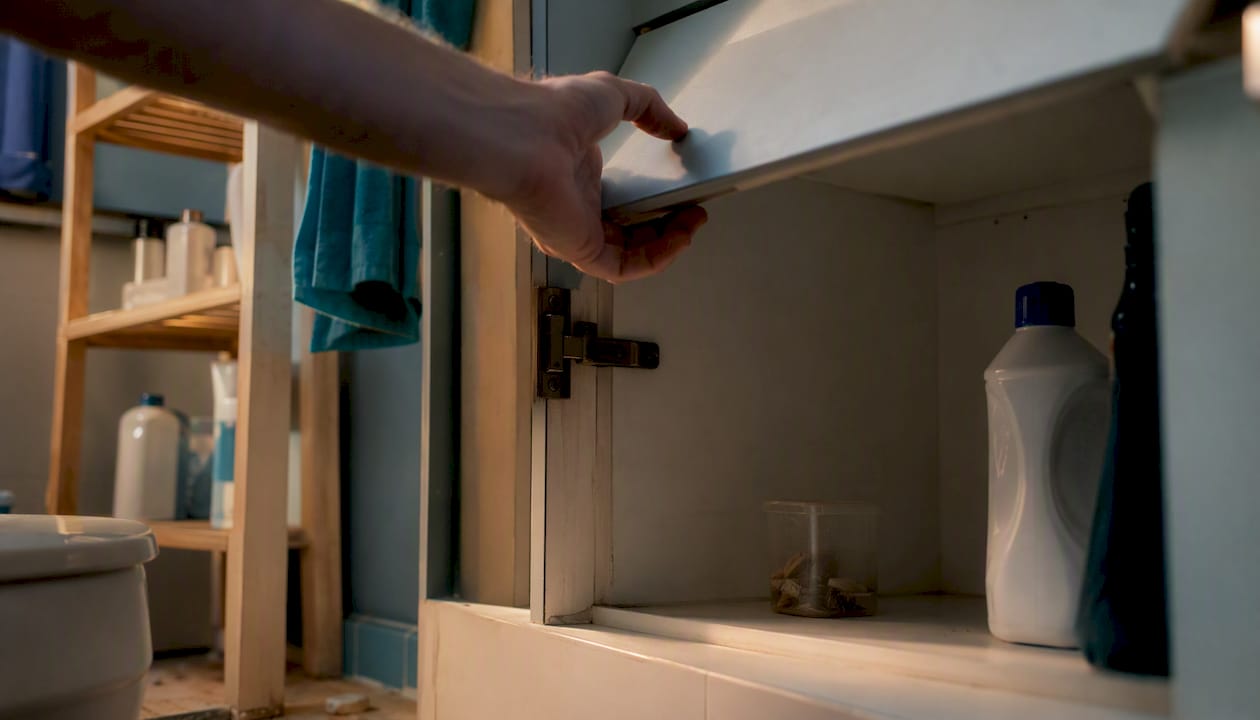
To determine if the smell comes from a duct or ventilation system, close the room, turn off any appliances, and approach the air grille. If the smell is stronger there than in the rest of the room, the air is circulating from another space, possibly from a neighboring apartment sharing ducts. In this case, door seals and a small bag of activated charcoal near the air intake help as a temporary solution, but do not resolve the source.
In cars, the cabin accumulates smoke particularly intensely because the upholstery, carpet, and headliner are very absorbent materials. An effective cleaning includes:
- Deep vacuuming of seats, carpets, and glove compartments.
- Cleaning upholstery with specific foam or steam.
- Replacing the cabin filter, which retains particles and may continue to release odor when the air conditioning is turned on.
- Professional cleaning of the air conditioning system when the smell comes out of the vents even with the car clean.
When the problem is in a shared duct of a building, the solution usually requires a specialized technician in cleaning and maintaining ventilation systems, not just domestic cleaning. The Regulation No. 154/2022 requires, for rooms where smoking is allowed in Portugal, ventilation systems with a minimum effectiveness defined by the European technical standard EN 13779, which gives an idea of the technical requirements needed to control tobacco odors through isolated ventilation.
Professional tip: in small spaces, always keep a small grille or vent open, even in winter. Completely closed spaces for days reconcentrate the odor that had already been reduced.
Products and devices that work, and those to avoid
Air purifiers with HEPA filters combined with activated charcoal are the most effective option for suspended particles and residual odor in the air, as they simultaneously capture physical particles and absorb the volatile compounds responsible for the smell. Enzymatic sprays specifically for tobacco odors work well on fabrics because they break down the odor molecules instead of covering them.
A common air freshener masks the smell for a few hours, but does not alter the nicotine and tar molecules present in the fabric or wall. When the spray effect wears off, the original odor returns exactly the same.
For devices and products available in general and specialized stores in Portugal, keep in mind:
- HEPA + activated charcoal purifiers: choose a model sized for the actual area of the room, not just for the room where it will be placed. Filters need regular replacement, usually every three to six months.
- Enzymatic sprays for fabrics: apply directly to upholstery, carpets, and curtains, allowing to air dry without scrubbing.
- Activated charcoal bags or boxes: useful for closets, drawers, and small closed spaces.
- Avoid home ozone generators without professional control: ozone in unregulated concentrations can irritate the respiratory tract and is not recommended in inhabited spaces without technical supervision.
- Avoid spray air fresheners or candles as the only solution: they mask without eliminating, and some even react with nicotine residues creating even more unpleasant odors.
Professional tip: if you buy a purifier, check the "CADR" (Clean Air Delivery Rate) indication on the packaging and choose a value suitable for the actual square meters of the room, not the entire house.
When to hire professional cleaning
Call a professional cleaning company when the smell persists after two or three complete attempts at ventilation, washing, and neutralization, or when there are clear signs of third-hand smoke on porous surfaces such as plaster, untreated wood, or mattress foam.
Before hiring, use this checklist:
- Request deep upholstery cleaning with enzymatic treatment, not just vacuuming.
- Confirm if they include professional washing of curtains and heavy bedding.
- Ask if they clean ventilation ducts, when applicable to your building.
- Demand a checklist of the work performed, with a quality guarantee and the possibility of repetition if the result is not satisfactory.
- Ask what products they will use and if they are safe for children and pets.
The costs of a deep residential cleaning in Portugal vary depending on the area and degree of impregnation, and a typical intervention lasts between three and six hours for an average apartment, potentially extending to a full day in cases of heavy impregnation or when it includes wall treatment.
Professional tip: before closing the service, ask how long they recommend keeping the house ventilated after cleaning and if they offer a second free visit if the smell reappears in a few days. This reveals whether the company truly trusts the result.
How Cleaning Point addresses tobacco smell in Lisbon
Cleaning Point resolves cases of persistent tobacco smell in Lisbon through deep cleanings and specific treatments, carried out by teams that follow detailed checklists room by room.
The most relevant services for this problem include:
- Signature deep cleaning, which addresses surfaces, upholstery, and areas of greater odor accumulation with a level of detail superior to regular maintenance.
- Specific treatment of upholstery and carpets, including vacuuming with a filter and application of neutralizing products.
- Washing of curtains and heavy textiles that do not usually enter regular domestic cleaning.
- Extras like window, appliance, and outdoor space cleaning, useful when the odor has spread to balconies or habitual smoking areas.
Before the visit, it helps to identify the most affected areas (the sofa where smoking occurred, the room next to the window) and ensure easy access to those areas. The team works with consistent checklists by room and sends a digital report of the work performed, allowing you to confirm exactly what was treated.
A well-done deep cleaning does not mask the smell; it physically eliminates the residues that cause it. This is the difference between an air freshener and an intervention that resolves the problem for good.
You can book directly through the Cleaning Point booking page or first check the services available in Lisbon to understand the scope of coverage.
Perspective: what really works on the ground
Cases of persistent tobacco smell in rented or resold homes are one of the most common reasons for requests for deep cleaning in Lisbon, especially in apartments where the previous tenant smoked indoors for years. The expectation of many owners is that a two or three-hour cleaning will solve everything. It rarely does when the impregnation has already reached the walls.
A typical "before and after" pattern is as follows: a room with visibly yellowed walls and a perceptible smell upon entry, after deep vacuuming, upholstery washing, enzymatic treatment of fabrics, and a coat of sealing primer on the walls, no longer has a perceptible odor even with the door closed for days. What changes the result is not a single miracle product; it is the combination of several steps done in the right order, without skipping the neutralization phase before painting.
The part that most people underestimate is the maintenance after cleaning. If smoking continues indoors, even sporadically, the odor returns in weeks, not because the cleaning has failed, but because the source never disappeared. The most effective long-term solution is not to clean better; it is to move the habit outside, near an open window or on the balcony.
When home efforts are no longer enough
There comes a point when vinegar, baking soda, and ventilation are no longer sufficient: when the smell is in the structure of the house, not just on the surface. At this moment, the difference between continuing to try alone and hiring professional cleaning is primarily one of time and guarantee of result.

Cleaning Point is the alternative to spending an entire weekend testing products without knowing if they will work. A team with defined checklists treats upholstery, fabrics, and surfaces with tested methods and delivers a report of the work done, something no homemade spray can guarantee. For busy families or owners preparing a house for new tenants, this means resolving the problem in a single visit instead of multiple attempts spread over weeks.
If the tobacco smell has already resisted two or three attempts at home, the next logical step is to request a quote. You can book a deep cleaning directly through the booking page or first check the service details on Signature deep cleaning to understand what is included before deciding.
Summary: essential steps to eliminate tobacco smell
Eliminating tobacco smell requires immediate ventilation, removal of the source, washing of fabrics, neutralization with appropriate products, and, in cases of deep impregnation, professional cleaning.
| Point | Details |
|---|---|
| Air out first | Open opposite windows for 15 to 30 minutes, several times a day, in the first days. |
| Wash porous fabrics | Clothing, bedding, and curtains need hot washing, not just airing. |
| Use baking soda and activated charcoal | Apply to carpets, upholstery, and closets before vacuuming or closing spaces. |
| Check ducts and cars | Test if the smell comes from shared ventilation or the vehicle's air conditioning system. |
| Call Cleaning Point | When the odor persists after several attempts, professional deep cleaning treats upholstery, walls, and fabrics definitively. |
Sources
For those who want to delve into the legal framework and scientific evidence behind these recommendations, these Portuguese sources are a good starting point:
- Regulation No. 154/2022 — Regulation on places where smoking is allowed
- Third-hand smoke: how the harmful substances from cigarettes impregnate the environment? — Drauzio Varella Portal
Frequently asked questions
Why do I smell tobacco for no apparent reason?
Smelling cigarette smoke without any real source may be phantosmia, a change in smell that arises after viral infections, nasal inflammation, or, more rarely, neurological changes. If the smell persists without a physical explanation in the house, it is worth seeking medical evaluation.
Is smoking allowed in the street in Portugal?
Yes, smoking in the street is generally allowed, but Law No. 37/2007 and more recent amendments restrict consumption near school entrances, hospitals, and certain public spaces. The rules have been reinforced, including proposals for new prohibitions near educational establishments.
Is smoking allowed on balconies?
In private homes, smoking on the balcony is allowed, but smoke can enter neighboring apartments through windows or shared ducts, which generates frequent complaints in buildings. There is no specific national prohibition for private balconies, but condominium regulations may impose their own restrictions.
Which European country smokes the most?
The tobacco consumption rate varies among European countries and frequently changes as new official data is published, so this data should be consulted in updated European statistical sources rather than quoted from memory.
Does the tobacco smell disappear on its own over time?
Not completely. Fresh air dilutes the smell in hours, but the residues that cling to fabrics, walls, and upholstery can persist for weeks or months without active intervention, requiring washing, neutralization, or, in more severe cases, professional cleaning like that offered by Cleaning Point in Lisbon.


