How to clean the balcony in any season

To effectively clean the balcony, remove furniture and protect the plants, sweep well and pre-rinse the floor, apply a suitable product for the flooring material, scrub in sections and rinse thoroughly before drying. Always check the drains before and after. In most balconies, this process generally takes about one to one and a half hours. If you detect leaks or dirt accumulated over the years, it is better to call a professional team than to risk damaging the flooring.
In summary:
- Effective balcony cleaning requires sweeping, pre-rinsing, applying suitable products for each material, and rinsing thoroughly, paying attention to hard-to-reach areas.
- The use of a pressure washer should be done carefully, at a minimum distance of 30 centimeters and with a fan nozzle to avoid damaging the flooring.
- Each flooring material requires specific treatment: tiles with mild detergent, wood with protective oil, and stone with neutral products, avoiding bleach or abrasives.
- Cleaning and protecting outdoor furniture with specific products and regular care prolongs its durability, especially in environments exposed to sun, rain, and sea air.
- Frequent inspections of drains and preventive maintenance prevent clogs and leaks, essential for preserving the structure of the balcony.
Index
- Step-by-step guide to cleaning the balcony floor
- How to clean by flooring type: tile, cement, wood, stone, and composite
- Care for outdoor furniture: cleaning and protection by material
- Cleaning glass and railings without leaving streaks
- Drainage and drains: prevention of clogs and leaks
- Products, tools, and safety: what to have and what to avoid
- Seasonal maintenance schedule: checklist by season
- Tips for cleaning and maintaining plants and planters on the balcony
- Guidelines for cleaning and maintaining awnings and sun protections on the balcony
- How to identify signs of mold and mildew and specific methods for their removal on the balcony
- When to hire professionals: an editorial opinion
- Service option: how Cleaning Point can help
- Sources
- Frequently asked questions
Step-by-step guide to cleaning the balcony floor
Before grabbing the broom, remove chairs, tables, and outdoor rugs. If you have plants, temporarily move them away or cover the pots with bags to avoid splashing them with detergent. Gather all the materials before you start: stiff-bristled broom, bucket, scrubbing brush, hose or large watering can, gloves, and the right product for the flooring you have at home.
- Sweep the entire surface well, including corners and along the skirting board, to remove leaves, sand, and dust before wetting the floor.
- Pre-rinse with water to loosen dry dirt and prevent it from turning into mud when applying the product.
- Apply the appropriate detergent or degreaser for the material and let it act for 5 to 15 minutes, longer if there are grease or moss stains.
- Scrub in sections, starting from the furthest point from the drain and moving towards the drainage, to avoid stepping on already cleaned areas.
- Rinse thoroughly, removing all product residue, which if not removed attracts more dirt.
- Dry with a squeegee or cloth, especially in the joints, to prevent moisture from being trapped.
A guide from Brico Depôt on cleaning terraces follows this exact sequence and recommends applying an annual sealer on outdoor tile floors, which reduces porosity and facilitates future cleanings.
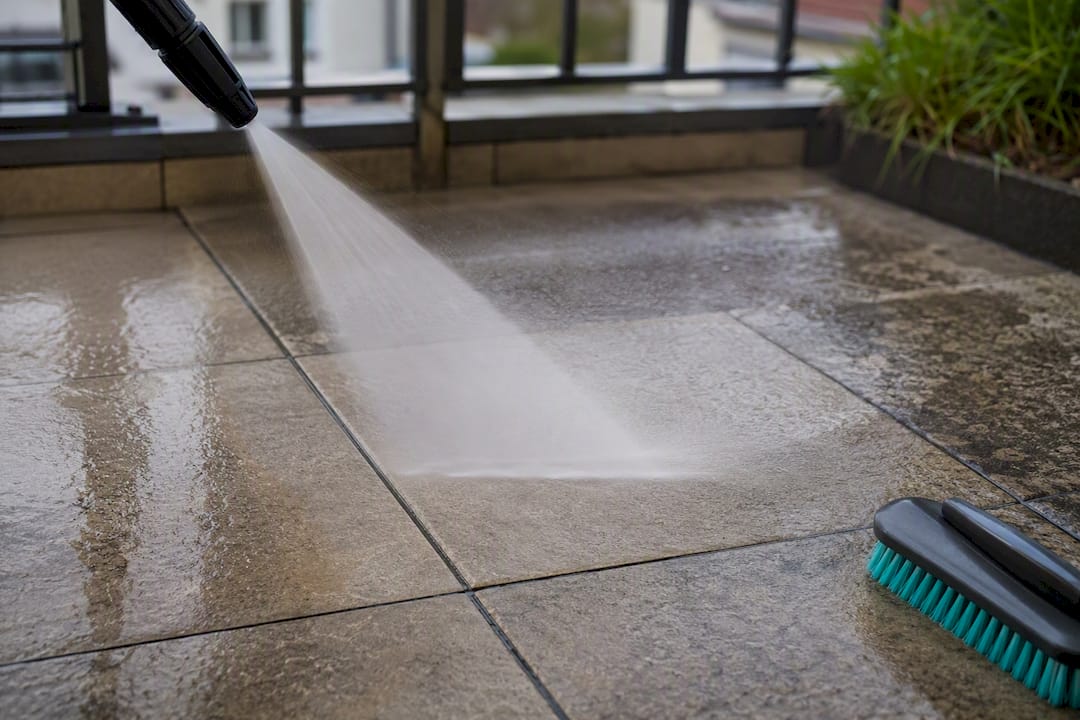
The pressure washer speeds up the work significantly on large balconies, but requires caution. Work at least 30 centimeters away from the surface and use the fan nozzle instead of the concentrated jet. Excessive pressure can lift mortar joints and pull fibers from wood, a risk identified by terrace maintenance specialists. If you are unsure of the material's resistance, test it first in a discreet corner.
How to clean by flooring type: tile, cement, wood, stone, and composite
Each balcony material requires a different approach. Using the wrong product can stain, scratch, or accelerate the wear of the flooring.
- Tile: mild detergent and stiff-bristled brush on the joints; avoid strong acids that damage the glaze over time.
- Cement or concrete: a neutral degreaser removes grease and moisture stains; control the pressure of the washer to avoid opening existing cracks.
- Wood or deck: always scrub in the direction of the grain with soft brushes, never metal brushes, and apply specific oil after drying to protect against cracks.
- Natural stone: use only neutral products, without acid or concentrated bleach, because stone is porous and easily absorbs stains.
- Composite: diluted neutral soap in water is sufficient; abrasives scratch the surface and destroy the finish.
Professional tip: Always test any new product in a small, hidden area before applying it to the entire surface, especially on natural stone or treated wood. This precaution avoids irreversible discoloration on more sensitive materials.
Care for outdoor furniture: cleaning and protection by material
Balcony furniture suffers from sun, rain, and sea air, and each material needs its own care to last more than one season.
- Synthetic fibers: wash with water and mild soap, rinse well and let air dry before storing.
- Wood like teak or eucalyptus: gentle cleaning followed by periodic application of oil or varnish, essential to protect against UV rays and cracks, according to IKEA Portugal's recommendations.
- Aluminum and plastic: avoid abrasive sponges that scratch the surface; dry well to prevent water stains.
- Upholstery and cushions: remove the covers, wash according to the label, and always dry in the shade to avoid fading the fabric.
- Use breathable covers to protect against dust, pollen, and moisture, and store everything well-dried in winter to avoid mold.
- Check screws and fittings from time to time, as oxidation often starts there.
Cleaning glass and railings without leaving streaks
Balcony glass remains streak-free when washed with water and a little mild soap, rinsed well, and dried with a squeegee or microfiber cloth in vertical movements.
- A solution of diluted vinegar or alcohol helps cut grease and fingerprints, but only on regular glass, never on glass with special treatments.
- Metal railings are cleaned with a damp cloth and should dry immediately to avoid corrosion, especially in coastal areas.
- Never clean glass or railings at height without a secure support point; if the balcony has a low guard, always use a safety belt or seek professional help.
Drainage and drains: prevention of clogs and leaks
Drainage is the most critical point of all balcony maintenance. Clogged drains and gutters retain water that seeps into the slabs and can cause costly structural damage to repair, as warned by Casa Sapo.
- Inspect the drain before starting the cleaning to remove leaves and larger debris.
- Unclog with a small brush or manual plunger; avoid aggressive chemicals that corrode old pipes.
- Check the drainage again at the end, letting water run to confirm there is no accumulation.
- If water does not drain or there are moisture stains on the ceiling of the lower floor, call a technician before the problem worsens.
Professional tip: In coastal areas, sea air accelerates the corrosion of metals and accumulates salts on fabrics and surfaces. Washing the balcony with fresh water after days of strong winds from the ocean prolongs the life of furniture and metal structures, as pointed out by MaisCasa.
Products, tools, and safety: what to have and what to avoid
A stiff-bristled broom, scrubbing brush, hose, bucket, sturdy gloves, and glass scraper cover almost all cleaning needs for balconies.
- Neutral soap works for most surfaces; for mold, a diluted bleach solution in water at a ratio of 1:10 is effective on resistant floors.
- Avoid strong acids on natural stone, metal brushes on wood, and excessive pressure on fragile or already cracked surfaces.
- Wear non-slip footwear during cleaning and signal the slippery floor if sharing the space with children or the elderly.
Seasonal maintenance schedule: checklist by season
Spreading the work throughout the year prevents the balcony from accumulating heavy dirt and reduces the need for recurring deep cleanings.
| Season | Main tasks |
|---|---|
| Spring | Deep cleaning of the floor, inspection of cracks, and application of UV protections on furniture |
| Summer | Light weekly maintenance and reinforcement of UV protection on woods and fabrics |
| Autumn | Removal of fallen leaves and careful cleaning of drains before the rains |
| Winter | Cover or store furniture and inspect drainage after storms |
This seasonal rhythm aligns with preventive maintenance recommendations for synthetic fiber and treated wood furniture, which emphasize that small regular interventions prevent costly repairs later.
Tips for cleaning and maintaining plants and planters on the balcony
Plants and planters are often forgotten in balcony cleaning, but they accumulate dust, dry leaves, and watering residues that dirty the surrounding floor.
Clean the planters outside with a damp cloth and regularly remove dead leaves, as they decompose and attract insects. Check that the water collection plates do not have stagnant water, a common breeding ground for mosquitoes in summer. Rotate the pots from time to time to avoid permanent moisture marks on the floor, especially on wood or composite.
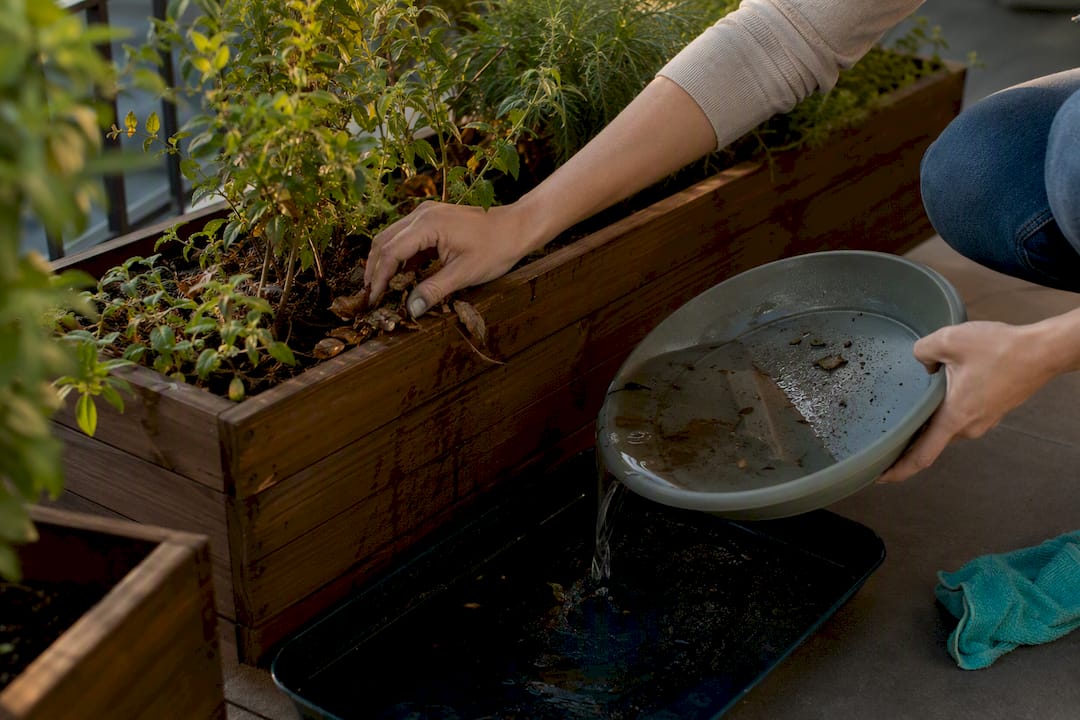
If you use wooden planters, treat them with the same care as the furniture: gentle cleaning and periodic protective oil. Plastic or fiberglass planters only need water and mild soap. When watering, prefer to do it in the morning or late in the day to reduce rapid evaporation and water waste, and place a plate or tray under the pots to protect the floor from soil and lime stains.
Take advantage of the seasonal balcony cleaning to renew the soil in the planters and remove dead roots, which often block the drainage of the pot itself and promote the appearance of fungi.
Guidelines for cleaning and maintaining awnings and sun protections on the balcony
Awnings and other sun protections accumulate dust, pollen, and, in more humid areas, mildew stains that worsen if not treated in time.
For awning fabrics, start by dry brushing to remove loose dust, then wash with warm water and mild soap using a soft sponge. Rinse well and let dry completely in the air before storing, as storing damp fabric is the most common cause of persistent mildew stains. Avoid aggressive detergents or concentrated bleach on fabrics with waterproof treatment, as they degrade that protective layer more quickly.

Metal or aluminum structures of the awnings are cleaned with a damp cloth and should dry well to avoid oxidation, especially on balconies exposed to sea winds. Periodically check the opening mechanisms and fixing gutters, as accumulated dirt in these parts eventually hinders the movement of the awning.
For those looking for a more permanent shading solution, structures like the bioclimatic aluminum pergolas from D&Z Pergole offer an alternative to traditional fabrics, with adjustable slats that reduce the need for frequent washings as they are less exposed to dirt accumulation. Whatever sun protection is chosen, review the overall condition at the beginning of spring and before winter, when strong winds tend to damage poorly tightened fittings.
How to identify signs of mold and mildew and specific methods for their removal on the balcony
Mold appears as dark, green, or black spots, usually in tile joints, shaded corners, and wooden surfaces that remain damp for longer. A persistent musty odor is often the first sign, even before the stain becomes visible.
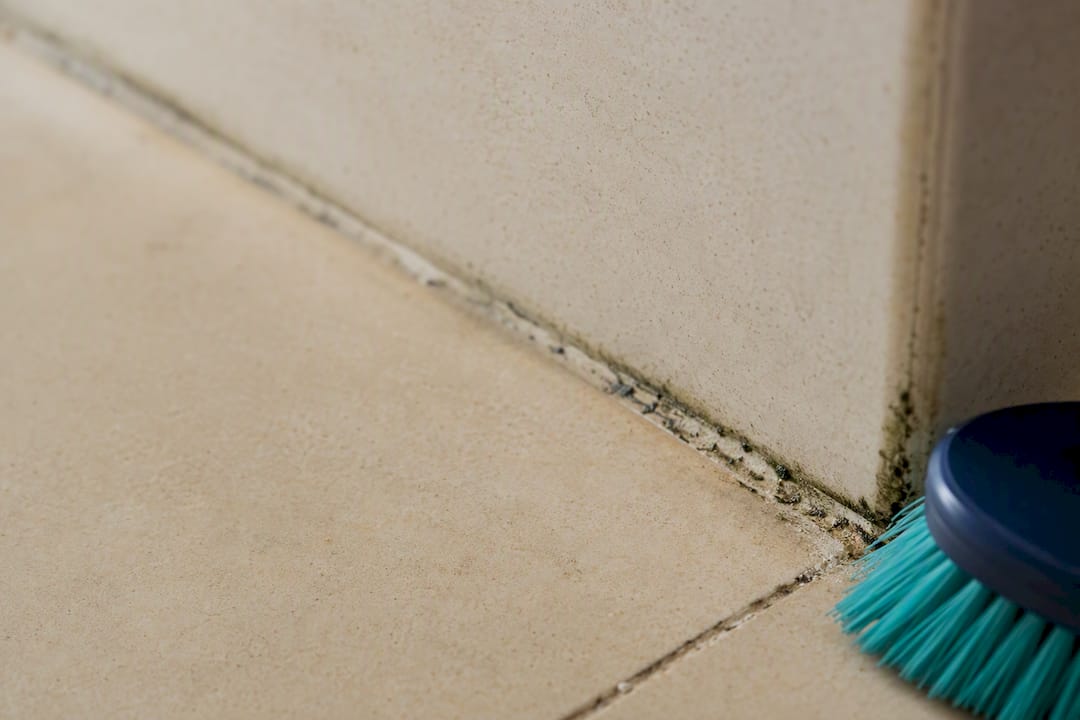
On resistant floors like tile or cement, a diluted bleach solution in water, at a ratio of 1:10, removes most surface mold. Apply with a brush, let it act for a few minutes, and rinse well. For more stubborn joints, an old toothbrush helps reach narrow corners without damaging the tile, a technique recommended in terrace cleaning guides.
On wood, avoid concentrated bleach, which dries out the fibers. Prefer specific solutions for outdoor wood or diluted white vinegar, applied with a soft brush and always in the direction of the grain. After removing the mold, dry the surface completely and consider applying a protective oil, as retained moisture is the main factor that allows mold to reappear.
If stains repeatedly return to the same area, the problem may not just be superficial cleaning. Check for a point of stagnant water due to poor drainage, as in this case, the solution involves correcting the slope or unclogging the drain, not just scrubbing harder.
When to hire professionals: an editorial opinion
Leaks, post-construction dirt, or work at height require a trained team, the right equipment, and a checklist, not risky improvisation.
— Taras
Service option: how Cleaning Point can help
After going through this entire process, it is easy to see why many people prefer to delegate the cleaning of the balcony to a fixed team rather than repeating the work every month. Some companies operate as an alternative to hiring one-off cleanings without quality control, maintaining consistent teams whenever possible, following detailed checklists by space, and offering support in multiple languages, which facilitates communication about specific requests for balconies and terraces.

For balconies with dirt accumulated over the years or after construction, the deep cleaning service takes care of removing tough stains, construction dust, and residues that a normal cleaning does not resolve. For regular maintenance of the rest of the house in parallel, the professional home cleaning includes extras like window and upholstery cleaning, useful for completing the care of the outdoor space. Request a quote and schedule a visit through the booking page.
Sources
- How to prepare your outdoor furniture for spring and summer | IKEA Portugal
- Terrace cleaning: tips for easy maintenance | Casa Sapo
- How to clean outdoor terraces | Brico Depôt
- Guide: durable garden furniture for the Portuguese climate | MaisCasa
Frequently asked questions
How to wash the balcony of an apartment?
Remove furniture, sweep well, apply neutral detergent or specific for the flooring, scrub, and rinse with plenty of water. In apartments, take extra care with drainage to avoid disturbing neighbors on the lower floor.
How to clean glass balconies?
Wash the glass with water and mild soap, rinse, and dry with a squeegee or microfiber cloth in vertical movements to avoid streaks and stains. For work at height, always use a secure support point or hire a professional.
How to clean the floor of a terrace?
Follow the sequence of sweeping, pre-rinsing, applying the appropriate product for the material, scrubbing in sections, and rinsing well before drying. The type of product varies between tile, cement, wood, natural stone, and composite.
How to clean glass without leaving streaks?
Use little detergent and rinse generously before drying, as excess product is the main cause of stains. A dry microfiber cloth or rubber scraper gives the final finish without streaks.
How much does it cost to hire professional cleaning for the balcony in Lisbon?
The prices of Cleaning Point services are not published for one-off balcony interventions and vary according to the size and condition of the space. Request a custom quote directly with the team.