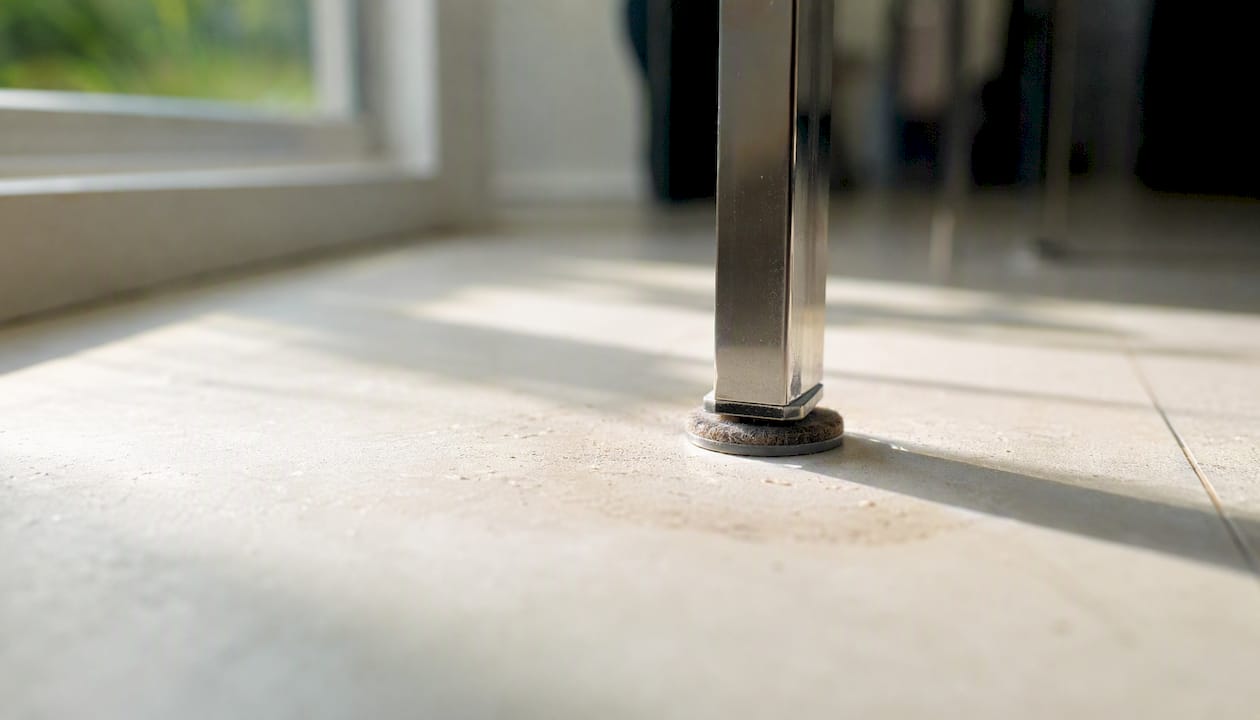
Rust stains on the floor: how to remove them from ceramic

To remove rust from ceramic or stoneware floors, apply an appropriate remover, let it act for about 15 minutes, and rinse thoroughly. This is the most straightforward method and works for the vast majority of household stains. Always test any product in a discreet area first, wear gloves, and ensure ventilation in the space.
Two quick rules before you start:
- Never use chlorine-based products on rust stains. Chlorine can fix the oxidation and worsen the stain instead of removing it.
- Avoid strong acids on marble, limestone, or glazed ceramics without prior testing. The risk of permanent discoloration is real.
For small stains on common ceramics, a paste of baking soda with lemon juice often resolves the issue without needing commercial products. For old, extensive stains or on natural stone, professional removers available in Portugal, such as NO RUST from FILA, Ruginoff, or Removex, are the safest and most effective choice.
Key Takeaways
Removing rust from ceramic floors requires the right method for the right material: start with the least aggressive and move to professional products only when necessary.
| Point | Details |
|---|---|
| Typical action time | Removers like NO RUST act within a recommended time sufficient for the necessary chemical reaction; respect this time for effectiveness. |
| Gel vs. liquid | Viscous formulas maintain contact with the stain and reduce drips, especially in joints. |
| Natural stone | Use only acid-free removers (Ruginoff, NO RUST); after intervention, reapplying sealant may be necessary. |
| Decision rule | If the stain does not come out after two attempts with safe methods, call a professional. |
| Cleaning Point in Lisbon | Deep cleaning with products suitable for each surface, checklists and digital report included. |
Index
- How to remove rust from the floor in a few steps (small stains)
- Persistent or extensive stains: when the quick method isn't enough
- Which method to use depending on the type of flooring
- What removers are available in Portugal and how to choose
- Why a viscous gel works better than a liquid
- When it makes sense to call a professional cleaning service
- What I learned to do differently
- Cleaning Point handles what you can't resolve on your own
- Sources
- Frequently asked questions
How to remove rust from the floor in a few steps (small stains)
What you need
- Rubber gloves
- Soft sponge (and green sponge for stubborn stains)
- Clean cloth
- Lemon and salt, or baking soda
- Bucket with clean water
Numbered steps
- Clean the area with water and a cloth to remove dust and loose dirt. Dry slightly.
- Prepare the homemade paste: mix baking soda with lemon juice until you achieve a thick consistency. Apply directly to the stain.
- Let it act for 5 to 10 minutes. For more stubborn stains, you can extend it to 15 minutes.
- Scrub with a soft sponge in circular motions. If the stain persists, use the abrasive side of the green sponge carefully.
- Rinse thoroughly with clean water. Dry immediately to avoid new deposits.
- Repeat if necessary, but never more than twice with the same homemade method. If the stain persists, switch to a commercial product.
Homemade methods with lemon and baking soda are effective for superficial oxidations on ceramics, but effectiveness varies depending on the substrate and the age of the stain.
Professional tip: Always start with the least aggressive method. Test first on a joint or in a less visible corner, even with homemade products. If the shine of the tile changes, stop immediately.
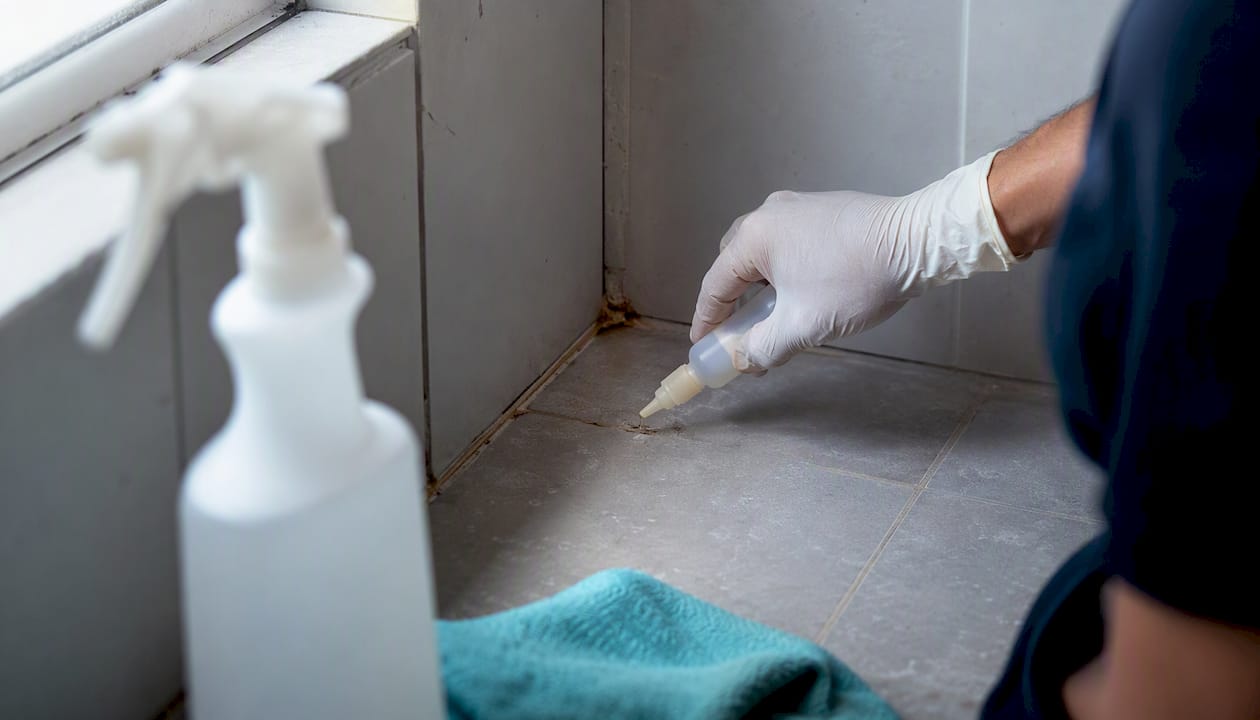
Persistent or extensive stains: when the quick method isn't enough
Some rust stains on the floor do not yield to homemade methods. This happens with old oxidations, embedded after construction, or in extensive areas where the source of rust (a furniture leg, a pipe) has been in prolonged contact with the flooring.
When to use a professional remover
- The stain is more than a few weeks old or is visibly embedded
- The affected area is extensive (more than one joint or tile)
- You have already tried the homemade method twice without results
- The flooring is made of natural stone (marble, granite, limestone)
Steps for difficult stains
- Moisten the area with water before applying the product. This facilitates penetration and reduces the risk of excessive reaction.
- Apply the remover directly to the stain, following the manufacturer's instructions. For viscous gels, apply undiluted; for liquids, respect the indicated dilution.
- Wait for the recommended action time, usually 15 minutes for products like NO RUST from FILA.
- Scrub with a green abrasive sponge when the product indicates. On polished natural stone, use only a soft sponge.
- Rinse thoroughly and dry immediately.
- Repeat once if necessary. If after two applications the stain persists, call a professional.
Attention: Never use removers with strong acids on marble, limestone, or glazed ceramics without testing in a discreet area first. Damage can be irreversible. Always consult the Safety Data Sheet (SDS) of the product before use, wear chemical-resistant gloves, and ensure adequate ventilation in the space.
Which method to use depending on the type of flooring
| Surface | Safe methods | What to avoid |
|---|---|---|
| Glazed ceramics | Lemon + baking soda; acid-free removers (NO RUST, Ruginoff) | Strong acids; metal scrubbers |
| Ceramic stoneware | Lemon + baking soda; NO RUST; Deterdek Pro | Concentrated acids without dilution |
| Porcelain stoneware | Acid-free removers; viscous gel | Strong acids; aggressive abrasives |
| Marble / limestone | Only acid-free removers (Ruginoff, NO RUST) | Any acidic product |
| Granite / slate | Acid-free removers; always test first | Acids; strong alkaline products |
| Cement joints | Baking soda paste; old toothbrush | Strong acids (corrode the grout) |
| Epoxy joints | Neutral removers; hot water | Solvents; acids |
On polished natural stone, after any intervention with a remover, reapplying wax or sealant may be necessary to restore surface protection.
For joints, the type of grout determines the method. Cement grouts tolerate baking soda paste and an old toothbrush. Epoxy grouts are more stain-resistant but also more sensitive to aggressive products, so use only neutral removers and hot water.
What removers are available in Portugal and how to choose
There are four products with confirmed distribution in Portugal worth knowing:
-
NO RUST / DETERDEK PRO (FILA): Acid-free formula, viscous consistency, and a color indicator that changes to purple when it reacts with rust. Available in 75 mL, 1 L, and 5 L formats. The 75 mL or 1 L bottle is suitable for localized domestic interventions; the 5 L is for professionals or post-construction.
-
Ruginoff (Prosam): Acid-free remover suitable for natural stone (marble, granite, terrazzo), ceramics, stoneware, porcelain, clinker, and concrete. Works indoors and outdoors. It is the safest choice when the flooring is made of natural stone and you don't want to risk discoloration.
-
Removex (Grupo Lacrilar): Post-construction descaler that removes rust, cement, and limestone. Can be diluted (1:1 to 1:5 depending on dirtiness). Should not be used on glazed surfaces, polished marble, or stainless steel without prior testing. Suitable for post-construction interventions on stoneware or concrete.
-
Ruginoff vs. Removex: If the flooring is made of natural stone or delicate glazed ceramics, Ruginoff is safer. If you are dealing with multiple incrustations after construction (cement + rust + limestone) on rustic stoneware or concrete, Removex is more effective.
Professional tip: Before purchasing, always check if the product includes the SDS (Safety Data Sheet). Any professional remover should have it available. Without it, you don't know exactly what you are applying to your flooring.
Why a viscous gel works better than a liquid
The consistency of the remover is not a marketing detail. Viscous formulas keep the product concentrated on the stain, reducing drips to unaffected areas and ensuring that the necessary contact time is met without the product running off before reacting.
On a horizontal floor, the difference may seem smaller. But in open joints, slightly sloped surfaces (balconies, bathrooms with drainage) or localized stains on a single tile, a liquid runs off and dilutes before completing the reaction. A gel stays where you place it.
- Viscous gel: ideal for localized stains, joints, sloped surfaces
- Liquid with controlled dilution: suitable for large flat areas, such as extensive construction floors
The color indicator present in products like NO RUST from FILA has a concrete practical use: when the product changes color to purple, you know that the reaction with the oxide has occurred. If it does not change color, either the stain is not rust, or the product is not reaching the substrate. Avoid unnecessary repeated treatments.
Professional tip: Always prefer removers with a color indicator for stains where you are unsure of the origin. You save product and avoid treating the surface more than necessary.
When it makes sense to call a professional cleaning service
There are situations where domestic intervention is not enough, and insisting can damage the flooring.
Signs to call a professional:
- The stain covers several tiles or a large area of the floor
- There is embedded rust after construction or renovation work
- The flooring is polished natural stone and you don't want to take risks
- You have already tried twice with suitable products and the stain persists
- The problem is recurring (the rust always returns to the same spot)
When you contact a professional service, provide them with this information from the start:
- Type of surface (ceramic, stoneware, marble, porcelain)
- Approximate size of the affected area
- Estimated age of the stain
- Products already used and results obtained
- Photos of the stain (facilitates remote assessment)
A professional service evaluates the surface before intervening, uses products suitable for the substrate, and, when necessary, restores protections such as wax or sealant after removal. Post-construction interventions or on natural stone are typically framed as deep cleaning, with a corresponding cost.
What I learned to do differently
Most guides focus on the right product. What rarely appears is what to do after removing the stain.
First: dry the area immediately after rinsing. Leaving standing water on stoneware or cement joints, even for a few minutes, creates conditions for new oxidation if there are still metallic residues on the flooring. A dry cloth passed immediately after rinsing makes a difference.
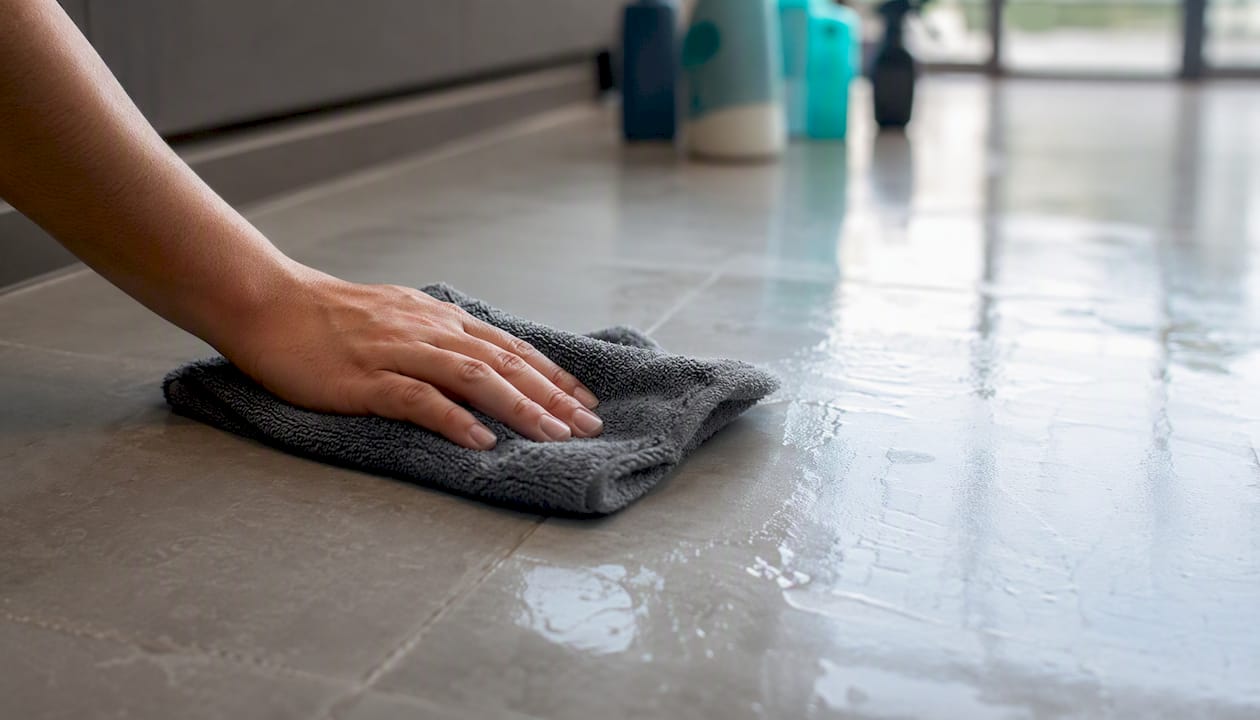
A self-adhesive felt strip under metal legs costs less than two euros and eliminates the most common cause of recurring rust in homes with ceramic flooring.
Cleaning Point handles what you can't resolve on your own
When the stain is extensive, the flooring is made of natural stone, or you simply don't want to risk damaging the covering, Cleaning Point's deep cleaning in Lisbon is the most straightforward alternative. The team intervenes with the right products for each surface, assesses the condition of the flooring before starting, and, when necessary, restores protections such as wax or sealant after removal.

Unlike a repeated domestic attempt, a professional intervention resolves the problem in one visit, with detailed checklists and a digital report of the work done. Stain removal can be included as an extra in a regular cleaning or treated as deep cleaning, depending on the size of the problem.
Book your intervention directly online. Clear prices, no surprises.
Sources
- How to eliminate large rust stains, even on delicate surfaces
- Removex Lacrilar – Effective post-construction descaler | Lacrilar
- Ruginoff - rust remover
Frequently asked questions
What removes rust from ceramic floors?
Acid-free removers like NO RUST from FILA or Ruginoff are the safest and most effective for ceramics. For small stains, a paste of baking soda with lemon juice also works if the oxidation is superficial.
What is the best product for removing rust stains?
For domestic use on ceramics and stoneware, NO RUST from FILA is a solid choice: acid-free formula, viscous gel, color indicator, and available in formats from 75 mL to 5 L. For natural stone, Ruginoff is more suitable.
How to remove rust from mosaic floors without damaging the shine?
Use an acid-free gel remover, let it act for 15 minutes, and scrub with a soft sponge. Never use a metal scrubber or chlorine-based products, which can fix the oxidation and alter the shine of the glaze.
How to prevent rust from returning to the same spot?
Identify the source of oxidation: metal furniture legs, pots, or pipes with condensation. Place self-adhesive felt under metal bases, dry the flooring after cleaning, and apply sealant to the joints to reduce moisture absorption.