House Cleaning Calendar: How Often to Clean Each Room
If you want to know the ideal frequency for house cleaning, the golden rule is simple: daily micro-tasks for basic hygiene, weekly tasks for essentials, and monthly or annual blocks for deeper maintenance. There is no fixed formula, but there is a pattern that works in most Portuguese homes.
- Daily: dishes, kitchen countertops, made bed.
- Weekly: sheets, toilet and sink, general vacuuming, floor.
- Monthly: inside the fridge, extractor hood, windows.
- Annual (or semi-annual): curtains, mattresses, deep carpets.
Homes with children, pets, or high daily traffic need to shorten these intervals. An empty house during the day, with one or two residents, can extend them without any problem.
Key Takeaways
The ideal house cleaning frequency combines daily micro-tasks, weekly maintenance, and monthly or annual blocks, adjusted to the number of residents and pets in the home.
| Point | Details |
|---|---|
| General rule by frequency | Daily for basic hygiene, weekly for essentials, monthly or annually for deep maintenance. |
| Kitchen and bathroom first | These are the rooms with the highest risk of contamination, so they require the strictest routine. |
| Dust mites require prevention, not reaction | Cleaning only when there is visible dirt leaves invisible dust and mites unchecked. |
| Adjust for real context | Children, pets, and frequent guests justify shortening the usual intervals. |
| Professional to restart the calendar | Cleaning Point offers regular maintenance and deep cleaning with checklists by room in Lisbon. |
Index
- Cleaning frequency in the kitchen
- Cleaning frequency in the bathroom
- Cleaning frequency in the bedrooms
- Cleaning frequency in the living room and common areas
- How to create a practical house cleaning calendar
- When it’s worth hiring a professional cleaning service
- Sources
- Frequently asked questions
Cleaning frequency in the kitchen
The kitchen is the room where cleaning frequency has a direct impact on food safety. Food scraps, moisture, and temperature create the perfect environment for bacteria and, over time, for pests.
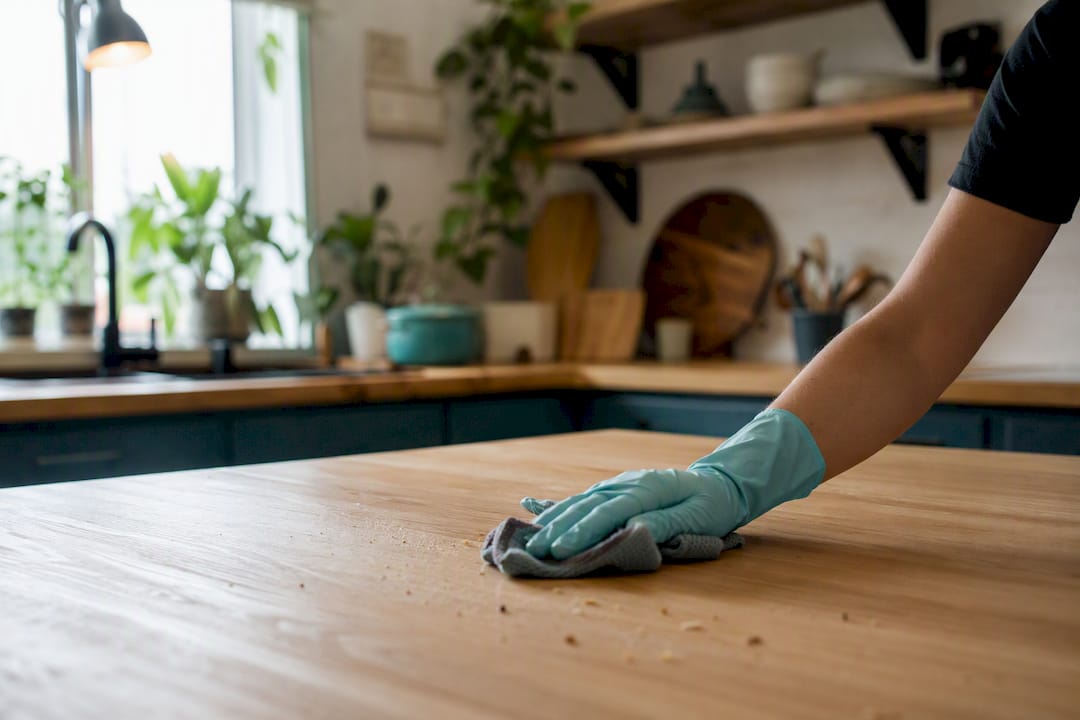
Daily tasks leave no room for delay: countertops, dishes, and a quick wipe of the stove right after cooking prevent grease from accumulating and becoming difficult to remove later.
Weekly, it’s worth dedicating a little more time:
- Partial interior cleaning of the fridge, removing old packaging and cleaning shelves.
- Microwave inside and out.
- Floor washed thoroughly, not just swept.
- Cleaning the trash can, even with a bag.
Monthly, the focus shifts to less visible areas: inside cabinets, extractor filter, and a cleaning cycle for the dishwasher (there are specific products for this, but white vinegar works well too). This summary of regular maintenance routines confirms that cleaning well and regularly prevents deep cleans from becoming hours-long tasks.
Professional tip: Use different cutting boards for raw meat and vegetables, and wash them immediately after use. It’s one of the simplest gestures to avoid cross-contamination without spending more cleaning time.
Cleaning frequency in the bathroom
The bathroom concentrates constant moisture, making it the room with the highest microbiological risk in the house. The toilet and sink deserve disinfection once or twice a week, without exception, even in homes with few residents.
Weekly deep cleaning should include shower or bathtub, tiles, and skirting boards, where limescale and mold settle more quickly in Portugal due to the typical humidity of old houses.
During the pandemic, the DGS recommended increasing the frequency of cleaning and disinfecting frequently touched surfaces, a principle that remains valid in homes with small children, the elderly, or someone sick.
Some practical care makes a real difference:
- Choose disinfectants based on diluted bleach or alcohol for hard surfaces, never mixed together.
- Always ventilate the bathroom during and after cleaning, even in winter.
- Change towels every three uses, according to specific frequency recommendations for household textiles.
Cleaning frequency in the bedrooms
The bedroom is where we spend the most hours still, and it is also where the most dust mites and invisible dust accumulate. Sheets should be changed weekly, with even more frequency in summer or in homes with pets sleeping in bed.
Duvets and pillows require washing every six months. The mattress itself benefits from regular vacuuming and a waterproof protective cover, a more effective measure than traditional sun exposure for controlling dust mites.
- Sheets: weekly change.
- Duvets and pillows: wash every six months.
- Mattress: monthly vacuuming and permanent protective cover.
- Bedroom curtains: shaken or vacuumed biweekly.
A study referenced by NiT shows that many Portuguese only clean when they see dirt with the naked eye, which completely fails to control dust mites, invisible at that scale.
Cleaning frequency in the living room and common areas
In the living room, dust accumulates on surfaces and upholstery at the pace of people and animals moving around. A quick wipe on furniture and surfaces once or twice a week keeps the essentials under control.
- Dust on surfaces: once or twice a week.
- Upholstery (sofas, armchairs): weekly vacuuming.
- Rugs and carpets: regular vacuuming, with deep cleaning semi-annually or annually, depending on usage.
- Windows: monthly cleaning.
- Curtains: two to three times a year.
Homes with pets should shorten these intervals, especially for vacuuming upholstery and rugs, where hair accumulates more quickly than common dust.
Less frequent tasks: curtains, appliances, carpets, and windows
Some tasks do not require weekly attention but cannot be forgotten indefinitely.
- Curtains: washing or dry cleaning two to three times a year.
- Glass and windows: monthly cleaning, more frequently near busy roads.
- Carpets: deep cleaning semi-annually, with regular vacuuming between cleanings.
- Oven and extractor: monthly cleaning, or more frequently in homes where cooking occurs daily.
Always check the maintenance label of textiles before applying products or washing temperatures that may damage them.
How to create a practical house cleaning calendar
A calendar works best divided into small, repeatable blocks, rather than a whole day dedicated to general cleaning.
- Daily (10 minutes): dishes, countertops, made bed, a quick pass on the kitchen floor.
- Weekly (1 to 2 hours, divided into blocks of 15 to 20 minutes): bathroom, general vacuuming, sheets, washed floor, inside fridge.
- Monthly (2 to 3 hours): windows, extractor, inside cabinets, dishwasher.
- Semi-annual or annual (half a day, ideally with extra help): curtains, deep carpets, mattresses, post-season cleaning.
Distributing tasks among household members, even informally, reduces the burden on one person. Dividing the work by process, dust first, then vacuuming, then floors, avoids rework and makes each block faster.
Adjusting frequency: families, pets, allergies, and personal routines
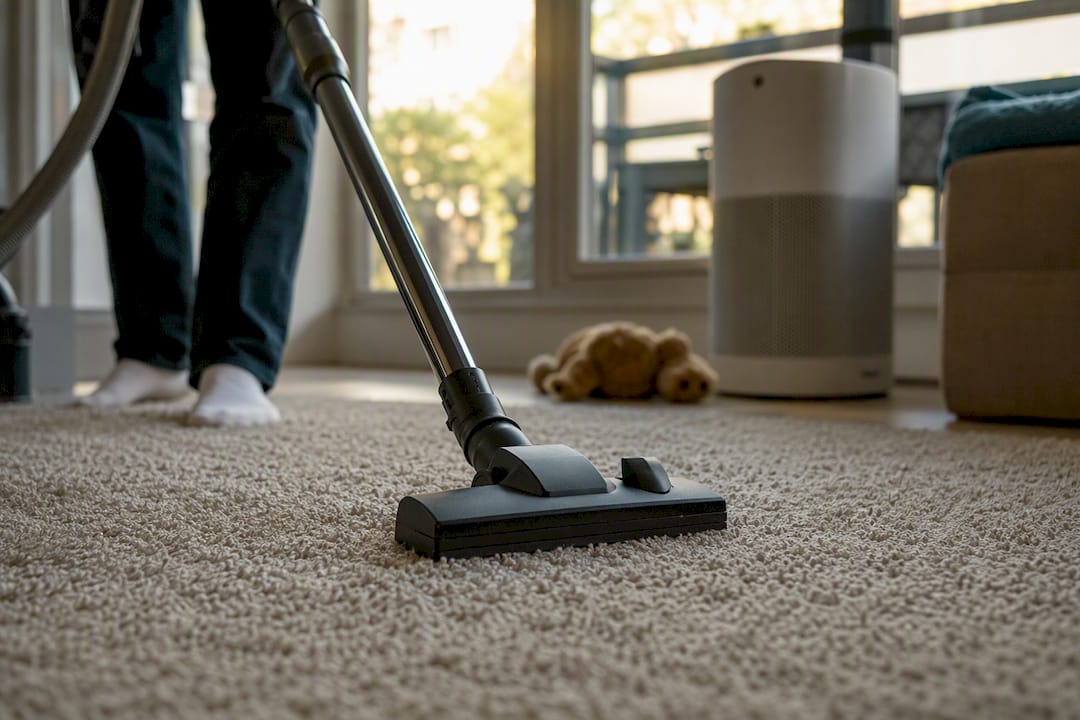
Homes with small children, pets, or someone working from home all day need to shorten intervals, especially in the kitchen and living room. Frequent guests or daily home-cooked meals also require more attention to the kitchen.
When time is short, absolute priority goes to the toilet, countertops, and dishes. The rest can wait another day without much harm.
Professional tip: In summer, with more sweat and more time at home, shorten the interval for sheets to five days and increase ventilation in the bathroom to prevent mold.
When it’s worth hiring a professional cleaning service
There are clear signs that the home calendar is no longer sufficient: persistent lack of time, recent renovations, tenant changes, or accumulated dirt that regular products can no longer resolve.
A professional deep clean typically covers areas that rarely enter the weekly routine: inside appliances, skirting boards, behind heavy furniture, and complete disinfection of bathrooms and kitchens. Packages range from regular maintenance, designed to complement what you already do at home, to deep cleaning, intended to "restart" the house before resuming the usual calendar.
A team that follows checklists by room and provides a visit report eliminates the biggest uncertainty of hiring third parties: knowing exactly what was done.
Cleaning Point follows precisely this model in Lisbon, with fixed teams and detailed checklists by room, making it easy to fit a professional visit into the home calendar without duplicating efforts.
Author's personal note on realistic routines
No calendar survives intact to contact with real life. What works is adjusting without guilt: skipping a week, shortening another, and returning to the rhythm without trying to compensate all at once.
Cleaning Point as a practical option for your calendar
Not everyone has the time or willingness to stick to a strict cleaning calendar every week, and that’s where a fixed professional team makes a real difference: fewer decisions to make, more time returned to your week.
Cleaning Point offers three natural fits into the calendar we described: Regular Home Care to keep weekly tasks under control, the Signature Deep Clean for the more demanding semi-annual or annual blocks, and a dedicated service for post-renovation cleaning when the house needs a complete restart. Each visit follows a checklist by room, with a digital report of what was done, so you know exactly what the team covered, without surprises. If you want to eliminate the more labor-intensive monthly and semi-annual tasks from your routine, you can schedule a cleaning and adjust the frequency of visits to your home’s needs.
Sources
To delve into frequencies by room, consult the cleaning calendar from idealista and the DGS guidelines on surface hygiene.
- Many Portuguese only clean the house when it’s (very) dirty — NiT
- House cleaning: tips to keep your home always impeccable — RicaVida
Frequently asked questions
How much does cleaning cost per hour in Portugal?
What is the hourly rate for a cleaning lady in 2026?
Prices vary depending on the area and type of service contracted; for a reliable and updated estimate, it’s safest to consult the available services directly and request a quote tailored to your home.
What does a deep cleaning include?
A deep cleaning covers areas that the weekly routine normally does not reach: inside appliances, skirting boards, behind furniture, complete disinfection of bathrooms and kitchens, and often cleaning the extractor and oven.
What is the average cost of post-renovation cleaning?
The price of post-renovation cleaning depends on the amount of construction debris, the size of the property, and the condition it was left in after the renovation; details about prices and what to expect help estimate the budget before requesting a visit.
How often should the fridge be cleaned?
The inside of the fridge should be partially cleaned every week, removing old packaging, and thoroughly at least once a month to avoid odors and bacteria buildup.


