Condensation on Windows in Lisbon: What to Do Now

Condensation on windows is, in most cases, a sign of high indoor humidity. The solution starts with ventilation, not cleaning. According to Velux, a family of four produces 10–15 litres of water vapour per day just from cooking, bathing, and drying clothes. This vapour needs to be ventilated outside.
What to do right now:
- Open opposite windows for 5–10 minutes several times a day to create cross ventilation
- Turn on the kitchen and bathroom extractor fans whenever steam is produced
- Wipe droplets off the glass with a dry cloth as soon as you see them
- Avoid drying clothes indoors; if there's no alternative, ventilate the space at the same time
- Consider a portable dehumidifier for the most affected rooms, although it does not solve continuous sources of vapour without ventilation
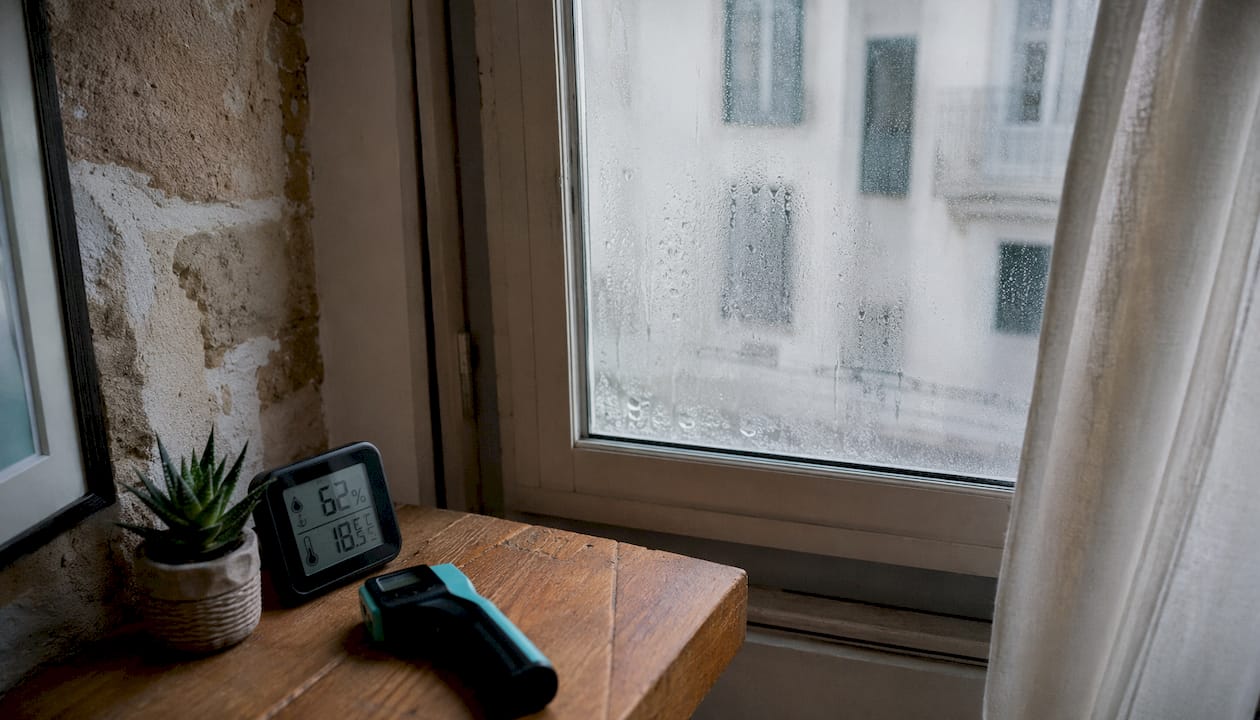
Professional tip: Measure the relative humidity and temperature near the window with a hygrometer and an infrared thermometer. If the humidity exceeds 60%, the problem is environmental. If condensation only appears on the edges or profile, there may be a thermal bridge or faulty sealing.
Watch for two signs that require technical intervention: condensation between the panes indicates a failure of the double glazing seal and requires replacement; visible mould near the frames needs safe cleaning and, if it persists, professional inspection.
Index
- What technical solutions resolve the problem in the long term?
- When is it time to call a professional?
- How much does it cost to solve the problem?
- Cleaning Point solves the problem in Lisbon
- Key conclusions
- Frequently asked questions
What technical solutions resolve the problem in the long term?
Ventilating and drying solve day-to-day issues, but do not correct a house structurally prone to condensation. The three interventions with the most lasting impact are:
Controlled mechanical ventilation (CMV). Continuously and quietly renews the air without relying on opening windows. It is the most effective solution for apartments in Lisbon where cross ventilation is difficult.

Windows with thermal break and low-E glass. Modern windows with a low Uw coefficient keep the glass warmer, reducing the likelihood of condensation on the panes. Old single-glazed windows are the most vulnerable. Maintaining stable heating at around 18–19 °C also helps more than turning off the heating at night.
Replacement of seals and caulking. Degraded rubbers and aged silicone allow cold air to enter, creating localized thermal bridges. Replacing the rubbers with EPDM models and reinforcing the perimeter caulking is a cheap intervention with immediate results. Sealing doors and windows is often the most accessible starting point before larger works.
When is it time to call a professional?
Call a professional when: mould reappears weeks after cleaning; condensation is between the panes of double glazing; there are stains on the glass that do not come off with regular cleaning; or humidity has spread to adjacent walls and ceilings.
Before the visit, prepare: photos of the affected areas (early in the morning when condensation is highest), the hygrometer reading, and how long the problem has existed. A good technician should provide a report with photos, identify whether the problem is environmental or structural, and recommend the next steps, whether ventilation, glass replacement, or insulation works.
How much does it cost to solve the problem?
| Intervention | Approximate cost | Time |
|---|---|---|
| Professional cleaning of windows and mould | approximate value for Lisbon | — |
| Replacement of seals/rubbers | variable cost per window | — |
| Replacement of double glazing (IGU) | approximate value per window | — |
| — | approximate cost | — |
These values are indicative for Lisbon; the final budget depends on the condition of the frames and the type of intervention.
Cleaning Point solves the problem in Lisbon

When condensation has already left marks, mould, or stained glass, Cleaning Point takes care of what is visible and tells you what to do next. The service includes window cleaning, safe mould removal, and a visual assessment of the seals, with clear indication of when to refer to a glazier.
Each visit follows a detailed checklist and ends with a digital report with photos and follow-up recommendations: ventilation, dehumidifier, or requesting a quote from a specialist. For situations where mould has spread, the Signature Deep Cleaning covers a more intensive intervention, room by room.
The team operates in Lisbon, with multilingual support and a high rate of returning customers. Book your visit and indicate the affected areas and the photos you took.
Key conclusions
Condensation on windows is first resolved with ventilation and humidity control; it only persists when there is a structural or sealing failure.
| Point | Details |
|---|---|
| Main cause | A family of 4 produces 10–15 L of vapour per day; ventilation is the immediate response. |
| Alarm signal | Condensation between panes indicates sealing failure and requires replacement of the double glazing. |
| Lasting solution | CMV or windows with thermal break eliminate the problem at the root; seals are the most accessible step. |
| Cleaning Point | Window and mould cleaning in Lisbon, with digital report and follow-up recommendations included. |
Frequently asked questions
Why do water droplets appear on windows in the morning?
Humidity accumulated overnight condenses on the cooler surfaces at dawn. Ventilating for a few minutes first thing in the morning quickly reduces the problem.
Is there a solution for condensation between the panes without replacing the window?
No. When humidity appears between the panes of double glazing, the hermetic seal is compromised and the only remedy is to replace the insulating glass.
Does mould near windows harm health?
Yes. Fungi such as Aspergillus and Cladosporium release spores that worsen allergies and respiratory problems; safe removal and humidity control are priorities.
Does Cleaning Point clean windows in Lisbon?
Yes. Cleaning Point includes window cleaning as an extra and provides a digital report with recommendations after each visit, available throughout the Lisbon area.
Does a dehumidifier solve condensation on windows?
It helps reduce humidity in specific rooms, but does not replace ventilation or correct continuous sources of vapour such as cooking without an extractor.