Stainless Steel Cleaning: Practical Methods and Lasting Shine

The correct cleaning of stainless steel always starts with the gentlest method: warm water and neutral detergent with a microfiber cloth. Do this first to avoid damage. For most household situations, this three-step routine solves everything: clean with a damp cloth and neutral detergent, rinse well, and dry immediately. Stubborn limescale responds to diluted vinegar; persistent grease yields to a specific degreaser. Only when signs of pitting, deep oxidation, or stains that do not yield to gentle methods appear is it worth calling a professional. The following sections detail each situation, with products available in Portugal and cost guidance.
Key Takeaways
The correct cleaning of stainless steel is based on a simple principle: always start with the gentlest method, dry immediately, and avoid chlorides and abrasives under any circumstances.
| Point | Details |
|---|---|
| Base Method | Warm water, neutral detergent (pH 6–8), and microfiber cloth solve most situations. |
| Always Dry | Stagnant water, especially hard water, promotes pitting corrosion; drying immediately is the rule. |
| Avoid Chlorides and Abrasives | Bleach, steel wool, and chlorine-containing products irreversibly damage the passive layer. |
| Diluted Vinegar for Limescale | Ratio of 80% water to 20% vinegar; rinse immediately after application. |
| Pitting Requires Professional | Visible cavities or loss of shine due to chemical attack require specialized assessment. |
| Cleaningpoint in Lisbon | Deep cleaning service with stainless steel treatment, post-renovation, and online scheduling. |
Index
- How to Clean Stainless Steel in Daily Life
- How to Remove Grease and Fingerprints Without Scratching
- How to Safely Remove Limescale and Water Stains
- How to Treat Difficult Stains, Oxidation, and Rust Spots
- How to Polish and Protect the Shine of Stainless Steel
- What Tools and Products Are Available in the European Market
- What Precautions to Take with pH, Chlorides, and Abrasives
- When to Hire a Cleaning Company
- Why Proper Cleaning Matters: Technical Fundamentals
- An Honest Perspective on Stainless Steel Cleaning
- Cleaningpoint: Professional Stainless Steel Cleaning in Lisbon
- Sources
- Frequently Asked Questions
How to Clean Stainless Steel in Daily Life
The World Stainless Association always recommends starting with the gentlest method: warm water, neutral detergent, and microfiber cloth, followed by immediate drying. This sequence removes dirt without degrading the passive chromium layer that protects the metal.
Necessary Materials:
- Microfiber cloth (e.g., those from the 3M Scotch-Brite line)
- Neutral kitchen detergent (pH 6–8)
- Warm water
- Dry cloth or absorbent paper for finishing
Steps:
- Moisten the microfiber cloth with warm water.
- Apply a small amount of neutral detergent to the cloth, not directly on the surface.
- Always clean in the direction of the finish (brushed), if visible — circular motions create micro-scratches.
- Rinse with a clean damp cloth to remove detergent residues.
- Dry immediately with a dry cloth. Stagnant water, especially hard water, promotes pitting corrosion.
Professional Tip: Never use the same cloth that you used on other metals. Iron particles left by steel brushes or steel wool cause rust stains that come from external contamination, not from the stainless steel itself.
For surfaces in contact with food, ensure that the detergent has food certification. Most household neutral detergents meet this criterion, but it's worth checking the label.
How to Remove Grease and Fingerprints Without Scratching
Fingerprints on stainless steel are the most common problem in kitchens. The grease and oils from the skin form a film that blocks oxygen access to the surface, preventing the natural repassivation of the metal.
For light grease, neutral detergent with microfiber solves the issue. For more ingrained grease, a specific degreaser for stainless steel (chloride-free, neutral pH) applied with a soft cloth is the right choice. Non-halogenated solvents, such as diluted isopropyl alcohol, work well for fingerprints on polished surfaces but should be used sparingly and always followed by rinsing.
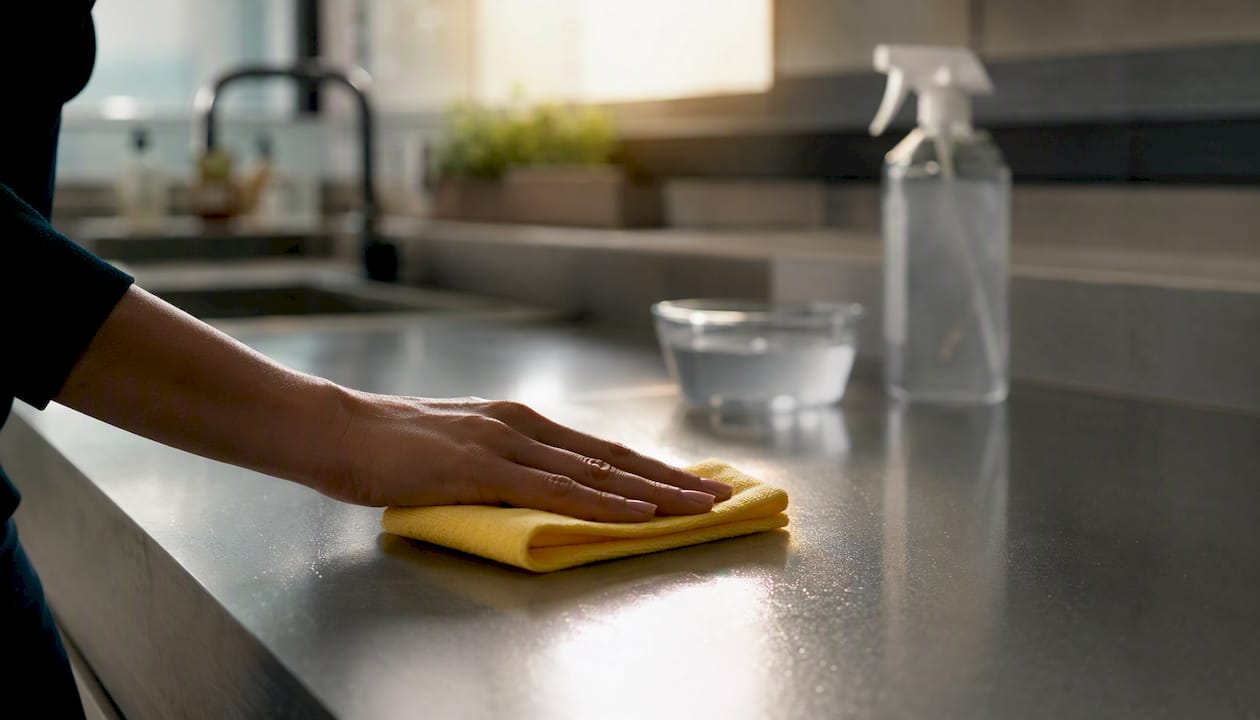
After cleaning, dry and apply a very thin layer of food-grade mineral oil with a clean cloth. This layer reduces the adherence of new fingerprints and facilitates future cleanings. Avoid vegetable oils, which can go rancid and attract more dirt.
Never use abrasive metal sponges or steel wool. Besides scratching, they leave iron particles that rust on the surface. The Revista Casa e Jardim confirms that neutral detergent and microfiber are sufficient for the routine; for ingrained stains, baking soda paste is the safest alternative.
How to Safely Remove Limescale and Water Stains
Limescale is the silent enemy of stainless steel in hard water areas. Mineral deposits do not damage the metal directly but create irregularities where moisture gets trapped.
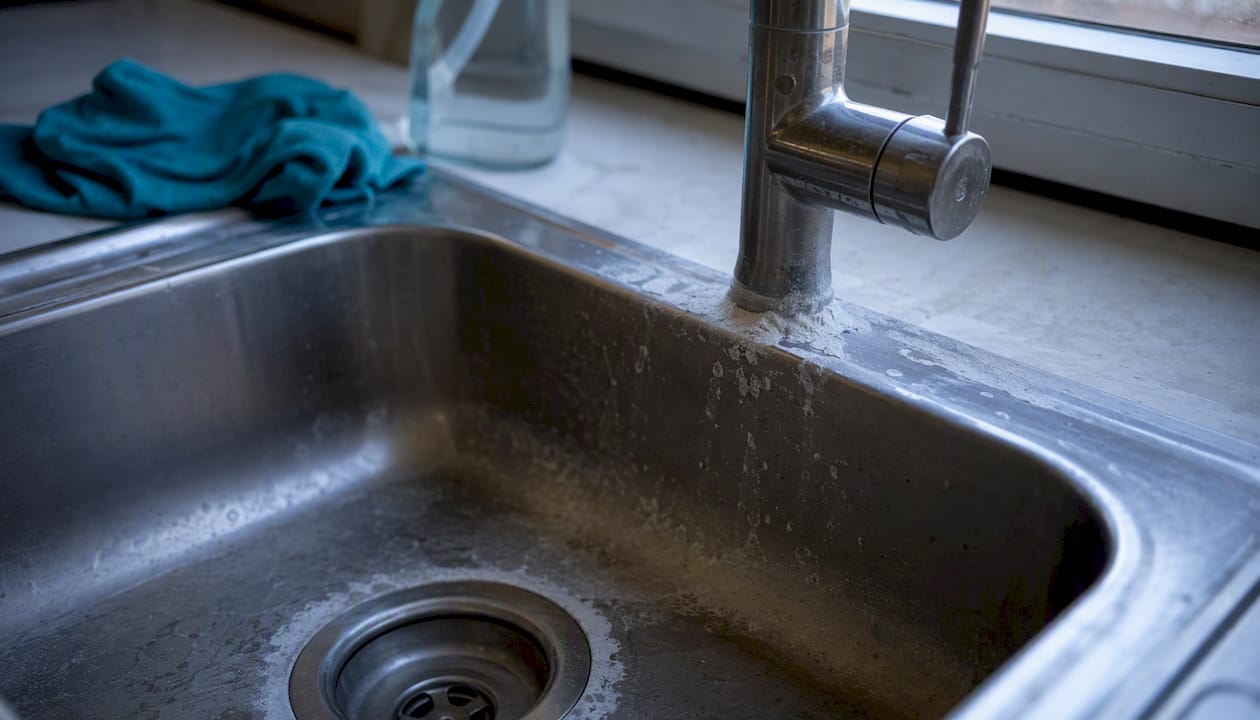
Vinegar Solution: White vinegar works for limescale if diluted in the ratio of 80% water to 20% vinegar. Apply with a cloth, wait two to three minutes, and rinse immediately. Pure acetic acid or prolonged contact can attack the passive layer.
Alternatives to Vinegar:
- Mild cleaning creams without abrasives (check the label)
- Baking soda paste for localized stains
- Specific detergents for stainless steel with neutral pH
What Not to Do:
- Concentrated industrial descalers
- Products with bleach or chlorine compounds
- Pure vinegar without dilution
- Leave any acidic product in contact for more than five minutes
After removing the limescale, always dry with a dry cloth. Immediate drying is the most effective measure to prevent new mineral deposits, especially in areas with hard water like Lisbon.
How to Treat Difficult Stains, Oxidation, and Rust Spots
Not every brown stain on stainless steel is rust from the metal itself. Often it is external iron contamination, such as particles from a steel sponge used by mistake.
Intervention Sequence:
- Start with neutral detergent and microfiber. If the stain yields, the job is done.
- If it persists, apply baking soda paste with a soft cloth, in the direction of the grain.
- For more resistant stains, a specific product for stainless steel with oxalic or phosphoric acid may be necessary. Use with gloves, ventilate the area, and rinse thoroughly.
- If the stain does not yield after these steps, or if you notice small cavities (pitting) on the surface, stop.
How to Distinguish the Type of Stain:
- Brown superficial stain that comes off with a soft scrub: external iron contamination.
- Stain that remains after cleaning and has irregular edges: possible onset of pitting.
- General loss of shine after contact with a chemical product: attack on the passive layer.
When there is visible pitting or loss of shine due to chemical attack, chemical repassivation or replacement of the part are the only solutions. The technical manual from Atlas Steels confirms that products with chlorides can cause pitting and that immediate rinsing is mandatory when these products are mistakenly used.
How to Polish and Protect the Shine of Stainless Steel
Polishing stainless steel is not just aesthetic. A protective layer reduces dirt adherence and facilitates future cleanings.
Safe Options:
- Food-grade mineral oil: ideal for surfaces in contact with food. Apply with a clean cloth, in a very thin layer.
- Light paraffin-based waxes or neutral silicone sprays: suitable for appliances and decorative surfaces.
- Specific stainless steel polishes (such as those from the Würth line for stainless steel or Pro-Inox/Prosam): formulated to restore shine and leave a protective layer.
Application Steps:
- Clean and dry the surface completely.
- Apply a minimal amount of product to the cloth, not on the surface.
- Distribute in the direction of the grain.
- Remove excess with a clean dry cloth.
Avoid products with aggressive solvents on surfaces that come into direct contact with food. The protection generally lasts four to eight weeks under normal domestic use; in high-use areas, reapplying monthly is reasonable.
What Tools and Products Are Available in the European Market
Choosing the right tools saves time and avoids damage. These are the materials worth having at home:
Tools:
- 3M Scotch-Brite Microfiber Cloths: the most accessible reference for scratch-free cleaning. They absorb well and do not leave fibers.
- Non-abrasive sponges: for applying paste products without scratching.
- Soft-bristled plastic brushes: useful for joints and corners.
- Plastic spatulas: for removing dry residues without metal contact.
Products:
- Neutral detergents pH 6–8 (check the label): the base of any routine.
- Specific degreasers for stainless steel without chlorides: Würth offers a line of stainless steel cleaners available at industrial distributors and online in Portugal.
- Stainless steel polishes: Pro-Inox and Prosam are brands distributed in Central Europe, formulated to restore shine and protect.
- Rust removers based on oxalic acid: use with caution, gloves, and thorough rinsing.
Professional Tip: When buying any product for stainless steel, look for the label: “chloride-free,” pH between 6 and 8, and “compatible with food use” when the surface contacts food. Products that meet these criteria have controlled pH and are safe for regular use.
Affordable homemade alternatives: diluted vinegar (20%), baking soda paste, and pharmacy-grade mineral oil cover most situations without high cost.
What Precautions to Take with pH, Chlorides, and Abrasives
The passive layer of stainless steel is thin and invisible. Wrong products destroy it in minutes.
What Damages Stainless Steel:
- Products with chlorides (bleach, some multi-purpose detergents): cause pitting even in low concentrations.
- Metal abrasives (steel wool, metal sponges): scratch and contaminate with iron particles.
- Strong acids and strong bases (caustic soda, hydrochloric acid): attack the passive layer irreversibly.
- Prolonged contact with any product, even mild: immediate rinsing is always the rule.
The industrial guides from Atlas Steels are clear: when using products with chlorides by mistake, immediate rinsing is mandatory to avoid pitting. The Solipro recommends products with pH between 6 and 8 for regular use on stainless steel surfaces.
Recommended Protective Equipment:
- Rubber gloves for acidic or concentrated degreasing products.
- Adequate ventilation when using solvents or rust removers.
- Thorough rinsing after any product other than neutral detergent.
Before using a new product, always test in a discreet area and wait a few minutes. If the surface changes color or loses shine, do not continue.
When to Hire a Cleaning Company
There are situations where the DIY method is not enough. Recognizing them in time prevents permanent damage.
Scenarios to Call a Professional:
- Visible pitting (small cavities) on the surface.
- Stains that do not yield after the methods described above.
- Large areas of stainless steel (industrial kitchens, extensive countertops, built-in appliances).
- Post-construction or post-renovation cleaning, where there are residues of cement, paint, or solvents.
- Stainless steel in outdoor areas exposed to sea salt or pollution.
Price Guidance in Domestic Context (Lisbon):
A domestic cleaning visit focusing on stainless steel surfaces and appliances generally ranges between 60 and 120 EUR, depending on the area, the condition of the surfaces, and included extras. A deep cleaning with treatment for difficult stains and post-renovation may exceed this amount, especially if it includes repassivation or treatment of localized corrosion.
Checklist for Requesting a Quote:
- Description of the problem and location of the stains.
- Photographs of the affected surfaces.
- Type of stainless steel finish (polished, brushed, matte).
- History of products already applied.
- Indication if repassivation is needed.
Cleaningpoint offers deep cleaning and post-renovation cleaning in Lisbon, with a specialized team and detailed checklists. To schedule, simply access the scheduling page.
Why Proper Cleaning Matters: Technical Fundamentals
Stainless steel does not rust by itself under normal conditions. Its corrosion resistance depends on a passive layer of chromium oxide, just a few nanometers thick, which continuously regenerates in contact with oxygen. When dirt, grease, or iron contamination covers the surface, they block that contact and prevent repassivation.
The technical manual from the World Stainless Association confirms that periodic cleaning and removal of iron contamination are necessary to maintain maximum corrosion resistance. It is not just about aesthetics: a dirty surface is a more vulnerable surface.
Recommended Cleaning Frequency by Environment:
| Environment | Minimum Recommended Frequency |
|---|---|
| Domestic Kitchen (daily use) | Weekly |
| Bathroom | Biweekly |
| Urban Exterior | Monthly |
| Coastal Exterior (sea salt) | Weekly |
| Industrial or Polluted Area | Weekly |
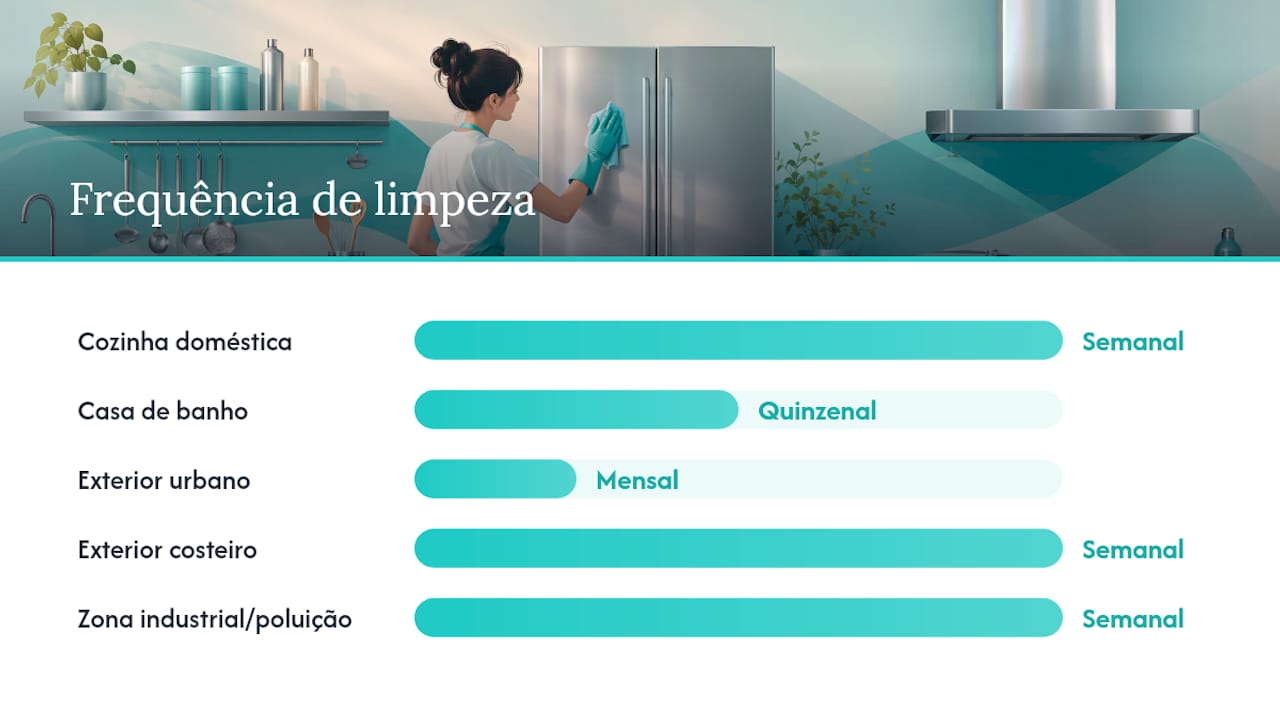
For surfaces in contact with food, cleaning after each use is the norm. In coastal environments, like many areas of Lisbon, the frequency should be higher because the sodium chloride from sea air accelerates corrosion.
An Honest Perspective on Stainless Steel Cleaning
The most common mistake I see in homes is using the wrong product with the best intentions. Someone buys a multi-purpose spray "for the kitchen," does not read the label, and applies it to a stainless steel fridge. Three weeks later, stains appear that won't come off. The product contained chlorides.
The second trap is using too much product. More is not better. A drop of neutral detergent on a damp cloth is enough for an entire fridge door. Those who apply product directly to the surface and scrub hard are working against themselves: they create residues that attract more dirt and can leave marks.
What really works is simple: gentle method, direction of the grain, always dry. Ninety percent of household problems are solved this way. The other ten percent, those involving pitting or chemical attack, need professional assessment. Trying to resolve pitting with more aggressive products at home is the quickest way to turn a repairable problem into permanent damage.
Cleaningpoint: Professional Stainless Steel Cleaning in Lisbon
When the stainless steel in your kitchen or appliances needs more than the weekly routine, Cleaningpoint takes care of it for you. The deep cleaning service includes treatment of stainless steel surfaces, built-in appliances, countertops, and post-renovation areas, with chloride-free products and technicians who know the difference between a limescale stain and the onset of pitting.
Busy families in Lisbon hire Cleaningpoint to avoid wasting time on difficult stains or risking damage from the wrong product. The team works with detailed checklists, multilingual support, and a digital report after each visit. To find out what is included in each service, check the services page. To book directly, access Cleaningpoint.
Sources
The recommendations in this article are based on technical guides from industry associations and manufacturer manuals. These sources are useful for anyone wanting to delve into the technical fundamentals of stainless steel maintenance or verify safety recommendations:
- World Stainless Association
- Comment nettoyer — entretien cuisine inox
- TN5 — Cleaning, care & maintenance of stainless steels (Atlas Steels)
- Solipro — hygiene en cuisine: comment entretenir efficacement vos surfaces en inox
- How to clean stainless steel appliances without compromising their shine — Revista Casa e Jardim
Frequently Asked Questions
How do you clean stainless steel correctly?
Clean with a damp microfiber cloth and neutral detergent (pH 6–8), always in the direction of the finish, rinse, and dry immediately. This method preserves the passive layer and avoids marks.
Can I clean stainless steel with vinegar?
Yes, but only diluted: 80% water to 20% white vinegar. Apply, wait two to three minutes, and rinse immediately. Pure vinegar or prolonged contact can attack the surface.
How to clean stainless steel to make it shine?
After the usual cleaning, apply a very thin layer of food-grade mineral oil or a specific stainless steel polish (such as those from the Würth or Pro-Inox lines) with a clean cloth in the direction of the grain and remove the excess.
How much does a cleaning company charge to treat stainless steel?
In Lisbon, a domestic visit focusing on stainless steel and appliances generally ranges between 60 and 120 EUR; a deep post-renovation cleaning may exceed this amount depending on the area and condition of the surfaces. Cleaningpoint offers personalized quotes at Cleaningpoint.
When should I call a professional to clean stainless steel?
When there is visible pitting, stains that do not yield to gentle methods, or after construction with residues of cement or solvents. Trying to resolve pitting at home with more aggressive products can turn a repairable problem into permanent damage.


