Lamp Cleaning: When to Do It Yourself and When to Call a Professional

Yes, most household lamps can be safely cleaned at home. Antique lamps, degraded wiring, or pieces of historical value require a professional. Cleaning glass or crystal lamps usually takes between 20 and 40 minutes per piece; a large ceiling chandelier may require two people and about an hour.
- Can do it yourself: modern floor or table lamps with wires in good condition.
- Call a professional: cracked wires, poor contact, collectible pieces, or lamps over 30 years old without inspection.
- Electrical risk not to ignore: never clean with the lamp plugged in, even if it appears to be off.
Key Takeaways
Cleaning lamps is safe to do at home for most modern models, but degraded wires, antique pieces, or those of historical value always require a qualified professional.
| Point | Details |
|---|---|
| Always cut the power first | Turn off at the circuit breaker and let the bulbs cool before touching the lamp. |
| Use the right product for the material | Crystal requires a specific spray like HG Crystal Chandelier Cleaner; brass requires warm water and caution with WD‑40. |
| Warning signs require a professional | Cracked wires, overheating, or collectible pieces justify rewiring by a qualified technician. |
| Keep a simple schedule | Monthly dusting, semi-annual intermediate cleaning, and annual deep cleaning extend the life of the lamp. |
| Cleaning Point integrates this care | In deep cleans in Lisbon, the team handles lamp cleaning as part of the regular service. |
Index
- Quick Steps for Cleaning Lamps at Home
- What Products to Use Depending on the Lamp Material
- How to Ensure Electrical Safety During Cleaning
- When It's Worth Hiring a Professional in Lisbon
- How Often to Clean Lamps to Keep Them in Good Condition
- What to Expect from a Trusted Professional Service
- Cleaning Point Takes Care of Lamp Cleaning Without Risk to You
- Sources
- Frequently Asked Questions
Quick Steps for Cleaning Lamps at Home
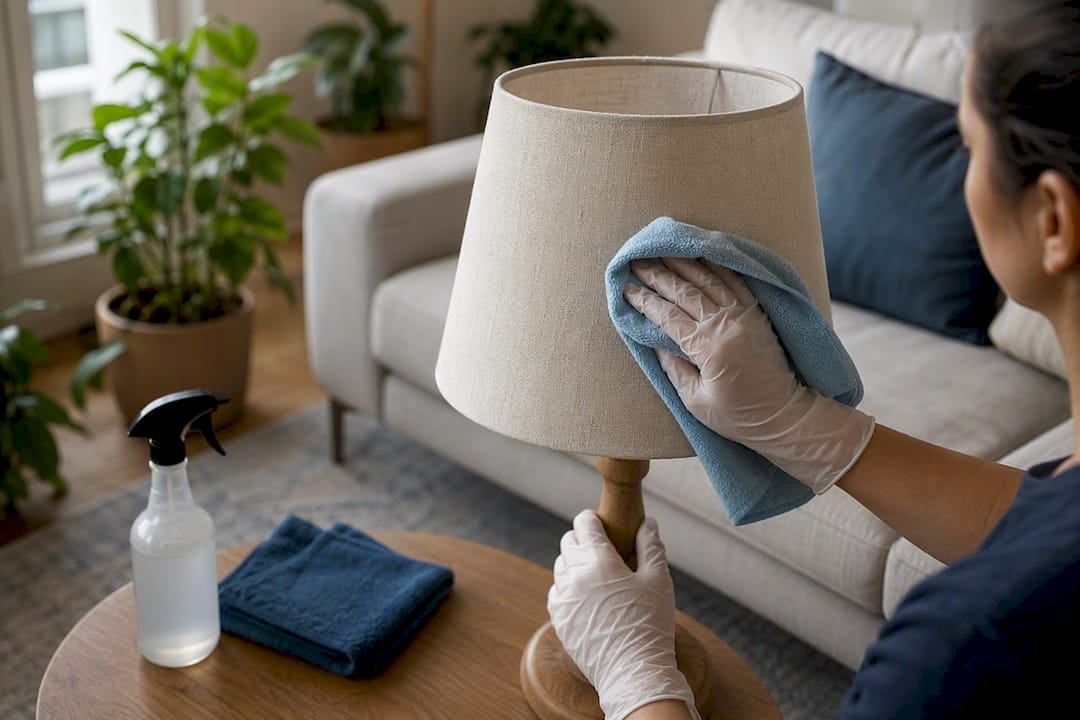
The sequence is simple: turn off, dust, clean, dry, test. It works for most living room, bedroom, or entryway lamps and does not require special tools.
- Turn off the power at the corresponding circuit breaker, not just at the wall switch.
- Remove cool bulbs and protect the sockets with a dry cloth before applying any product.
- Dust first dry, with a microfiber duster or soft brush, to avoid turning dust into paste.
- Clean with the right product for the material (see next section), always with a damp cloth, never soaked.
- Dry well and test the lighting only after everything is completely dry.
A typical living room lamp takes between 20 and 60 minutes, depending on the number of arms or pendants.
Professional Tip: always work from top to bottom, so loose dust falls onto pieces yet to be cleaned and not on those already finished.
What Products to Use Depending on the Lamp Material
Each finish requires a different treatment, and using the wrong product can stain or permanently devalue the piece. For crystal chandeliers, the most effective practice does not require complete disassembly: a specific spray is applied and allowed to run off onto a protective cloth on the floor, a technique also confirmed by Hagerty Portugal. The HG Crystal Chandelier Cleaner is one of the best-selling products in Portugal for this purpose, precisely because it allows this method without removing each pendant.
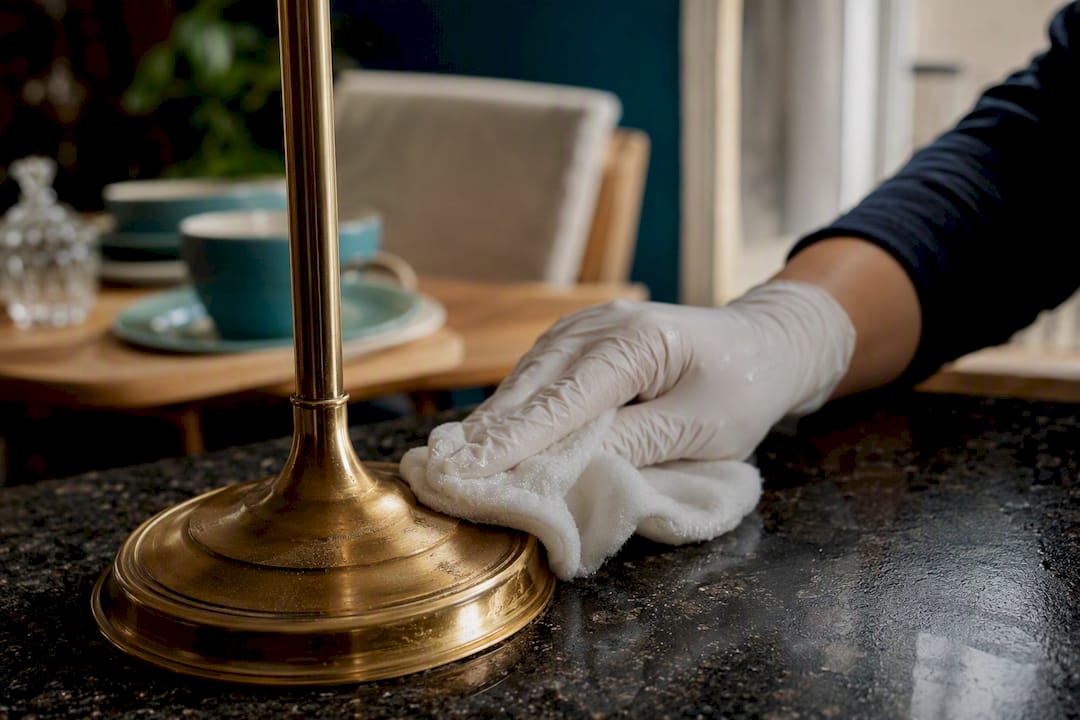
For brass, bronze, and gold finishes, warm water with neutral soap resolves most cases. WD‑40 Portugal is often recommended to add shine and loosen slight oxidation, but it's advisable to test in a hidden area first, as it may remove protective varnish on lacquered pieces.
| Material | Recommended Method | Product or Tool |
|---|---|---|
| Crystal and glass | Spray without disassembly, let run onto protective cloth | HG Crystal Chandelier Cleaner |
| Brass and bronze | Warm water with neutral soap, immediate drying | Soft cloth; WD‑40 in moderation |
| Stainless steel | Damp microfiber cloth, no abrasives | Neutral detergent |
| Fabric shades | Vacuum with soft brush, never wet | Clothing brush |
| Porcelain | Damp cloth, air dry | Distilled water |
Avoid ammonia on plastics and detergents with volatile organic compounds on LED fixtures, a recommendation found in the ETAP cleaning instructions to prevent stains and degradation of components.
How to Ensure Electrical Safety During Cleaning
Cut the power at the circuit breaker before touching any lamp, even if the switch appears to be off. Allow bulbs to cool for at least 15 minutes before removing them.
- Use a voltage tester to confirm there is no current before touching the wiring.
- Wear insulating gloves when handling ceiling or pendant lamps.
- Ensure a stable ladder, and for heavy or high ceiling lamps, ask for help from a second person.
- Never apply liquid directly onto sockets or electrical connections.
If you notice cracked insulation, blackened wires, or a burnt smell, stop immediately. In such cases, rewiring should be done by a qualified electrician, especially in older lamps where insulating materials no longer meet current standards.
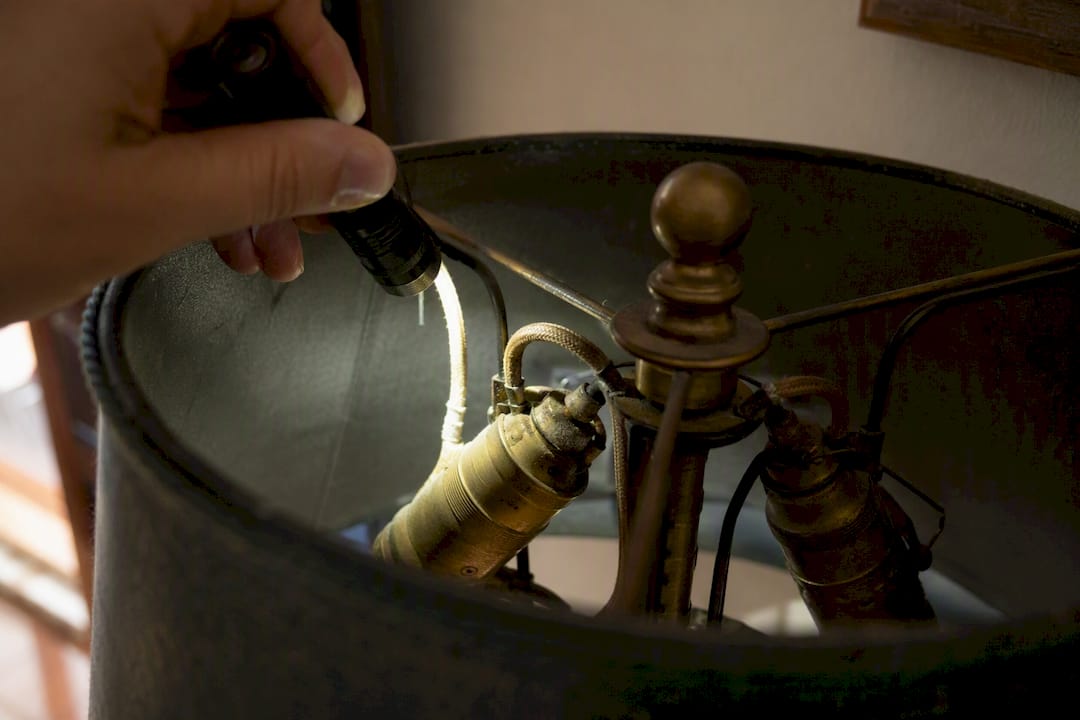
Professional Tip: keep a small flashlight near your work area: it illuminates dark areas inside shades and helps detect degraded wires before continuing cleaning.
When It's Worth Hiring a Professional in Lisbon
Some signs indicate, without a doubt, that the problem is no longer just cleaning. Old or cracked wires, intermittent poor contact, collectible lamps, or those of historical value, and micro-cracks in glass or crystal are objective reasons to call someone specialized. Antique pieces often require complete rewiring, an intervention that Mr-sailor describes as common in the conservation of this type of furniture, precisely to preserve the original patina without compromising safety.
- Wire visibly worn, cracked, or discolored near the plug.
- Lamp that heats more than normal during use.
- Family heirloom, antique, or chandelier with collectible value.
- Glass or crystal with fine cracks that may worsen with cleaning.
A simple professional cleaning generally costs less than a complete restoration intervention, but the price varies with the size of the lamp, the number of pieces, and the condition of the wiring. Before hiring, ask:
- What certifications or experience do you have with rewiring and restoration?
- Is the work guaranteed in writing?
- Are you insured for work at height or with electricity?
- Can you provide a detailed estimate before starting?
For classified or heritage-value pieces, consulting a conservator-restorer follows formal technical procedures described by the ARP, including prior assessment and technical report.
Professional Techniques That Avoid Disassembling the Lamp
The most commonly used trick by professionals on crystal chandeliers is to spray abundantly and let the dirt run off, protecting the lamp sockets beforehand. This approach, frequently applied in stores and exhibition spaces, avoids the risk of losing or breaking pendants during disassembly, and allows for a complete annual cleaning without disassembling the entire structure, as described in the Crystal Chandeliers guide.
- Always protect the sockets before spraying.
- Ensure complete drying before restoring power.
- Reserve complete disassembly for restoration, specialized polishing, or replacement of broken parts.
Professional Tip: if the lamp has more than 15 pendants, the spray method easily saves an hour of manual work piece by piece.
How Often to Clean Lamps to Keep Them in Good Condition
Three rhythms cover almost all domestic situations. A light monthly cleaning, with a microfiber duster, prevents dust accumulation that later turns into difficult stains. An intermediate cleaning every 3 to 6 months addresses kitchen grease or nicotine in high-use areas. An annual deep cleaning, with the material-specific method described above, maintains the original shine.
- Use energy-efficient bulbs that heat less and attract less dust by convection.
- Avoid cleaning in humid environments, especially on metal pieces.
- Conduct a quick inspection with a flashlight every six months, a common practice among professionals to detect cracks or corrosion before they worsen, according to RHEA Lighting.
- Monthly: light dusting.
- Quarterly to semi-annually: intermediate cleaning with the appropriate product for the material.
- Annually: deep cleaning and inspection of the wiring.
What to Expect from a Trusted Professional Service
A serious service always starts with a visual inspection, usually with a flashlight, to detect cracks, corrosion, or overheating points before touching any piece. Then comes dry cleaning, followed by specific treatment for the material and, when necessary, checking the wiring.
- Documented work checklist, with before and after photos.
- Team that knows how to distinguish between maintenance cleaning and conservative restoration.
- Report of what was done and recommendations for the next intervention.
To request a quote, have on hand the type of lamp, current photographs, approximate size, and, if known, the age of the piece or history of previous interventions.
Professional Tip: photograph the lamp disassembled piece by piece before any deeper cleaning: it facilitates reassembly and serves as proof in case of doubt about damage.
Preserve Instead of Over-Polishing
I have seen brass chandeliers lose value because someone decided to "make them look new" with aggressive polishing. The patina tells a story, and in antique pieces, it's worth preserving rather than erasing. The rule I follow is simple: clean dirt, never the age of the piece.
Cleaning Point Takes Care of Lamp Cleaning Without Risk to You
If you prefer not to risk old wiring or hard-to-reach ceiling lamps, Cleaning Point handles this within a deep cleaning in Lisbon, without needing to hire a separate service just for the lamps.

Our services include dusting, cleaning by material, and visual safety checks during a normal deep cleaning, with a fixed team and detailed checklist by division. For more delicate lamps or valuable collections, we always recommend a conservator-restorer, but regular and deep cleaning is integrated into your home maintenance plan, with no hidden costs. If you already have a recurring cleaning routine, lamps are included in the regular home care without needing extra scheduling.
Request a quote indicating the number of lamps, the type of material, and if there are any antique pieces in the house. You can book a cleaning directly online and choose the extras that make sense for your home in Lisbon.
Sources
- ETAP — Cleaning Instructions for Fixtures (PT)
- Mr-sailor — Antique Lamps
- HG — HG Crystal Chandelier Cleaner
- ARP — Conservation and Restoration Procedures (technical document)
Frequently Asked Questions
Can I clean a crystal chandelier without disassembling it?
Yes. Specific sprays like HG Crystal Chandelier Cleaner allow you to spray and let the dirt run off onto a protective cloth, without removing each pendant.
Is it safe to use WD‑40 on brass lamps?
It can be used in moderation to add shine, but always test in a hidden area, as it may remove protective varnish on lacquered pieces.
When should I hire a professional instead of cleaning it myself?
When you find cracked wires, overheating, micro-cracks in glass, or have an antique lamp of historical value that needs rewiring.
How often should I clean the lamps in my home?
A light monthly dusting, an intermediate cleaning every 3 to 6 months, and an annual deep cleaning keep the lamp in good condition.
Does Cleaning Point clean lamps as part of home cleaning?
Yes, lamp cleaning is included in deep cleans and regular home care plans from Cleaning Point in Lisbon.


