Switch Cleaning: How to Clean Safely at Home
This sequence addresses the overwhelming majority of cases without any electrical risk.
Essential steps:
- Turn off the corresponding circuit breaker in the electrical panel
- Confirm absence of voltage with a non-contact tester
- Clean the surface with a well-wrung cloth or cotton swab with 70% alcohol
- Dry completely before turning the power back on
- Test the switch after reconnecting
When not to clean and call an electrician: if the switch is warm to the touch, makes crackling sounds, has a burnt smell, or shows dark discoloration, stop immediately. These signs indicate an electrical problem, not dirt.
Key Takeaways
Safe switch cleaning always starts at the electrical panel: turning off the circuit breaker and confirming with a non-contact tester are the two steps that make everything else safe.
| Point | Details |
|---|---|
| Turn off before cleaning | Always cut the circuit breaker and confirm with a non-contact tester before touching the switch. |
| Damp cloth, not soaked | Use a well-wrung microfiber cloth or cotton swab with 70% alcohol; never spray directly. |
| Dry completely | Wait 10–15 minutes after using alcohol before turning the power back on. |
| Signs to stop | Burnt smell, heat, crackling, or dark discoloration require an electrician, not cleaning. |
| Cleaning Point in Lisbon | For deep cleaning with a detailed checklist and trained team, book the service. |
Index
- What do you need to clean switches safely?
- How to clean a light switch step by step, without electrical risks
- When does it make sense to clean the internal contacts?
- Special types of switches: painted, tactile, smart, and multi-modules
- How to clean sockets safely: the differences that matter
- What signs indicate you should stop and call an electrician?
- When is it worth hiring a professional service?
- My perspective on preventive maintenance
- Cleaning Point takes care of the details you usually postpone
- Sources
- Frequently Asked Questions
What do you need to clean switches safely?
Before touching any switch, gather the right materials. Improvising with what's on hand is the quickest way to damage the finish or, worse, create an electrical hazard.
Cleaning materials:
- Soft microfiber cloths (do not leave fibers or scratch)
- Cotton swabs for corners and crevices
- Soft sponge without an abrasive side
- Neutral detergent diluted in warm water
- 70% isopropyl alcohol for sanitizing and disinfection
- Diluted white vinegar (for accumulated grease)
- Paste bicarbonate (for yellowed plastics)
Tools and PPE:
- Non-contact voltage tester (essential before any intervention)
- Thin rubber gloves
- Screwdriver to remove the plate, when necessary
Non-negotiable safety warnings:
- Never use a soaked cloth. A damp cloth means that when wrung, no drop falls
- Never spray product directly on the switch.
- Keep alcohol away from flames or heat sources while working.
Thus, a quick monthly cleaning requires no preparation and can be done in two minutes.*
How to clean a light switch step by step, without electrical risks
The correct procedure, confirmed by specialized technical guides, always starts at the electrical panel, and never at the switch itself.
Safety checklist before starting:
- Electrical panel identified and accessible
- Non-contact voltage tester available and with batteries
- Dry work area
- Well-wrung cloth ready (not soaked)
Step by step:
- Turn off the circuit breaker for the circuit that powers the switch. If you don't know which it is, turn off the main circuit breaker.
- Confirm with the non-contact tester that there is no voltage. Bring the device close to the switch without touching. Only proceed when the signal is negative.
- Prepare the cleaning solution. For common dirt, neutral detergent in warm water. For disinfection, 70% alcohol on a microfiber cloth. For grease, diluted white vinegar. For yellowed plastic, paste bicarbonate applied with a cotton swab.
- Clean the face of the switch with the well-wrung cloth, using gentle movements. Use cotton swabs for the side crevices and around the button. Do not soak.
- Remove the outer plate with a screwdriver, if necessary for a more thorough cleaning. Take a photo of the position before disassembling.
- Dry completely. Wipe with a dry cloth and let air for 10–15 minutes, especially if you used alcohol.
- Reassemble the plate and reconnect the circuit breaker. Test the switch.
Professional tip: After using alcohol, always wait 10–15 minutes before reconnecting. Alcohol evaporates quickly, but in closed spaces, it can accumulate. Complete drying is the only real guarantee of safety.
When does it make sense to clean the internal contacts?
Surface cleaning resolves almost everything. Opening the switch to access the internal contacts is only justified in specific situations, and the procedure requires more care.
Criteria for considering internal cleaning:
- Visible dirt inside the box after infiltration or construction
- Contact failures: switch hesitates, makes noise when activated, or works intermittently
- Visible oxidation on terminals after visual inspection with the plate removed
When these signs are present, quick-drying dielectric contact cleaning sprays are the right tool. They leave no conductive residues and are used by professionals precisely because they evaporate without compromising insulation. WD-40 Specialist Contact Cleaner is an example available in Portugal.
Safe procedure for internal contacts:
- Turn off the circuit breaker and confirm with a non-contact tester
- Take a photo of the wire and plate positions before disassembling
- Apply the contact cleaner spray through the nozzle, at the distance indicated on the packaging
- Wait for complete drying before reassembling and reconnecting
- Never use common solvents (acetone, thinner) — they attack plastic and leave residues
Attention: if upon removing the plate you find loose wires, blackened terminals, or signs of electrical arcing, do not continue. Reassemble the plate without reconnecting and call a qualified electrician. Cleaning damaged contacts does not resolve the underlying problem — it may worsen it.
Special types of switches: painted, tactile, smart, and multi-modules
Not all switches are cleaned the same way. Some finishes and technologies require adjustments to the standard procedure.
Switches with painted finishes:
- Always test the cleaning product on a discreet area before applying it to the entire surface.
- Avoid abrasives and concentrated vinegar. Acid can attack paints and varnishes.
- Prefer warm water with neutral detergent and a very soft cloth.
Stuck switches or loose buttons:
- Do not force. A switch that does not fit or wobbles may have a broken mechanism.
- Turn off the power, visually inspect, and if the problem persists, replace the module. Forcing may damage the internal wiring.
Tactile switches and smart switches:
- Clean only the glass or plastic surface with a dry or slightly damp microfiber cloth.
- Never open the module. The internal electronics do not tolerate moisture or manual cleaning.
- Consult the manufacturer's manual before using any liquid. Some models have specific coatings that alcohol may degrade.
Multi-modules (two or three switches on the same plate):
- Clean one button at a time, drying completely before moving to the next.
- Only reconnect the circuit breaker when the entire plate is dry and reassembled.
How to clean sockets safely: the differences that matter
Cleaning sockets follows the same logic as switches, but the risk is higher because the slots are exposed. A drop of water in the wrong place can cause a short circuit or shock.
What to do:
- Always turn off the circuit in the panel before any cleaning
- Clean only the outer plate with a damp cloth or 70% alcohol
- Use cotton swabs only on the outer edge of the socket, never in the slots
- Dry completely before reconnecting. There is no rush that justifies reconnecting with moisture
What never to do:
- Insert objects into the slots to clean inside
- Wash the plate with running water
- Spray product directly into the socket
If you need deeper cleaning, remove the outer plate with a screwdriver after turning off the circuit, photograph the wire positions, clean the plate separately, and dry before reassembling. The internal contacts of the socket should never be touched without specific electrical training.
What signs indicate you should stop and call an electrician?
Some problems look like dirt but are faults. Recognizing the difference can prevent an accident.
Stop immediately if you notice:
- Burnt smell or melted plastic near the switch
- Switch warm to the touch (temperature above normal is always a sign of a problem)
- Crackling or sparks when activated
- Intermittent operation without apparent reason
- Dark or yellowed discoloration that does not come off with cleaning
Immediate actions:
- Turn off the circuit breaker for the circuit and do not turn it back on
- Isolate the area and do not use the switch
- Contact a certified electrician
Signs that the switch needs replacement, not cleaning:
- Loose or misfitting mechanism
- Contacts visibly corroded
- Switch with advanced age without recorded maintenance
When is it worth hiring a professional service?
There are situations where DIY cleaning is not the safest or most efficient choice. Unknown circuit, signs of failure, post-construction cleaning with dust accumulated at electrical points, or simply the preference not to mess with electrical installations are valid reasons to delegate.
What to expect from a good professional service:
- Turn off circuits before any non-invasive intervention
- Use of microfiber cloths, appropriate alcohol, and professional cleaning tools
- Checklist by room that includes switches, doorknobs, and other frequently contacted points
- Final report and testing of cleaned points
- Identification of points needing electrical attention (and referral to an electrician, if necessary)
A residential cleaning service with detailed packages typically includes these points in a deep clean, something that Cleaning Point offers in Lisbon with a trained team and verifiable checklist.
My perspective on preventive maintenance
What surprises me most is the frequency with which switches are ignored in household cleaning routines. They are touched dozens of times a day, accumulating grease, bacteria, and dust, and rarely appear on the weekly task list. When someone finally cleans them, the dirt is already ingrained, and the plastic may be permanently yellowed.
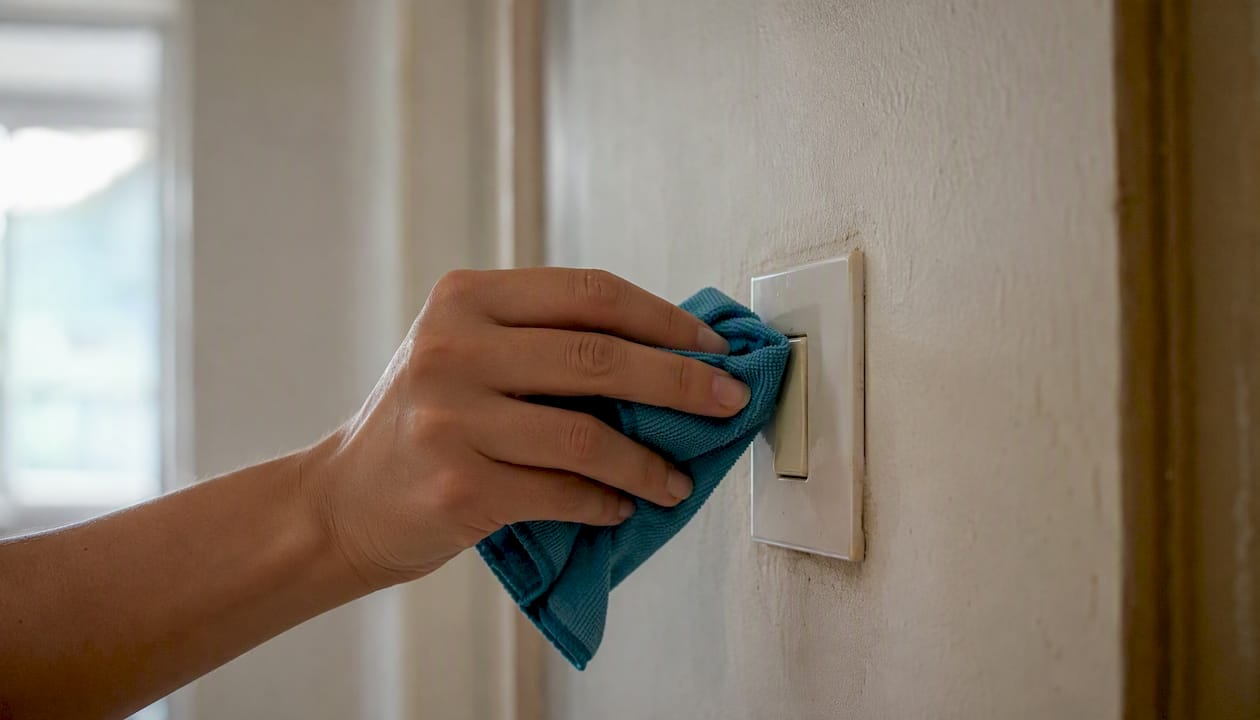
Preventive maintenance does not require much. A more careful cleaning every three months, paying attention to crevices and the plate, keeps the appearance and prevents accumulation that later requires more aggressive products. What costs more is the habit of including switches in the routine, not the work itself.
Cleaning Point takes care of the details you usually postpone
Switches, doorknobs, baseboards, ceiling corners. These are the points everyone notices when they are dirty and no one notices when they are clean. Cleaning Point does exactly this work in Lisbon: premium domestic cleaning with a detailed checklist, consistent team, and attention to points that a quick clean does not cover.

For those who prefer not to risk electrical installations or simply want a thorough cleaning done rigorously, the Signature deep clean includes all contact points, surfaces, and details of the house. No improvisation, no wrong products, no forgetfulness. Book your cleaning and receive a service that makes a difference in the details.
Sources
Before using any product or opening a switch, it is worth confirming the recommendations from manufacturers and technical guides:
- How to properly clean electrical contacts of equipment? — WD-40 Portugal
- Step-by-step guide: how to clean light switches — IGOTO
- Cleaning tips | How to clean switches and sockets safely - Homify
- How to clean sockets and light switches? — Seu Domingos Eletricista
For smart switches and dimmer switches, always consult the manufacturer's manual before using any liquid. Prefer dielectric products for any cleaning involving internal contacts.
Frequently Asked Questions
How to clean electrical sockets safely?
Never insert objects into the slots or use running water on the plate.
How often should I clean switches?
A more thorough cleaning, with removal of the plate and attention to crevices, is recommended every three months.
Can I use common cleaning products on switches?
Avoid abrasive products, concentrated bleach, and solvents like acetone, which attack plastic and can damage painted finishes.
When should I replace a switch instead of cleaning it?
When the mechanism is loose, the contacts are corroded, or the switch shows heat, crackling, or burnt smell. These signs indicate an electrical fault that cleaning does not resolve.
What does a professional deep cleaning include?
A deep clean covers surfaces, contact points like switches and doorknobs, appliances, baseboards, and areas typically ignored in regular cleaning, following a detailed checklist by room.


