Marble Cleaning in Lisbon: When to Call Professionals

In summary:
- Regular maintenance of marble should include daily cleaning with neutral products and professional visits every six months. Acidic products like vinegar and lemon should be avoided as they deteriorate the stone, and specialized intervention should be requested when deep stains, scratches, or loss of shine occur. Crystallization is a chemical process that requires appropriate equipment and humidity control to prevent stains and irreparable damage.
To preserve marble, the practical rule is simple: daily home maintenance with pH neutral products and a deep professional intervention twice a year. Wipe with a slightly damp microfiber cloth, dry immediately to avoid water marks and mineral deposits, and never use vinegar, lemon, or abrasive products. The Natural Stone Institute confirms that immediate drying is mandatory to preserve the surface.
When to call a professional without hesitation:
- Deep stains that do not come out with gentle cleaning
- Widespread loss of shine or dull appearance across the surface
- Visible pronounced scratches to the naked eye
- Mineral deposits or accumulated limescale
- Any situation requiring crystallization or technical polishing, as attempting these processes without appropriate equipment almost always causes irreparable damage
Index
- What you need to know before hiring
- How the Cleaning Point team approaches marble
- Cleaning Point in Lisbon: services and how to book
- Key takeaways
- The maintenance that no one mentions
- Frequently asked questions
What you need to know before hiring
Four points that make a difference in the decision:
- Home maintenance vs. professional service: at home, the goal is to remove surface dirt with a microfiber mop and neutral solution. A professional uses polishers, crystallizers, and penetrating sealants that fill the pores and facilitate future cleanings. Homemade oily waxes do the opposite: they retain dirt and reduce shine.
- What to never use: vinegar, lemon, bleach, and steel wool. Marble is rich in calcium carbonate and reacts poorly to any acidic or abrasive product, with visible corrosion after just a few uses.
- Questions to ask before hiring: does the company have liability insurance? Do they have documented experience with marble? Do they provide a work checklist and before/after photos? What is the correction policy if something goes wrong?
- Time and frequency: a professional intervention in a typical residence takes between 2 and 4 hours, depending on the area and condition of the marble. Periodic professional maintenance is recommended, with greater frequency in homes with heavy traffic.
How the Cleaning Point team approaches marble
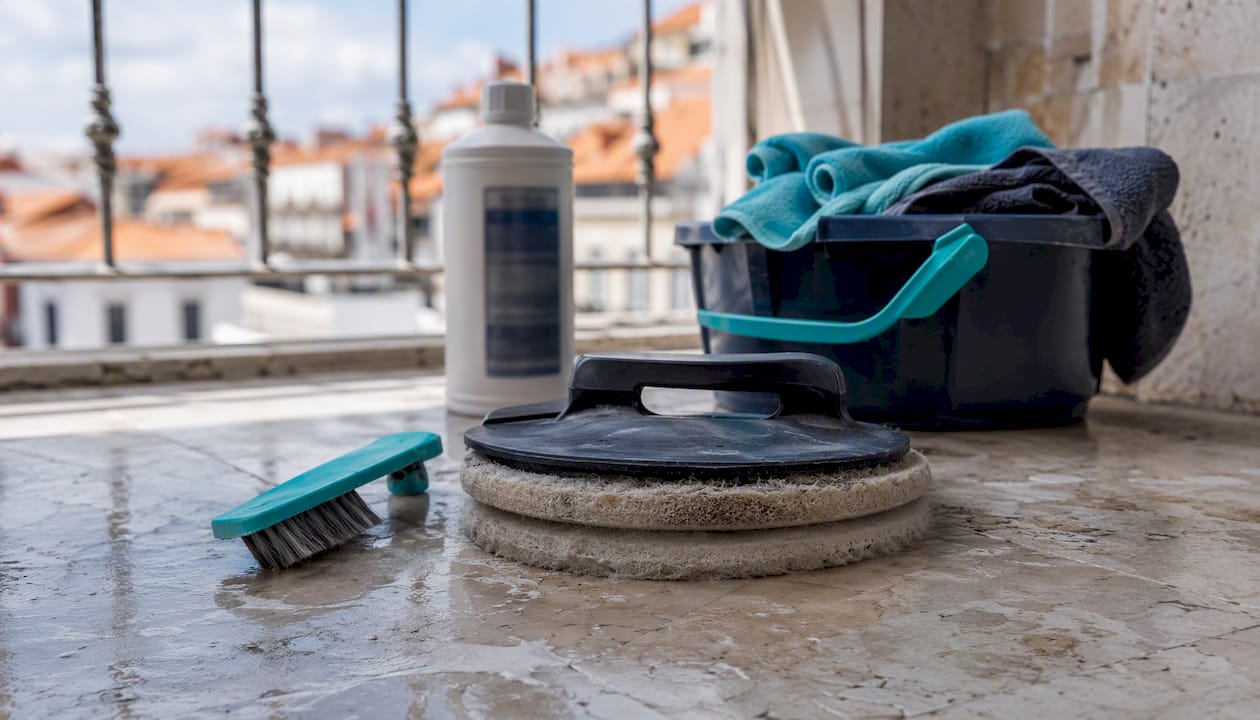
The approach always begins with diagnosis: the condition of the stone determines whether the visit is for maintenance or restoration. Surfaces with intact sealant and no deep stains are resolved with professional cleaning and preventive reapplication of the sealant. When there is loss of shine or scratches, crystallization comes into play, a chemical-mechanical process that uses single-disc machines with fluorosilicates and requires precise dosing.
Humidity management during the process is as important as the product used. Excess water seeps into the pores, degrades the sealant, and can stain the stone. Therefore, the team controls application and drying at each stage.
Professional tip: before any technical visit, remove rugs and objects from marble surfaces. This facilitates access and reduces service time.

Clients receive a detailed checklist of the work performed, before/after photos, and multilingual support. The correction policy is clear: if the result does not match what was agreed, the team returns at no additional cost.
Cleaning Point in Lisbon: services and how to book

For marble surfaces in Lisbon residences, Cleaning Point offers two levels of intervention: regular maintenance with surface cleaning and sealant check, and deep cleaning with polishing, crystallization, and reapplication of penetrating sealant. The price varies according to the area, the condition of the marble, and the type of intervention. Extras such as reapplication of sealant or treatment of specific stains are added to the service as needed.
To book, visit the booking page and indicate the type of surface, approximate area, and visible condition. The team confirms availability and sends a proposal. There are no mandatory long-term contracts.
Key takeaways
Proper marble maintenance combines daily home routine with neutral products and semi-annual professional intervention with specialized equipment.
| Point | Details |
|---|---|
| Recommended frequency | Daily home maintenance and professional intervention twice a year. |
| Prohibited products | Vinegar, lemon, bleach, and abrasives corrode the calcium carbonate in marble. |
| Penetrating sealant | Preferable to oily waxes; fills the pores and facilitates future cleanings. |
| Signs to call a professional | Deep stains, loss of shine, scratches, or visible mineral deposits. |
| Cleaning Point | Offers regular maintenance and deep cleaning with checklist, before/after photos, and correction guarantee in Lisbon. |
The maintenance that no one mentions
There is a recurring pattern: the client takes good care of the marble for months; then uses the wrong product once, and the damage is immediate. The acid in vinegar does not give a warning before corroding. The real problem is not a lack of care, but a lack of information about what the stone tolerates.
What generic guides rarely mention is that the relationship between home cleaning and professional service is complementary, not substitutive. Inadequate home maintenance accelerates wear and increases the cost of professional restoration. Those who maintain a correct routine between professional visits save money in the medium term because the necessary intervention is smaller.
Crystallization, in particular, is a service that seems simple but is not. Incorrect dosing or inadequate equipment leaves irregular stains that require additional polishing to correct. Hiring someone solely based on the lowest price, without checking experience with natural stone, is the most expensive mistake a homeowner can make.
Frequently asked questions
How often should I clean marble at home?
Wipe a damp microfiber cloth daily in high-traffic areas and vacuum solid particles before wetting the surface. Regular professional interventions are recommended for preservation.
Can I use vinegar to clean marble?
No. Vinegar is acidic and corrodes the calcium carbonate in marble, causing permanent stains and loss of shine. Only use pH neutral products specifically for natural stone.
How long does a professional marble cleaning take?
A professional intervention in a typical residence takes between 2 and 4 hours, depending on the total area and condition of the surface.
What does Cleaning Point's service for marble include?
Cleaning Point includes diagnosis, professional cleaning, reapplication of penetrating sealant when necessary, work checklist, before/after photos, and correction guarantee at no additional cost.
How do I know if my marble needs restoration or just maintenance?
If the loss of shine is widespread, there are visible scratches, or stains that do not come out with gentle cleaning, professional restoration with polishing or crystallization is necessary.