Spring Cleaning: Checklist and Plan for One Weekend

The most efficient spring cleaning follows a simple order: declutter first, always clean from top to bottom, and divide the work into time blocks by room. An intensive weekend is enough for most homes; those who prefer a calmer pace can spread tasks over 5 to 7 days. About 80% of people perform this cleaning annually, and evidence shows that the simple act of cleaning reduces anxiety and improves well-being.
The six-step plan, with time estimates:
- Declutter all rooms before picking up a cloth (1–2 h total)
- Ceilings, lamps, and fans — dust accumulates and falls down, so start here (30–45 min)
- Windows, curtains, and blinds — natural light and fresh air come in better quality (1–2 h)
- Deep kitchen clean — oven, extractor, fridge, and inside cabinets (2–4 h)
- Bedrooms — bedding, mattresses, and wardrobes (1.5–2 h per room)
- Floors throughout the house — vacuum and scrub as the final step (1–2 h)
For those who prefer to delegate, Cleaning Point offers deep cleaning in Lisbon with a detailed checklist and professional team.
Index
- What is the best calendar for spring cleaning?
- Checklist by room: what to clean in each area
- How to declutter before cleaning (and do it right)
- What tools and products to use for deep cleaning?
- Does spring cleaning benefit health?
- How to keep the house clean after deep cleaning
- When does it make sense to hire a professional?
- Key takeaways
- Spring cleaning works because it changes the relationship with space
- Cleaning Point takes care of deep cleaning for you, in Lisbon
- Useful sources and cited studies
- Frequently asked questions
What is the best calendar for spring cleaning?
The biggest trap is trying to do everything in one day. Dividing by zones and blocks avoids burnout and ensures each area gets enough attention.
Weekend Plan (2 days)
| Block | Tasks | Estimated Time |
|---|---|---|
| Saturday morning | Declutter living room and bedrooms; wash curtains and bedding | 2–3 h |
| Saturday afternoon | Deep kitchen clean (oven, extractor, fridge, cabinets) | 3–4 h |
| Sunday morning | Bathrooms; interior and exterior windows | 2–3 h |
| Sunday afternoon | Balcony/exterior; floors throughout the house; organize what’s left | 2–3 h |

Extended Plan (5–7 days)
| Day | Focus | Estimated Time |
|---|---|---|
| Monday | Declutter and sort clothes/objects | 1–2 h |
| Tuesday | Living room: ceilings, upholstery, windows, shelves | 2 h |
| Wednesday | Complete kitchen | 2–3 h |
| Thursday | Bedrooms: mattresses, wardrobes, bedding | 2 h |
| Friday | Bathrooms and laundry | 1.5 h |
| Saturday | Balcony, exterior, and general floor | 2 h |
Preparation checklist before starting:
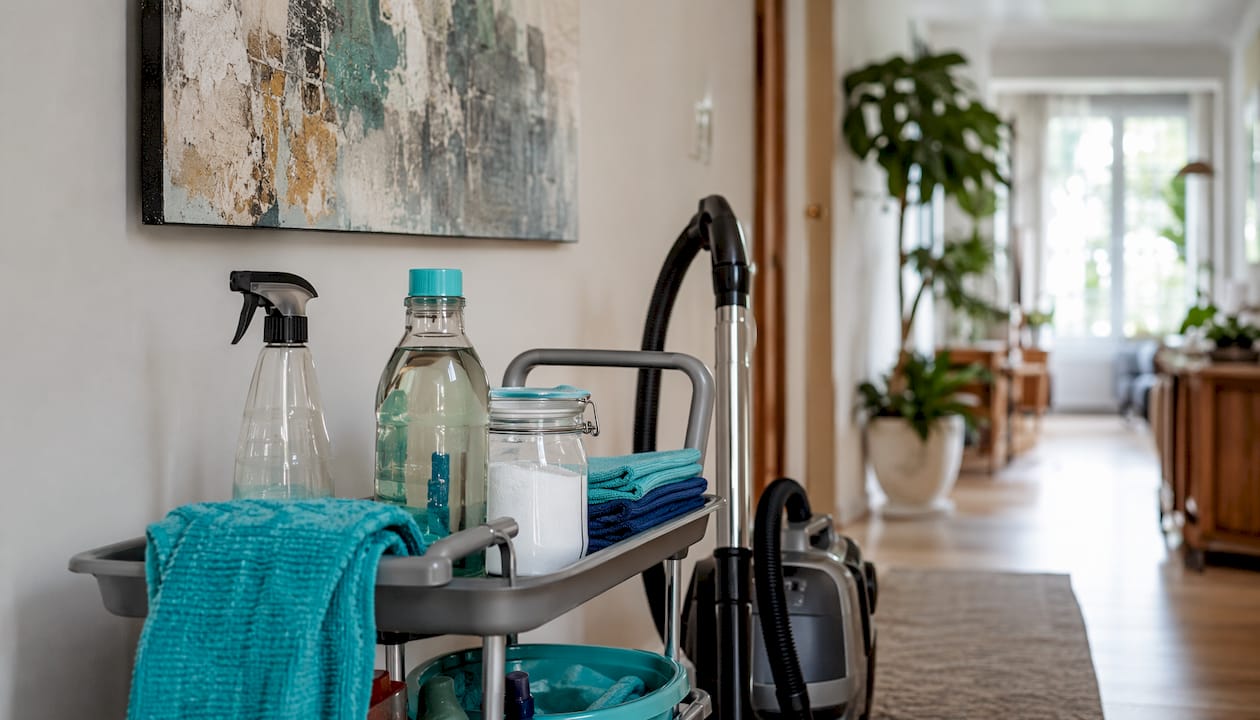
- Gather all products and tools in a portable basket
- Separate bags for donation, recycling, and trash
- Wear old clothes and closed shoes
- Plan the route: start with the rooms furthest from the exit
Professional tip: Open the windows early in the morning to air out, but close them between 10 am and 4 pm in spring if you suffer from pollen allergies. Pollen counts are highest midday.
Checklist by room: what to clean in each area
The golden rule is always work from top to bottom: dust and dirt fall, and the floor is always the last step.
Living Room (estimated time: 2–2.5 h)
- Clean ceiling, lamps, and fans with a damp cloth or long-handled duster
- Vacuum and sanitize upholstery (check washing label; use baking soda for odors)
- Clean windows inside and out; wash or vacuum curtains
- Dust shelves, frames, and baseboards
- Vacuum and scrub the floor as the final step
Professional tip: For stained upholstery, apply a mixture of warm water and Marseille soap with a white cloth. Never rub in circles — blot to avoid spreading the stain.
Bedrooms (1.5–2 h per room)
- Wash bedding at 60 °C to eliminate dust mites
- Vacuum mattress on both sides; air out before covering
- Organize wardrobe: separate seasonal clothes, check for damaged items
- Clean the top of the wardrobe and baseboards
- Priority "do now": mattress and bedding. "Can wait": complete wardrobe reorganization
Kitchen (2–4 h)
- Empty and clean the fridge; discard expired items
- Degrease the oven with a specific product or baking soda paste (let it sit for 30 min)
- Clean the extractor: grease filters in hot water with detergent
- Pull out appliances and clean underneath and behind
- Clean cabinets inside; check expiration dates in the pantry
Cleaning removes dirt; sanitizing reduces germs; disinfecting eliminates the rest. In the kitchen, each step has its moment — disinfect food preparation surfaces after cleaning, not instead of.
Bathroom (1–1.5 h)
- Disinfect toilet, sink, and shower/bathtub base
- Clean drains and check silicone (visible mold requires replacement)
- Wash or replace shower curtain; clean screen with descaler
- Ensure proper ventilation during and after cleaning with chemicals
Balcony and Exterior (1–1.5 h)
- Sweep and wash the pavement
- Clean outdoor furniture with water and neutral detergent
- Check drainage of pots and gutters
- Discard leaves and debris in garden bags for selective collection
How to declutter before cleaning (and do it right)
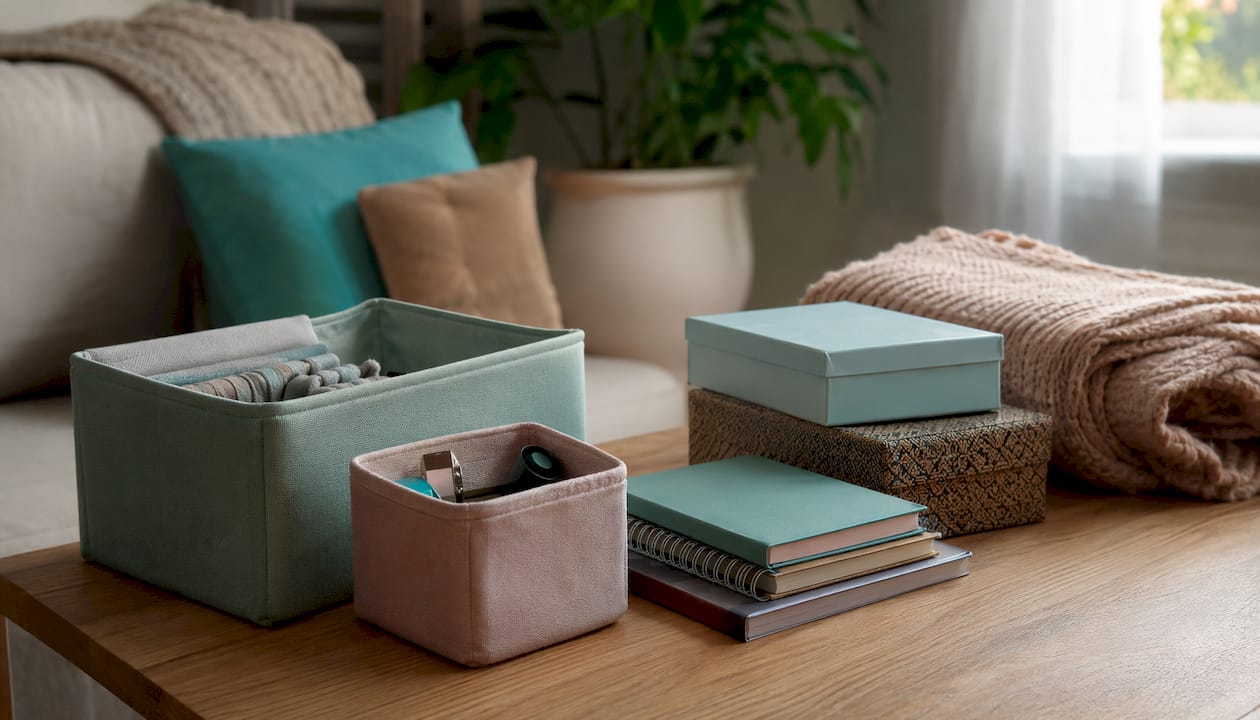
Decluttering before cleaning saves real time: it makes no sense to clean around items that will leave the house.
The three-pile method is the most straightforward:
- Keep — use regularly or has clear sentimental value
- Donate — in good condition but unused in the last 12 months
- Discard — damaged, incomplete, or useless
Three quick questions to decide: did I use this in the last year? Would it be easy to replace if needed? Will I think about this if I give it away?
For seasonal clothes, fold and store in labeled boxes or vacuum bags with the contents and season. Keep the wardrobe functional and future cleaning much quicker.
Mini checklist for responsible disposal:
- Clothes and items in good condition: Cáritas, Red Cross, or local donation groups
- Appliances and electronics: REEE collection points (Ecoelétrico or municipal council)
- Bulky items (furniture, mattresses): schedule collection with the parish council
- Packaging and paper: recycling bins
Professional tip: Take photos of sentimental items before donating them. The image remains, the item frees up space. It surprisingly reduces emotional resistance.
What tools and products to use for deep cleaning?
The right equipment cuts effort in half. For a complete deep clean, these are the essential categories:
- HEPA filter vacuum — retains fine particles and allergens; essential for mattresses and upholstery
- Microfiber mop — cleans without leaving residues and uses less product
- Degreaser — for the kitchen; choose ammonia-free formulas if you have delicate surfaces
- Glass cleaner — or diluted white vinegar in water (50/50) for streak-free results
- Grout brushes — for bathrooms and kitchens; old toothbrushes work well
- Eco-friendly descaler — citric acid powder dissolves limescale without damaging surfaces
Effective eco-friendly alternatives
White vinegar, baking soda, and Marseille soap cover most household tasks. For sustainable cleaning methods that go beyond homemade products, there are good practices for concentration and repurposing containers that reduce environmental impact.
Caution: never mix bleach with ammonia or vinegar — the reaction releases toxic gases. Store products in a cool place, out of reach of children, always in their original labeled containers.
Professional tip: Three kits per budget: basic (vinegar, baking soda, microfiber cloths, simple vacuum); effective (HEPA vacuum, concentrated degreaser, citric acid descaler); professional (steam equipment, upholstery extractor, professional-use products).
Does spring cleaning benefit health?
The short answer is yes, and there is evidence for it. An experimental study with 3,066 participants showed that the act of cleaning reduces anxiety and improves cardiovascular reactivity to stress. The British Psychological Society also points out that persistent clutter is associated with elevated cortisol levels, directly impacting anxiety.
From a physical standpoint, regular deep cleaning combined with HEPA filters and washing textiles at high temperatures reduce major indoor air allergy triggers.
Practical recommendations to reduce allergens:
- Wash bedding at 60 °C or higher to eliminate dust mites
- Vacuum mattresses and sofas with a HEPA filter
- Air out the house outside peak pollen hours (before 10 am or after 5 pm)
- Replace air conditioning and extractor filters at the beginning of spring
Those with asthma or respiratory conditions should avoid disinfectant sprays in enclosed spaces and prefer unscented products. In cases of severe sensitivity, hiring a professional service is the safest option.
How to keep the house clean after deep cleaning
Deep cleaning loses value quickly without a maintenance routine. The good news: 20 to 30 minutes a day is enough to maintain results.
Suggested weekly routine:
- Monday: vacuum living room and hallways (15 min)
- Tuesday: clean main bathroom (20 min)
- Wednesday: kitchen — countertops, stove, and floor (20 min)
- Thursday: bedrooms — tidy and dust (15 min per room)
- Friday: general floor and trash (20 min)
Monthly checklist:
- Clean extractor and air conditioning filters
- Wash light curtains and bathroom mats
- Vacuum mattresses
- Check pantry and fridge (expired items and organization)
- Clean behind and underneath fixed appliances
Integrate small tasks into daily habits: 5 minutes in the morning to tidy the kitchen counter and make the bed changes the perception of the whole house. When you start to notice visible dust on shelves, persistent odors, or accumulation in the pantry, it’s a sign that it’s time for an interim clean.
When does it make sense to hire a professional?
Dividing tasks among family works well with a clear assignment: by zones (each person responsible for one room) or by type of task (one person always vacuums, another cleans bathrooms). A visible board or a simple app like Google Tasks avoids misunderstandings and distributes effort fairly.
There are situations where hiring a professional service is the most rational decision:
- Lack of time for a complete deep clean
- Intense physical work (post-renovation, tenant change, preparation for sale)
- Special needs: severe allergies, pets, small children
- Holiday property that has been closed for months
Questions to ask before hiring:
- Does the service include liability insurance?
- Do they use a detailed checklist by room?
- What products do they use (pet and child-friendly)?
- How do extras work (upholstery, oven, windows)?
- Do they have references or verifiable reviews?
For post-renovation cleaning, national reference prices range from €17 to €30 per hour. For larger jobs, always request a fixed quote instead of an hourly rate.
Professional tip: Request a visit or assessment before signing any recurring contract. A good service has no problem showing the process and checklist before starting.
Key takeaways
Spring cleaning works when you start with decluttering, follow from top to bottom, and divide the work into time blocks by room, instead of trying to do it all at once.
| Point | Details |
|---|---|
| Declutter first | Sorting before cleaning saves time and avoids cleaning items that will leave the house. |
| Rule of top to bottom | Dust and dirt fall; the floor is always the last step in any room. |
| Realistic time blocks | Reserve 2–4 h per room for deep cleaning; quick areas take 1–1.5 h. |
| Maintenance routine | 20–30 minutes daily per zone maintains results without weekly overload. |
| Cleaning Point in Lisbon | For those who prefer to delegate, Cleaning Point covers deep cleans with a checklist and professional team in Lisbon. |
Spring cleaning works because it changes the relationship with space
What surprises me most about this practice is not the visual result, but the immediate effect on mood. There is solid research to support this: the study with over three thousand participants mentioned above showed that cleaning measurably reduces anxiety. It’s not placebo; it’s physiology.
What generic guides rarely mention is that the motivation to start is the biggest obstacle, not the task itself. The most effective solution I know is the 25-minute timer in the Pomodoro style: you decide on a task, set the time, and work uninterrupted until it goes off. When you stop, either you continue with renewed energy or take a well-deserved break. Cleaning stops feeling like an endless chore.
Another underestimated strategy: a playlist with a defined duration. If the 90-minute playlist ends, the session is over. This transforms time into a concrete anchor, not an open-ended task that could last all afternoon.
Cleaning Point takes care of deep cleaning for you, in Lisbon
Some homes become spotless with a weekend of effort. Others need professional hands: post-renovation, properties that have been closed, or simply a schedule that doesn’t allow for four hours in the kitchen.
Cleaning Point's Signature deep clean covers all rooms with a detailed checklist, consistent team, and digital report at the end. Additional services include upholstery, oven, windows, and balcony, charged separately and only when needed. The process is transparent: you know what will be done, who will do it, and with what products. Cleaning Point operates in Lisbon and surrounding areas, with support in multiple languages and access management for those who cannot be present.
To schedule your deep clean, book directly here.
Useful sources and cited studies
The sources below support the recommendations in this guide, based on scientific evidence and practical guides from the Portuguese and European market:
- Experimental study N=3,066 on cleaning and stress reduction — SAGE Journals
- Mental health benefits of spring cleaning — British Psychological Society
- Spring cleaning checklist and 80% participation statistic — CVS Health (2024 survey: 80% perform spring cleaning annually)
- Calendar and organization tips for spring cleaning — Idealista Portugal
- Deep cleaning at home: step by step — Go Now
- Indicative cost of post-renovation cleaning in Portugal — Zaask
- Professional tips for spring cleaning — Rádio Popular
- Spring cleaning and decluttering checklist — Angi
- Cleaning Point checklist by room — Cleaning Point
Frequently asked questions
When does spring start in Portugal?
Astronomical spring starts on March 20 and ends in June. Most people take advantage of March and April to do the seasonal deep clean.
How much does an hour of domestic cleaning cost in Lisbon?
Prices vary depending on the type of service and provider. For post-renovation cleaning, the national reference is between €17 and €30 per hour; for regular domestic cleaning, prices are generally lower and depend on the size of the house.
What is the cost of post-renovation cleaning?
In Portugal, the indicative cost for post-renovation cleaning is €17 to €30 per hour, with an average value close to €20/h. For larger jobs, it’s advisable to request a fixed quote.
How long does a complete spring cleaning take?
A two to three-bedroom house typically takes an intensive weekend or 5 to 7 days with time blocks per session, depending on the initial level of clutter.