Eco-friendly cleaning at home: practical guide and recipes

It is possible to clean the house effectively using eco-friendly ingredients and tools, without resorting to harsh chemicals. White vinegar, baking soda, and Marseille soap tackle most household tasks, while tools like Vileda microfiber cloths or Polti steam cleaners eliminate grease and bacteria without leaving toxic residues. For those who prefer to delegate, a professional service in Lisbon costs between €8 and €20/hour according to Fixando.
What you will find in this guide:
- Essential natural ingredients and their uses
- Recipes with exact quantities (multi-purpose spray, degreaser, glass cleaner, toilet cleaner)
- Tools that replace chemical products, with brands available in Central Europe
- Care by surface and what never to use on natural stone
- When to hire an eco-friendly professional and how much it costs
Index
- What tools replace chemical products?
- Practical recipes with quantities and step-by-step instructions
- How to clean each room and surface without harsh chemicals?
- When to hire an eco-friendly cleaning service?
- Key findings
- The hybrid approach is what really works
- Cleaning Point: professional eco-friendly cleaning in Lisbon
- Useful sources and where to buy in Central Europe
- Frequently asked questions
What tools replace chemical products?
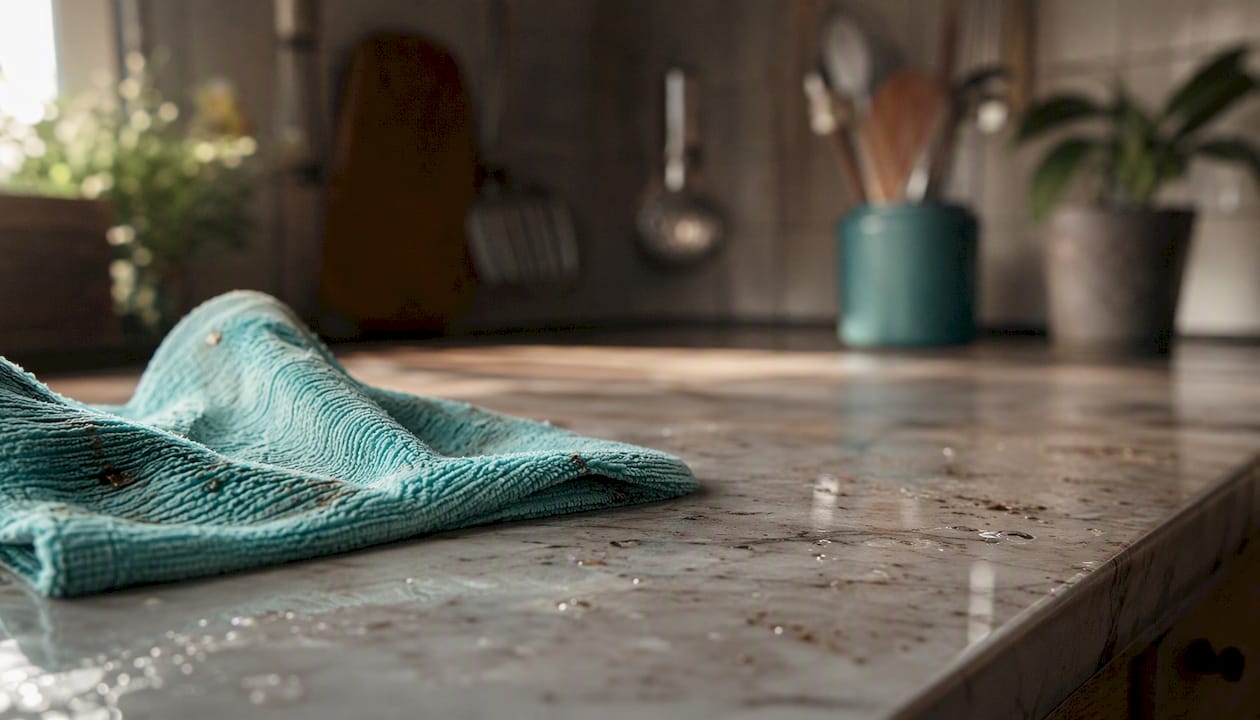
The right tool reduces or eliminates the need for any product. A damp microfiber cloth removes up to 99% of bacteria from smooth surfaces using only water, according to data from Vileda.
Microfiber cloths and mops
Vileda is the most accessible and widely available brand in Central Europe, with both domestic and professional lines. Microfiber cloths capture particles and grease through electrostatic action, without the need for detergent. The 5-year warranty on Vileda floor mops is a real indicator of durability, not just marketing. For washing, use water at 60 °C without fabric softener, as the softener clogs the fibers and reduces absorbency.
Steam cleaners
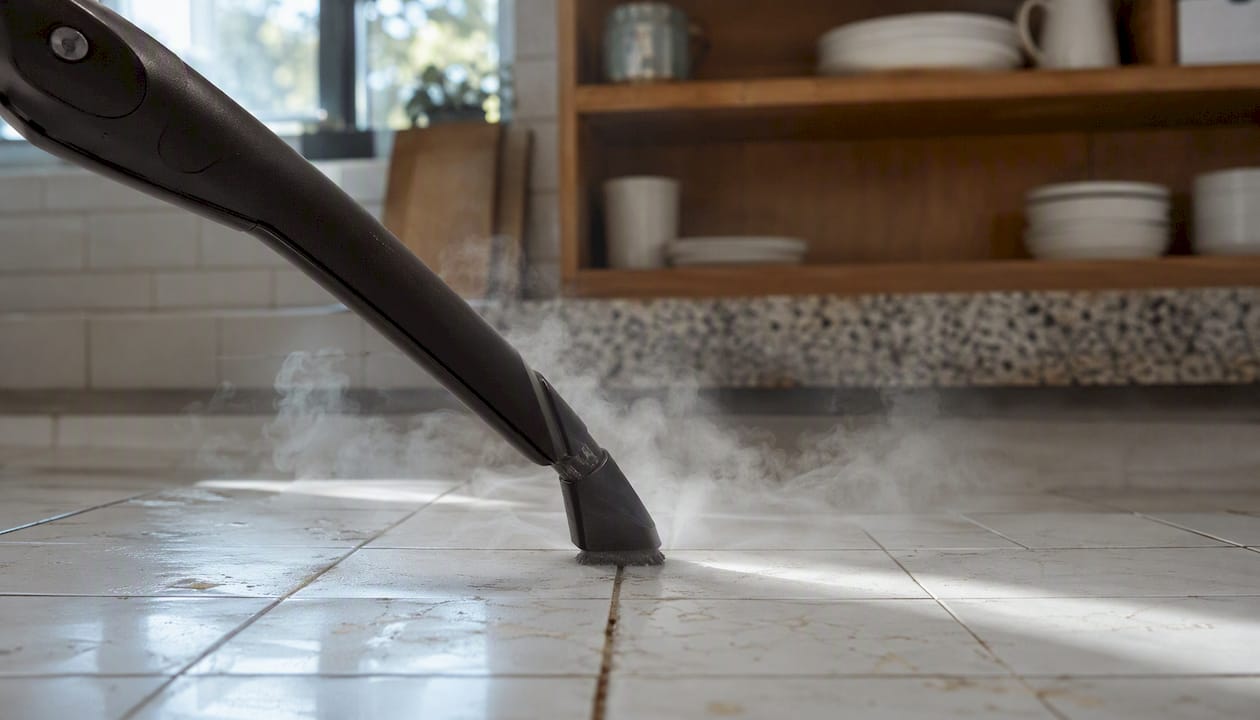
High-temperature steam (above 100 °C) disinfects, degreases, and removes limescale without any chemical product. Polti is the leading European manufacturer in this segment, with domestic and professional models available in Portugal and the rest of Europe. Kärcher also offers steam cleaners and vacuum steamers with good accessory coverage for kitchens and bathrooms. When choosing a model, check: minimum power of 1,500 W, tank capacity of at least 1 liter, and included accessories for tile joints and upholstery.
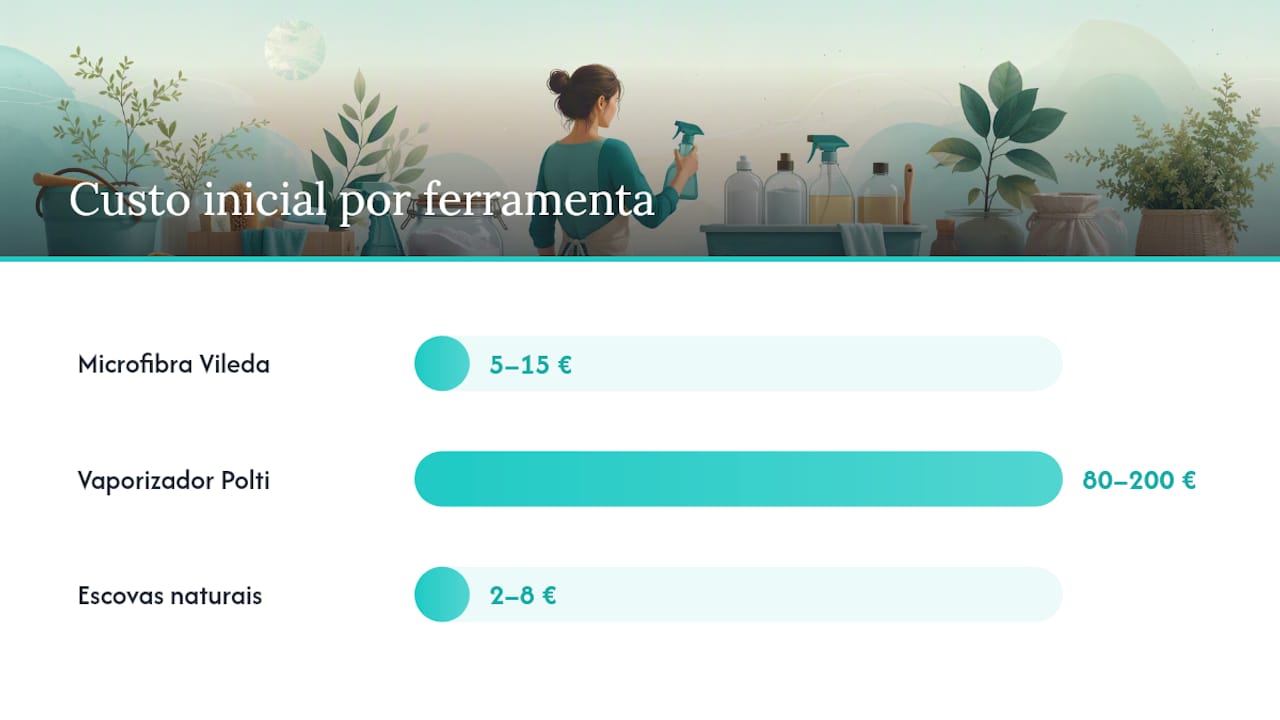
| Tool | Best for | Initial cost | Grease effectiveness | Environmental impact |
|---|---|---|---|---|
| Microfiber cloths (Vileda) | Smooth surfaces, dust, glass | Low (5–15 €) | Medium | Very low, washable |
| Domestic steam cleaner (Polti) | Tiles, joints, stove, upholstery | Medium (80–200 €) | High | Very low, just water |
| Steam cleaner/vacuum (Kärcher) | Floors, kitchen, bathroom | Medium-high (€) | High | Very low, just water |
| Manual brushes (natural bristles) | Joints, skirting boards, rough surfaces | Very low (2–8 €) | Medium | Low |
Professional tip: Descale the steam cleaner every 10–15 uses with a solution of water and white vinegar (1:1 ratio). Let it sit for 30 minutes before emptying. This significantly extends the equipment's lifespan and maintains constant steam pressure.
Practical recipes with quantities and step-by-step instructions
Multi-purpose spray (countertops, tiles, appliances)
- In a 500 ml spray bottle, mix 250 ml of white vinegar with 250 ml of water.
- Add 15 drops of lemon or lavender essential oil.
- Shake before each use. Apply, let sit for 2 minutes, and wipe with a microfiber cloth.
Do not use on: marble, granite, unvarnished wood, cast iron.
Kitchen degreaser (stove, extractor, oven)
- Mix 2 tablespoons of baking soda with 1 tablespoon of liquid Marseille soap and 200 ml of hot water.
- Apply the paste directly to the surface with a sponge or brush.
- Let it sit for 10–15 minutes on accumulated grease.
- Scrub with a sponge or medium-bristle brush and wipe with a damp cloth to remove residues.
For cleaning the extractor, the metal filters can be soaked in this solution for 20 minutes before scrubbing.
Natural glass cleaner (windows, mirrors)
Mix 100 ml of 70% isopropyl alcohol, 100 ml of distilled water, and 1 teaspoon of white vinegar in a 250 ml spray bottle. Apply in circular motions with a dry microfiber cloth. Distilled water is important in areas with hard water (high limescale), common in various regions of Central Europe, as it prevents white marks after drying.
Toilet solution
Pour 100 ml of 3% hydrogen peroxide directly into the toilet. Let it sit for 10 minutes. Scrub with a brush and flush. Alternatively, use 4 tablespoons of baking soda followed by 100 ml of white vinegar: the effervescent reaction helps loosen limescale deposits. Never mix peroxide and vinegar in the same application.
Upholstery and carpets (odors and surface stains)
Generously sprinkle baking soda over upholstery or carpet. Let it sit for at least 30 minutes (or overnight for persistent odors). Vacuum with a HEPA-filter vacuum cleaner. For localized stains, apply a paste of baking soda and water, let it dry, and vacuum. Activated charcoal in sachets placed under cushions or inside cabinets absorbs odors without any direct application.
How to clean each room and surface without harsh chemicals?
Kitchen
Ceramic or stainless steel countertops accept the above multi-purpose spray. The oven benefits from a baking soda paste applied to the inner walls, with a 30-minute to 1-hour action time before scrubbing. The Polti or Kärcher steam cleaner is the most effective solution for accumulated grease in tile joints and inside the oven, as the heat liquefies the grease without excessive physical effort.
Bathroom
Tiles and shower bases: diluted vinegar spray (1:1 with water) for limescale and soap stains. Joints: fine-bristle brush with baking soda paste or steam cleaner with concentrated jet accessory. Drains: pour 3 tablespoons of baking soda followed by 100 ml of vinegar, wait 15 minutes, and flush with hot water.
Varnished woods and floors
Use only a well-wrung microfiber cloth (almost dry) with a few drops of Marseille soap diluted in water. Never soak wood. Dry immediately with a dry cloth. Avoid vinegar on varnished wood floors, as the acid can dull the finish over time.
Natural stones (marble, granite)
No acidic products. Neither vinegar, nor lemon, nor citric acid-based products. The only safe option is warm water with neutral Marseille soap and a soft microfiber cloth. For persistent stains, consult a natural stone specialist before attempting any product.
Glass and mirrors
The method described above (alcohol + distilled water + vinegar) works well. In areas with very hard water, such as some parts of Central Europe, tap water leaves marks even after cleaning. Distilled or filtered water solves the problem at its root.
When to hire an eco-friendly cleaning service?
The DIY model covers weekly maintenance well. There are situations where a professional service clearly pays off: post-renovation (construction dust penetrates inaccessible places), tenant move-in or move-out, severe allergies to dust mites or mold, or managing holiday homes in Lisbon where the time between occupancies is short.
The difference between maintenance cleaning and deep cleaning is in scope: deep cleaning includes the inside of cabinets, skirting boards, filters, upholstery, and areas normally ignored in the weekly routine. Experts recommend deep cleaning every 3–6 months to keep the property in good condition. The logical sequence of execution starts with the least used rooms and ends in the kitchen and bathroom, to avoid recontamination.
What to expect from an eco-friendly professional service
- Confirmation of the products used (natural, with Ecolabel or equivalent)
- Detailed checklist by room provided before and after the service
- Waste and packaging disposal policy
- Civil liability insurance
- Possibility to check complaint history (for example, in the electronic Complaints Book at livroreclamacoes.pt)
Cost estimates and frequency in Lisbon
| Service type | Recommended frequency | Estimated cost (Lisbon) |
|---|---|---|
| Regular maintenance | Weekly or biweekly | €8–20/hour |
| Deep cleaning | Every 3–6 months | Variable depending on area and extras |
| Post-renovation/move | One-off | Variable depending on condition and area |
Prices vary depending on the number of hours contracted, the use of specific equipment, and the inclusion of certified eco-friendly products, which, according to Habitissimo, tend to be slightly more expensive than conventional ones.
Key findings
Eco-friendly home cleaning is effective, affordable, and safer for health and the environment when the right ingredients are combined with the right tools.
| Point | Details |
|---|---|
| Essential ingredients | Vinegar, baking soda, Marseille soap, and essential oils cover most household tasks. |
| Tool with the greatest impact | Polti or Kärcher steam cleaners eliminate grease and bacteria without any chemical product. |
| Surface to protect | Never use vinegar or acids on marble or granite; use only neutral soap and microfiber. |
| Cost of professional service | Regular maintenance in Lisbon costs between €8 and €20/hour, according to market references. |
| Cleaning Point in Lisbon | For deep cleaning or regular maintenance with an eco-friendly approach, Cleaning Point operates in Lisbon with detailed checklists and trained staff. |
The hybrid approach is what really works
There is a tendency to treat eco-friendly cleaning as all-or-nothing: either you do everything at home with natural ingredients, or you hire a professional service. The reality is that both approaches solve different problems.
Weekly DIY maintenance with microfibers and vinegar spray keeps the house presentable and prevents dirt accumulation. But there is a layer of cleaning that no homemade spray can reach without the right equipment: burnt grease in the oven, mold in silicone joints, dust mites in mattresses, limescale accumulated over years. For this, a professional steam cleaner or a trained team with the right equipment makes a difference in hours, not in days of effort.
What many people underestimate is the real cost of total DIY: time, physical effort, equipment cost (a good steam cleaner costs €80–200), and the risk of damaging surfaces by using the wrong product. A semi-annual professional deep cleaning, combined with weekly DIY maintenance, is often more economical and less exhausting than trying to do it all alone.
Eco-friendly cleaning does not require perfection. It requires consistency in the right ingredients, tools that last for years, and knowing when to ask for help.
Cleaning Point: professional eco-friendly cleaning in Lisbon
Doing weekly maintenance with vinegar and microfibers is completely feasible. But when it comes time for a deep clean, post-renovation, or preparing a property for new tenants, the effort and equipment needed are beyond what most people have available.
Cleaning Point offers deep cleaning in Lisbon with detailed checklists by room, trained staff, and a digital report after each visit. Services include extras like oven cleaning, upholstery, windows, and balcony, with the possibility of regular maintenance for those who want to maintain the result without weekly effort. Support is multilingual, and access management is included for owners of holiday homes or properties in Lisbon.
To find out what is included in each visit, check the checklist room by room. To book directly, go to cleaningpoint.net/pt/book.
Useful sources and where to buy in Central Europe
- Polti Portugal: information on steam cleaners and eco-friendly steam cleaning
- Polti (global site): technical specifications, domestic and professional ranges, European availability
- Vileda Portugal: practical tips and line of microfiber cloths and mops
- Vileda (floor warranty): information on durability and warranty of mops
- Fixando Lisbon: price reference for recurring cleaning in Lisbon
- Habitissimo: comparison of cleaning quotes in Portugal
- Famyle (standard vs. deep cleaning): guide on frequencies and service differences
Glass spray bottles and reusable containers can be found in stores like IKEA, Leroy Merlin, and natural product shops. Concentrated Marseille soap and bulk baking soda are available in supermarkets and organic product stores throughout Central Europe.
Frequently asked questions
How much does an hour of cleaning cost in Lisbon?
The reference price for recurring cleaning in Lisbon is between €8 and €20/hour, varying according to the type of service, the number of hours contracted, and the inclusion of eco-friendly products.
What does a deep cleaning include?
A deep cleaning goes beyond regular maintenance and includes the inside of cabinets, skirting boards, extractor filters, upholstery, inside appliances, and areas normally ignored in the weekly routine. It is recommended every 3–6 months.
Can I use vinegar on all surfaces?
No. Vinegar is acidic and damages natural stones like marble and granite, can dull wood finishes, and corrodes cast iron surfaces. On tiles, glass, and stainless steel, it works well when diluted.
Does Cleaning Point use eco-friendly products?
Cleaning Point operates in Lisbon with detailed checklists and trained staff, including deep cleaning and regular maintenance services. To confirm the products used on each visit, contact the team directly before booking.
Are steam cleaners effective for disinfecting without chemicals?
Yes. Steam at temperatures above 100 °C eliminates bacteria and fungi on hard surfaces without the need for any chemical product, according to Polti. They are especially effective on tile joints, stoves, and upholstery.


