Cleaning for Property Valuation: What to Do Before the Visit in Lisbon

Hiring professional cleaning before a valuation or visit is the most profitable decision a property owner can make in Lisbon: an immaculate property reduces objections about the price and speeds up the sale or rental process. The service must cover, at a minimum, kitchen, bathrooms, odour elimination, and well-cleaned windows, as these are the points that buyers and appraisers scrutinize first. A professional team, with checklists by room, meets these priorities without the owner having to manage the process.
In summary:
- Professional cleaning before a valuation should cover kitchen, bathrooms, windows, and surfaces, removing limescale, grease, and odours to improve the perception of the property.
- The cleaning order should follow the top-to-bottom method, prioritizing ceilings, walls, vertical surfaces, and floors to avoid recontamination.
- It is essential to hire an experienced team, with a checklist by room, that knows how to work with appropriate timing and prepare the property in advance.
- Deep cleaning of floors, walls, ceilings, and cabinets can reduce the selling time and increase perceived value, especially in high-traffic areas or those with humidity issues.
- Using eco-friendly products and ensuring prior ventilation reduces odours and guarantees a healthy environment for potential buyers and appraisers.
Index
- What does a professional cleaning for property valuation include
- Room-by-room guide: what to clean before the valuation
- How to choose and brief a cleaning company for valuation
- How long and how much does it cost to prepare the property in Lisbon
- Final checklist: 1 to 2 hours before the visit or valuation
- Tidying and depersonalization: the right balance
- Carpet and floor cleaning before the valuation
- Wall and ceiling cleaning: the detail that few check
- Ventilation and humidity control before the visit
- Eco-friendly and safe cleaning products for the property
- Organization of outdoor space: balconies and gardens
- Author's perspective on cleaning for valuation in Lisbon
- How Cleaning Point prepares your property for valuation
- Sources
- Frequently asked questions
What does a professional cleaning for property valuation include
A serious property valuation cleaning goes beyond just dusting. It involves the removal of limescale and accumulated grease, sanitizing surfaces and textiles, and special care for windows and mirrors, which enhance the entry of natural light and the sense of space in photographs.
Essential services usually include:
- Deep cleaning of kitchen and bathrooms, focusing on joints, taps, and appliances.
- Descaling of shower bases, taps, and tiles.
- Sanitizing textiles (sofas, curtains, rugs) and frequently touched surfaces.
- Cleaning of interior windows and, ideally, exterior ones.
- Extras that make a difference: upholstery, oven, post-construction cleaning when applicable.
The expected result is a space that photographs well, has no residual odours, and conveys a sense of continuous maintenance, something that any appraiser or buyer notices within the first thirty seconds, as recommended by photo strategies for co-op listings.
Professional tip: Always request that the window cleaning includes the interior of the frames, not just the glass. This is where visible dirt accumulates in photographs with direct light.
Room-by-room guide: what to clean before the valuation
Order and detail matter as much as the cleaning itself. Kitchens and bathrooms are the rooms scrutinized most rigorously by potential buyers, so they must be spotless, with no visible limescale and completely clear countertops.
- Kitchen: clean the inside of the oven and microwave, degrease the extractor fan, empty and organize visible cabinets, and ensure that the countertop has no loose items.
- Bathrooms: remove limescale from taps and shower enclosures, sanitize toilets, and ensure that towels and personal hygiene products are out of sight or perfectly arranged.
- Living rooms and bedrooms: minimize personal items (family photos, mail, personal objects), clean baseboards and light fixtures, and wash or vacuum fabrics like curtains and cushions.
- Balconies and exteriors: clean windows and frames, wash the exterior floor, and maintain only a simple decorative touch, like a plant or two neatly arranged chairs.
The recommended work order by home staging professionals is top to bottom: ceilings, then light fixtures, vertical surfaces, and only at the end the floor. This prevents the team from having to redo areas already cleaned due to dust falling from upper parts.
How to choose and brief a cleaning company for valuation
It’s not enough to hire "a cleaning service." It’s worth asking directly if the company has experience with properties for sale or rent, if they work with checklists by room, and if they guarantee a consistent team instead of rotating staff with each visit.
Before the cleaning, send the provider:
- Photographs of the rooms, to identify critical points in advance.
- Your specific priorities (for example, old stains in the bathroom or persistent smells in the kitchen).
- Information about access to the property and possible timings.
- Explicit request for extras, such as cleaning of exterior windows or upholstery.
A serious proposal should include a task list by room, estimated execution time, separate pricing for extras from the base service, and a clear cancellation policy. Cleaning Point provides a detailed checklist that serves as a reference for comparing what is being proposed.
Professional tip: Always ask in writing what small repairs the team can flag during the cleaning, such as dripping taps or squeaky hinges. Correcting these details avoids price reduction arguments during negotiations.
How long and how much does it cost to prepare the property in Lisbon
A T1 usually requires between two to three hours of deep cleaning; a T3 can take a full day of work, especially if it includes extras like upholstery or post-construction cleaning. In Lisbon, the logistics of access, elevators, and visit timings affect the schedule, so it is advisable to allow a window of 2 to 3 hours before any photo session or visit.
The most common pricing models in the market are:
- Hourly charge, suitable for one-off maintenance.
- Charge per visit, more predictable for complete deep cleans.
- Extras charged separately (exterior windows, upholstery, oven).
Investing in this preparation can increase the perceived value of the property and reduce the selling time, as it eliminates objective reasons for discounts that a discerning buyer often uses as negotiation leverage. Check the Cleaning Point pricing page for budget guidance before requesting proposals.
Final checklist: 1 to 2 hours before the visit or valuation
In the hours leading up to the arrival of the appraiser or potential buyers, follow this sequence:
- Air out all rooms, even on cold days, for at least fifteen minutes.
- Turn on lights in darker areas, even during the day.
- Check for smells in the kitchen, bathrooms, and closets; open the fridge to confirm there are no odours.
- Polish visible surfaces: countertops, mirrors, taps.
- Store loose personal items (mail, medications, hygiene products).
- Place new or neatly folded towels and align cushions.
- Confirm that burnt-out bulbs have been replaced and taps are not dripping.
A small trick used in home staging is to have freshly brewed coffee or something baking in the oven shortly before the visit. It works, but use it sparingly: an overly intense smell can seem artificial and raise suspicion among visitors to the property.
Tidying and depersonalization: the right balance
Depersonalizing does not mean emptying the house of identity; it means reducing what distracts the eye of the visitor. Preparing a lived-in house for sale requires "editing" everyday life: removing excesses, organizing closets, and creating neutral spaces where the buyer can imagine themselves living.
This applies especially to prominently displayed family photos, magnets and drawings on the fridge, personal collections on shelves, and clothes visible on chairs or balconies. It’s not necessary to remove everything, but reducing the visible quantity helps the visitor project their own life into the space, rather than constantly noticing someone else's life.
Closets and wardrobes deserve extra attention. Many appraisers and buyers open closet doors during the visit to assess the available storage space, so a closet overflowing with clothes conveys a lack of tidiness, even if the rest of the house is immaculate. Temporarily reducing the volume of clothes and items stored, even if just by moving them to a box out of sight, makes a real difference in the perception of space.
Home staging, in fact, is not artificial staging. It is editing life so that the buyer can imagine themselves in the space, and professional cleaning is the essential foundation of that editing. Without careful cleaning beneath the tidiness, the effort to depersonalize loses half its effect.
Carpet and floor cleaning before the valuation
Floors are the most visually scanned surface during a visit, and it is where old stains or hidden smells most negatively impact the overall perception. Carpets and rugs accumulate dust, mites, and odours that a simple vacuuming does not remove; they require deep cleaning with an extraction machine or, at a minimum, localized stain treatment before any visit.
In wooden floors, care involves removing marks from dragged furniture and restoring shine without leaving a slippery residue, which is a safety risk during the visit. Ceramic or marble floors, common in kitchens and bathrooms in Lisbon, need attention to the joints, where limescale and dirt accumulate more visibly than on the surface itself.
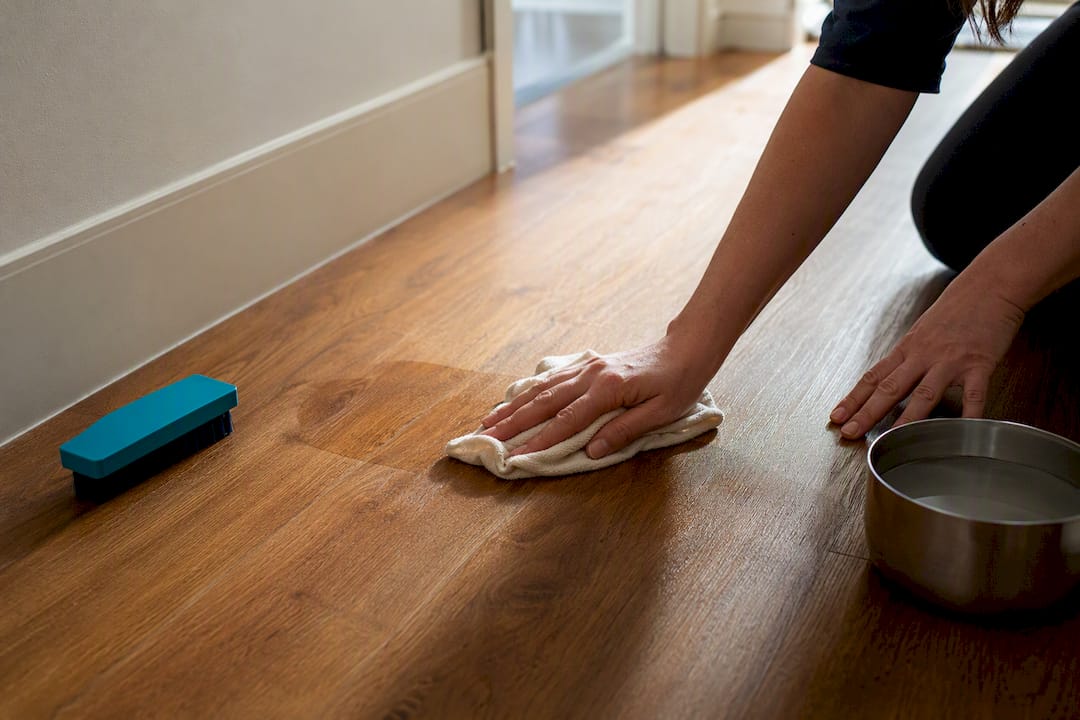
High-traffic areas, such as the entrance and main corridor, deserve priority. They are the first visual contact for anyone entering, and if they are worn or dirty, they create a negative first impression that is hard to reverse even if the rest of the property is in good condition. Following the top-to-bottom cleaning order ensures that the floor is the last surface treated, preventing dust from upper areas from re-soiling what was already clean.
Wall and ceiling cleaning: the detail that few check
Walls and ceilings rarely make it onto the mental checklist of those preparing a house for valuation, but they are responsible for a significant part of the overall feeling of cleanliness. Cobwebs in ceiling corners, moisture stains on windows, or fingerprints near switches stand out in photographs with direct light, even when the rest of the room is immaculate.
The professional practice of working from top to bottom exists precisely for this reason: cleaning ceilings and walls first prevents dust from falling onto surfaces and floors that have already been treated. Switches, sockets, and areas near doorknobs accumulate grease from hands and deserve specific attention, as they are points that any visitor touches or observes closely.

Moisture stains on walls, especially in bathrooms or near windows, require more than cleaning: they require treatment of the cause. A wall painted over a recent moisture stain can re-stain within weeks, which is worse for the credibility of the property than the original stain. If there are signs of infiltration, resolving the source before the final cleaning saves rework and prevents the appraiser from questioning the integrity of the construction.
Ventilation and humidity control before the visit
Odour is often the deciding factor during a visit. Deep cleaning eliminates the real sources of bad odour, such as accumulated moisture, food remnants, or pet hair, while air fresheners merely mask them for a few minutes.
In Lisbon, apartments with little natural ventilation, especially in older areas or with interior bathrooms, accumulate humidity that gets trapped in cabinets, curtains, and textiles. Airing out the property daily in the weeks leading up to the valuation, even if only for fifteen minutes in the morning, significantly reduces the feeling of heavy air that many visitors associate, without being able to explain why, with a poorly maintained property.
Specific problematic areas deserve direct checking: under the sink, corners of bathrooms without windows, and cabinets against exterior walls. If there is persistent mustiness in these locations, cleaning alone will not solve it. Prolonged ventilation is needed, and in more severe cases, using a dehumidifier in the days leading up to the visit. Keeping a window slightly open during the visit itself, if the weather allows, also helps to refresh the air without seeming forced.
Eco-friendly and safe cleaning products for the property
The choice of cleaning products influences both the visual result and the final odour of the property. Highly perfumed products can artificially mask smells and, paradoxically, generate distrust in visitors, as it seems like something is being hidden.
Eco-friendly and low-toxicity products, such as those based on vinegar, baking soda, or natural enzymes, remove grease and limescale without leaving a strong chemical residue in the air. They are particularly suitable for bathrooms and kitchens, where close contact during the visit makes the odour of the products more noticeable.
There is also a practical advantage: surfaces like marble, treated wood, or certain fabrics can be damaged by abrasive or highly acidic products. A professional team knows how to adapt the product to the material, avoiding stains or loss of shine that, ultimately, create more of a visual problem instead of solving it. Asking the provider what products they use, especially if there are children, pets, or people with respiratory sensitivities visiting the house later, is a simple question that avoids complications.
Organization of outdoor space: balconies and gardens
Balconies, terraces, and gardens are often overlooked in preparation, but in Lisbon, where many apartments value precisely these outdoor spaces, they are a selling point in their own right when well presented.
A balcony with dirty glass, stained floor, or accumulated objects (bicycles, boxes, laundry) conveys a lack of care, even if the interior of the house is perfect. The cleaning should include washing the exterior floor, removing rust stains from metal railings, and carefully cleaning the windows that lead outside, both from the inside and outside whenever access allows.
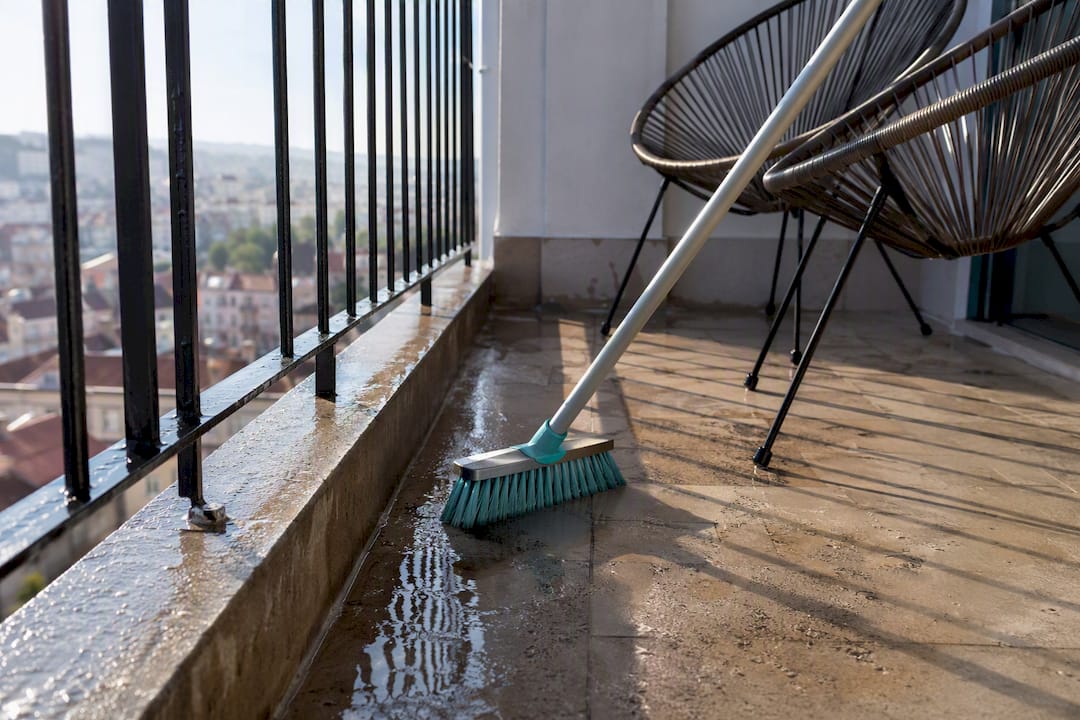
In gardens or private patios, the goal is not to create a magazine-worthy space but to convey maintenance: cut grass, plants without dry leaves, and paths clear of foliage or accumulated rubbish. A well-placed pot or two neatly arranged chairs communicate more than an empty space or, conversely, overloaded outdoor furniture.
Author's perspective on cleaning for valuation in Lisbon
Working with property preparation in Lisbon, I notice that most owners underestimate the impact of small details, such as tile joints or balcony glass, and overestimate expensive decoration. Cleaning Point follows exactly this logic: detailed checklists by room, consistent team, and multilingual support for owners managing properties from a distance.
— Taras
How Cleaning Point prepares your property for valuation
If you have realized that the right cleaning before a valuation requires more than a quick vacuuming, the practical solution is to hand over the work to those who do this every day in Lisbon.
The Signature deep cleaning from Cleaning Point covers exactly the priorities that make a difference in a valuation: kitchen, bathrooms, removal of limescale and odours, windows, and horizontal surfaces, with the option to add extras like upholstery or cleaning of exterior windows through add-on services. The team works with a checklist by room, which helps ensure complete coverage of the necessary tasks.
For those preparing the house for visits or photographs, the most important thing is to schedule with enough margin before the decisive day, avoiding last-minute cleanings that leave little time to correct unforeseen issues. You can request a quote and schedule the cleaning directly, with a date adjusted to your photo session or visit.
Sources
- How to prepare the house for successful selling in 2026 — idealista
- Preparing your house for sale — Engel & Völkers
- How to prepare the house for sale: guide to maximize value — MaxCidadela
- How to prepare a lived-in property for sale? — CasaYes
Frequently asked questions
How much does a cleaning for property valuation in Lisbon cost?
The cost varies with the size of the property and the chosen extras, charged by hour or by visit. Check the Cleaning Point pricing page for indicative values.
How long before the visit should I schedule the cleaning?
It is recommended to schedule the deep cleaning with a margin of two to three days before the photo session or visit, allowing a window of 2 to 3 hours of work on the day itself for final touches.
Does professional cleaning really influence the selling price?
Yes. Careful preparation, including deep cleaning and minor repairs, can increase the perceived value of the property and reduce the time until sale.
Should I clean myself or hire a company?
For valuations and visits, a professional team with a checklist by room, like that of Cleaning Point, ensures consistency and covers critical points, such as limescale and odours, that regular domestic cleaning often leaves unresolved.
Which rooms should I prioritize if time is limited?
Kitchen and bathrooms, followed by windows and mirrors. These are the areas most scrutinized by buyers and appraisers, and where lack of cleaning is most penalizing.