Cleaning by Room: What to Clean and When

In summary:
- Keeping a clean home requires an organized routine by rooms and task frequency.
- Using methods like FlyLady helps distribute maintenance throughout the week, avoiding overload.
Kitchen daily, bathroom several times a week, living room and bedroom weekly, and a seasonal deep clean for what accumulates out of sight. This is the core of any practical room-by-room cleaning plan.
TL;DR — quick plan to print:
- Kitchen: countertops and stove daily; fridge and oven monthly
- Bathroom: toilet and sink every 2–3 days; tiles and grouts monthly
- Living Room: vacuum weekly; upholstery and windows monthly
- Bedroom: change bed linens weekly; mattress and curtains seasonally
- Entrance/hallway: sweep or vacuum 2× a week; mirrors and skirting boards monthly
- Office/balcony: surfaces weekly; quarterly deep clean
- Alternative for large houses or tight schedules: the FlyLady method divides the house into five zones and proposes 15–30 minutes daily per zone, without marathon cleaning sessions.
Index
- What to clean in each room and how often?
- How to organize your daily, weekly, and monthly routine
- Windows, curtains, carpets, and upholstery: how to treat each one
- What products and equipment do you really need?
- The FlyLady method and zone cleaning: when to use each approach
- How to create your room checklist
- How to divide tasks in the family without creating conflicts
- Deep cleaning: what it includes and how much it costs
- Key takeaways
- Room-by-room cleaning from the inside
- Useful sources and references
- Cleaningpoint: professional cleaning in Lisbon when routine is not enough
- Frequently asked questions
What to clean in each room and how often?
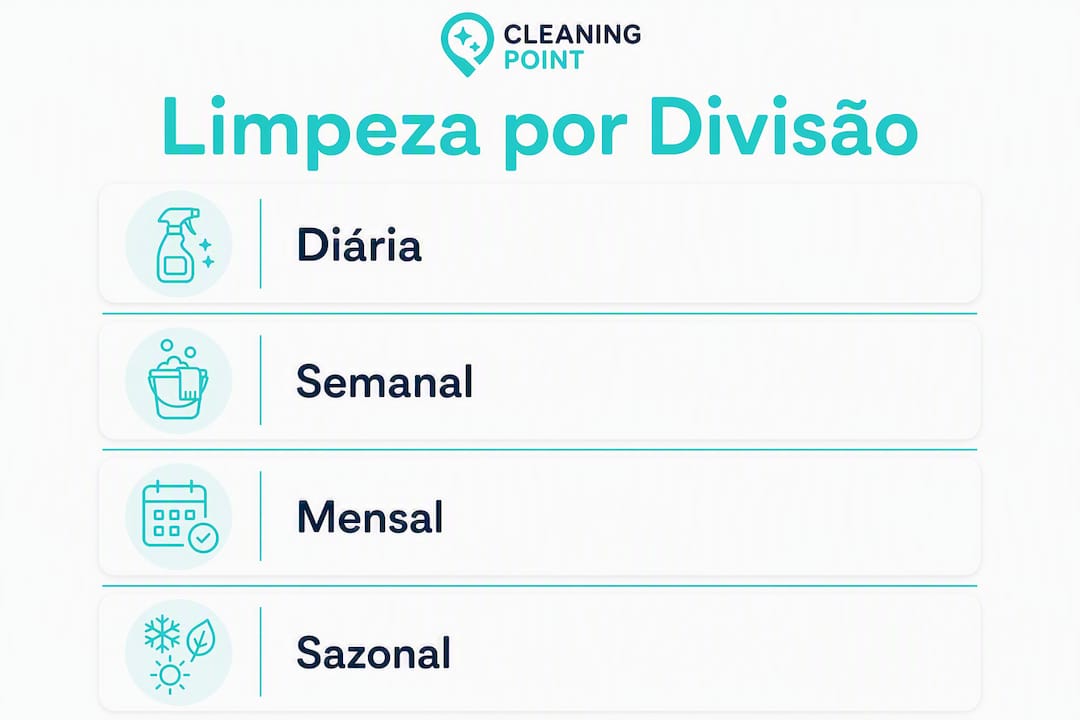
The table below consolidates essential tasks by room with the recommended frequency. The order of work within each space always follows the same logic: from top to bottom and from dry to wet, which avoids rework and cross-contamination between surfaces.
| Room | Daily | Weekly | Monthly | Seasonal |
|---|---|---|---|---|
| Kitchen | Countertops, stove, dishes | Microwave interior, trash, floor | Fridge interior, oven, extractor | Interior cabinets, filters |
| Bathroom | Sink, toilet | Shower/bathtub, mirrors, floor | Tiles, grouts, seals | Siphons, ventilation |
| Living Room | Tidy loose items | Vacuum, dust surfaces | Upholstery, windows, skirting boards | Curtains, deep clean carpets |
| Bedroom | Tidy clothes | Change bed linens, vacuum | Under the bed, mirrors | Mattress, interior wardrobe |
| Entrance/hallway | Shoes in place | Sweep/vacuum, mirrors | Skirting boards, coat hangers | Deep clean entrance mat |
| Office | Tidy desk | Keyboard, screen, dust surfaces | Cables, shelves | Paper filing |
| Balcony/service area | — | Sweep | Grills, pots, washing machine | Waterproofing, gutters |
Specific surfaces: stone countertops (marble, granite) require neutral products, free of acids. Varnished wood can handle a damp cloth; natural wood needs specific products. Tiles can withstand common detergents, but grouts benefit from a small brush and degreasing product. For fabric upholstery, vacuum before applying any wet product.
Professional tip: Always start with the dirtiest room (usually the bathroom) and finish in the living room. This way, the mop doesn’t drag dirt from a clean space to another.
How to organize your daily, weekly, and monthly routine
A concrete schedule is worth more than any list of intentions. This model distributes effort throughout the week without overloading any day.
Daily routine (10–15 minutes)
- Wash or load dishes into the dishwasher right after meals
- Wipe kitchen countertops with a damp cloth
- Quickly clean the bathroom sink
- Return each item to its place before leaving or going to bed
- Sweep or vacuum the entrance if there is sand or leaves
Weekly model (distribution by day)
- Monday — kitchen: clean stove, microwave, floor, and trash
- Tuesday — bathrooms: shower, bathtub, toilet, mirrors, and floor
- Wednesday — living room: vacuum, dust all surfaces, and clean interior windows.
- Thursday — bedrooms: change bed linens, vacuum, organize wardrobe
- Friday — entrance and hallway: vacuum, mirrors, tidy shoes
- Saturday — monthly mission: one rotating deep task (oven, fridge, upholstery, windows)
- Sunday — rest or minimal maintenance
Rotating monthly mission
Assign a deep task to each Saturday of the month: first Saturday for the fridge and oven, second for windows and exterior glass, third for upholstery and carpets, fourth for cabinets and shelves. This way, each area receives deep attention four times a year without requiring a whole day of work.
To turn this model into a printable template, copy the table into a text document, print it in A5, and stick it on the fridge door or a cork board. Apps like FlyLady Routines allow you to save checklists on your phone with integrated timers.
Windows, curtains, carpets, and upholstery: how to treat each one
Streak-free windows
The most common mistake is cleaning windows in direct sunlight, which dries the product before spreading it and leaves streaks. Always clean in diffused light or early in the morning. Use a damp microfiber cloth (water with a drop of neutral detergent) and a second dry cloth for finishing. The "S" motion from top to bottom is more effective than circular motions.
Golden rule of professionals: separate cloths for each surface. A cloth that has touched the toilet never touches the sink, and a window cloth never touches the floor. This separation, used in professional operations, is what distinguishes a cleaning that looks clean from one that is truly clean.
Curtains
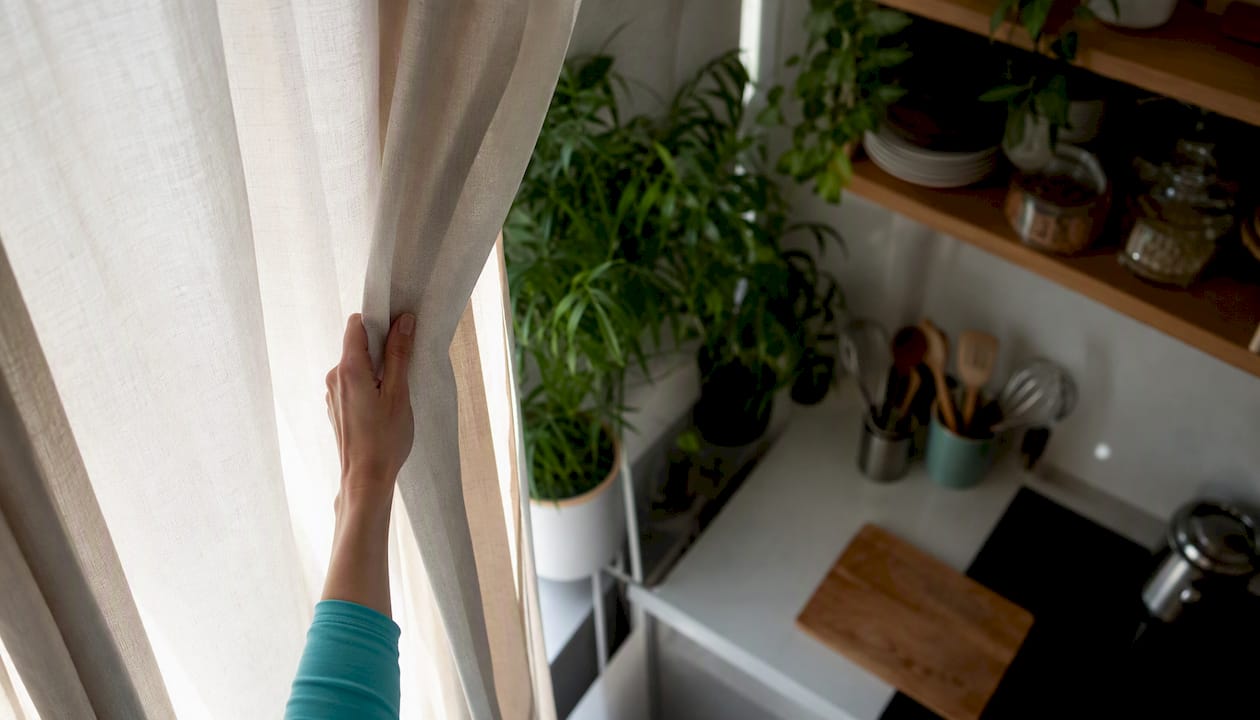
Always check the label before any washing. Most common fabric curtains can handle a delicate cycle at 30 °C. Remove them without excessive folding, wash, and rehang while still damp so that the weight stretches them naturally. Linen or velvet curtains require specialized laundry. As a rule of thumb, wash them twice a year and vacuum them monthly with the upholstery attachment.
Carpets and upholstery
For fresh stains on carpets, absorb the liquid with absorbent paper without rubbing, then apply cold water with a clean cloth in inward motions. Rubbing spreads the stain. For regular maintenance, vacuum carpets weekly and upholstery monthly. Leather upholstery requires specific products and conditioning twice a year.
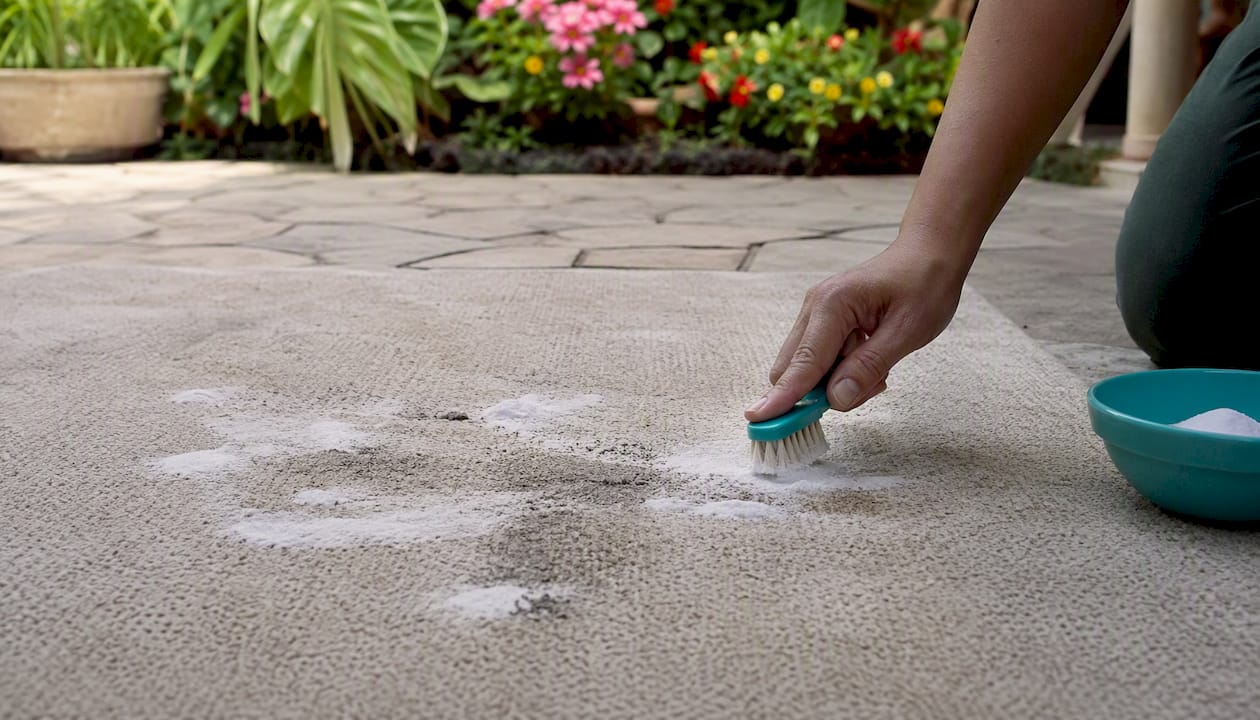
Professional tip: Sprinkle baking soda on fabric carpets and upholstery, let it sit for 15–20 minutes, and vacuum. It neutralizes odors without harsh chemicals.
When to call a professional for carpets or upholstery: organic stains (blood, urine, vomit) that do not come out with home cleaning, or upholstery that does not dry evenly after wet cleaning, are clear signs that specialized intervention is worth it.
What products and equipment do you really need?
The minimum effective kit takes up no more than a bucket and a small shelf.
Essential equipment:
- Vacuum cleaner with HEPA filter (retains dust mites and allergens)
- Microfiber cloths in different colors (one color per type of surface)
- Microfiber mop or flat mop for floors
- Small brushes for grouts and corners
- Bucket with wringer
- Reusable spray bottle
Products:
- Neutral multi-purpose detergent for general surfaces
- Disinfectant for bathroom and kitchen
- Specific product for natural stone (acid-free)
- Glass cleaner or a solution of water with white vinegar (1:1)
- Baking soda for odors and light stains
Safety and labels: when choosing products, look for the EU Ecolabel — the European eco-label that certifies lower environmental impact and safer formulas for home use. Never mix bleach with ammonia or vinegar, as the reaction releases toxic gases. Always ventilate the space when using concentrated disinfectants and respect the dilutions indicated on the label.
For homes with small children or pets, prefer products with EU Ecolabel certification or enzyme-based formulas, which break down organic dirt without aggressive compounds. Store all products out of reach of children, even those with gentle formulas.
The FlyLady method and zone cleaning: when to use each approach
Room-by-room cleaning works well when there is time to systematically go through the house. When schedules tighten, zone cleaning is a more realistic alternative.
The FlyLady method divides the house into five zones and dedicates 15–30 minutes a day to a different zone, without trying to clean everything at once. The weekly rotation ensures that each area receives regular attention without requiring a whole day of cleaning.
"Daily maintenance — returning items to their place, washing dishes immediately — is more effective for keeping the house clean than sporadic hours of deep cleaning." This is the central premise of FlyLady and coincides with what any experienced cleaning professional observes on the ground.
How to integrate zones into the room schedule:
Zone cleaning focuses on high-activity points, such as the coffee counter or the coffee table, with micro-resets of 5–15 minutes. Combine the two approaches: use the weekly room schedule for structured maintenance and apply the zone logic on days when you only have 10 minutes available.
Practical example: in a T2 apartment with long working hours, reserve Monday, Wednesday, and Friday for the main rooms (kitchen, bathroom, living room) and use Tuesday and Thursday for 10-minute micro-resets in high-traffic zones. On weekends, the rotating monthly mission takes care of what was left undone.
How to create your room checklist
A personal checklist is more useful than a generic template because it reflects your home, your materials, and your critical points.
- Step 1 — inventory each room: go through each space and note everything that needs cleaning, including what you usually forget: skirting boards, back of furniture, fridge seals, light switches, door handles
- Step 2 — assign priority: classify each task as essential (needed if not done this week), recommended (important but not urgent), or occasional (quarterly or seasonal)
- Step 3 — estimate time: timing the first times helps with planning. A complete bathroom typically takes 20–30 minutes; a kitchen with oven included can take 45–60 minutes
- Step 4 — organize by frequency: group tasks into daily, weekly, monthly, and seasonal within each room
- Step 5 — format for real use: print in A5 or save as a note on your phone. The Cleaningpoint room checklist is an example of a professional template you can use as a base
Standardized checklists reduce omissions and serve as a quality record, both in domestic and professional contexts.
How to divide tasks in the family without creating conflicts
Most household conflicts about cleaning do not come from laziness, but from a lack of agreement on what counts as "clean" and who is responsible for what.
The most effective principle is to agree, not impose. Gather the family once and together define what the essential non-negotiable tasks are: dishes washed before bed, trash taken out before overflowing, shoes at the entrance. These are the visible rules that everyone can check without ambiguity.
For distribution, visible boards in the kitchen work better than shared digital lists, as they create social responsibility. Assign micro-tasks per person (not rigidly by gender or age) and establish monthly rotation so that no one is always stuck with the less pleasant tasks.
Professional tip: Create a small weekly check-in ritual, five minutes on Sunday night, where each person confirms their tasks for the following week. Celebrating small victories, like a week without piled-up dishes, keeps adherence better than any punishment system.
Deep cleaning: what it includes and how much it costs
Regular cleaning keeps the house presentable. Deep cleaning addresses what accumulates underneath, behind, and inside.
What a deep clean typically includes:
- Interior of the oven, grills, and extractor
- Interior of the fridge and freezer
- Accessible interior and exterior windows
- Upholstery and carpets (deep vacuuming or washing)
- Tile grouts and seals
- Skirting boards, switches, and handles
- Under and behind heavy furniture
- Curtains (removal and washing or deep vacuuming)
Time estimate by type of space:
| Type of space | Regular cleaning | Deep cleaning |
|---|---|---|
| T1 | 2 hours | 3–4 hours |
| T2 | 2–3 hours | 4–6 hours |
| T3 | 3–4 hours | 6–8 hours |
| T4 or larger | 4–5 hours | 8+ hours |
Cost guidance in Portugal: according to data from national platforms, domestic cleaning services typically range from 8 € to 25 € per hour, with an average close to 12 € per hour. A deep clean of a T2 can cost between 80 € and 200 €, depending on the condition of the space and the extras included.
When to hire a professional: moving house, end of construction, entry or exit of tenants, and any situation where the accumulation exceeds what a weekly routine can resolve are the right moments for professional intervention.
Key takeaways
Consistent daily maintenance prevents accumulations that only a deep clean can resolve, and a room-by-room schedule is the most effective way to make it sustainable.
| Point | Details |
|---|---|
| Cleaning order | Always from top to bottom and from dry to wet, to avoid rework. |
| Frequency by room | Kitchen and bathroom need daily attention; living room and bedroom, weekly; deep cleaning, seasonally. |
| FlyLady method | Divides the house into five zones with 15–30 minutes daily, ideal for tight schedules. |
| Reference cost | Professional services in Portugal range from 8 € to 25 € per hour, with an average close to 12 € per hour. |
| Cleaningpoint | For deep cleans or regular maintenance in Lisbon, Cleaningpoint offers detailed checklists, consistent team, and digital report after each visit. |
Room-by-room cleaning from the inside
There is a difference between a house that looks clean and one that is truly clean. I have worked with professional cleaning teams long enough to know that most people underestimate two things: the importance of the order of execution and the value of an honest checklist.
Order matters more than the product used. Cleaning the floor before dusting the shelves is the most common mistake and the one that wastes the most time. The same goes for separating cloths: it’s a habit that seems excessive until the day you realize you were spreading bacteria from one surface to another.
What always surprises me is that people invest in expensive products but ignore basic equipment. A good vacuum cleaner with a HEPA filter and quality microfiber cloths make more difference than any premium detergent. And a room checklist, even a simple one, transforms a vague intention into a verifiable routine.
When the home routine is not enough, whether due to lack of time, moving house, or seasonal accumulation, the solution is not to force more hours of cleaning. It is to recognize that a professional intervention, done with protocol and record, resets the starting point for regular maintenance to work again.
Useful sources and references
Practical resources to deepen methods, checklists, and cost estimates:
- FlyLady — explanatory video of the zone method: visual introduction to the five zones system and daily routines of 15–30 minutes
- What is the FlyLady cleaning method (Homes & Gardens): detailed explanation of the method in English, with examples of morning and evening routines
- Room cleaning checklist (Donamaid): checklist template by space with recommended frequencies (daily, weekly, monthly, seasonal)
- Zone cleaning for use (New Energy Brasil): practical approach for quick maintenance by high-activity points
- FlyLady zone cleaning — complete guide (Organize o Seu Lar): guide in Portuguese with timers and daily and nightly routines
- Quality control in professional cleaning (Limpeza com Zelo): how checklists and indicators make professional cleaning verifiable and auditable
- How much does apartment cleaning cost in Portugal (Zaask): reference for national prices per hour and by type of service
- FlyLady Routines — app (App Store): digital tool to manage checklists and timers on your phone
Cleaningpoint resources:
| Resource | What it offers |
|---|---|
| Room checklist | Printable professional model, room by room |
| Signature Deep Cleaning | Complete description of the deep cleaning service |
| Recurring cleaning in Lisbon | Regular maintenance plans with a consistent team |
| Available extras | Oven, windows, upholstery, and other add-ons |
Cleaningpoint: professional cleaning in Lisbon when routine is not enough
Maintaining a room-by-room routine works well until a house move, construction, tenant entry, or simply an accumulation that weekly maintenance can no longer resolve. It is for these moments that Cleaningpoint exists.
Cleaningpoint offers premium domestic cleaning in Lisbon with detailed room checklists, a consistent team on each visit, and a digital report at the end of the service. There is no guessing about what was done: each task is recorded. For those needing a one-off intervention, the Signature Deep Cleaning covers the oven, fridge, windows, upholstery, and everything that the weekly routine does not reach. For those who want to keep the house always in order without thinking about it, the recurring maintenance plans ensure a fixed team with the same protocol every week.
Book your cleaning at cleaningpoint.net/pt/book and receive a no-obligation quote.
Frequently asked questions
What is the hourly rate for cleaning in Portugal?
Domestic cleaning services in Portugal typically range from 8 € to 25 € per hour, with an average close to 12 € per hour, according to data from national platforms like Zaask. The price varies depending on the region, type of service, and whether it includes products.
What does a deep clean include?
A deep clean covers the interior of the oven and fridge, windows, grouts, upholstery, skirting boards, under furniture, and curtains. Cleaningpoint also includes a digital report and photographic record on each visit.
What is a realistic weekly schedule for a house?
The most practical distribution is one main room per day: kitchen on Monday, bathrooms on Tuesday, living room on Wednesday, bedrooms on Thursday, entrance and hallway on Friday. On Saturday, a rotating monthly mission takes care of deep tasks.
How much does a complete cleaning service cost?
A deep clean of a T2 in Lisbon can cost between 80 € and 200 €, depending on the condition of the space and the extras included. Regular weekly maintenance has a lower hourly cost than a one-off deep clean.