Microfiber vs Cotton: Which to Request from Your Cleaning Service
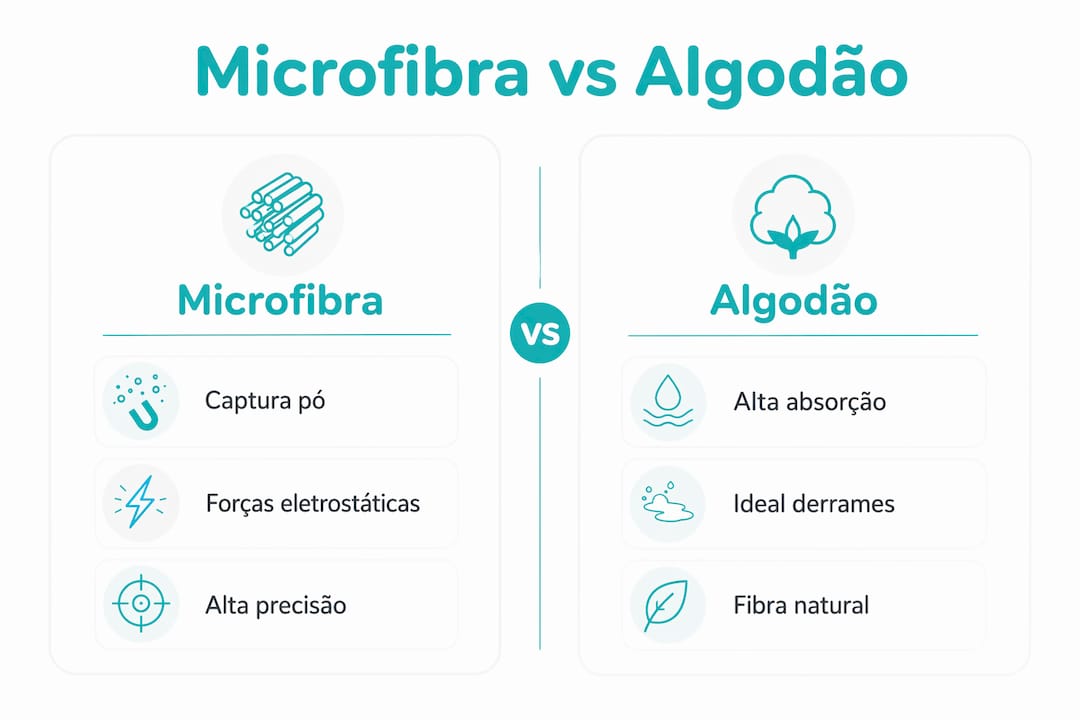
For most premium domestic cleanings, microfiber is the primary tool and cotton is the complement for heavy absorption tasks. Microfiber captures particles through mechanical action and electrostatic forces, retaining them in the mesh instead of spreading them. Cotton cleans through friction and gross absorption, being ideal when there are large volumes of liquid to remove. Cleaning Point applies this distinction in all its protocols, based on evidence such as the Rutala/UNC microbiological study on microbial reduction with microfiber.
Three quick applications to keep in mind:
- Glass, mirrors, and electronics: fine microfiber, lint-free and streak-free.
- Liquid spills and wet floors: cotton, for immediate absorption of large volumes.
- Floors with dry dirt: microfiber to sweep particles; damp cotton to rinse afterwards.
Professional tip: Store microfiber and cotton cloths in separate bags or boxes, labeled by area (kitchen, bathroom, living room). This prevents cross-contamination even before you start cleaning.
Index
- How each fabric removes dirt — what changes in practice
- Practical comparison: when to choose each one
- Which fabric to use on each surface in the house
- How to wash and maintain microfiber and cotton cloths
- How Cleaning Point applies these materials in professional protocols
- What to ask when hiring a premium domestic cleaning in Lisbon
- Key conclusions
- What practice teaches about these two materials
- Cleaning Point and the protocols that make a difference in Lisbon
- Frequently asked questions
How each fabric removes dirt — what changes in practice
The difference between microfiber and cotton is not just material: it’s mechanism.
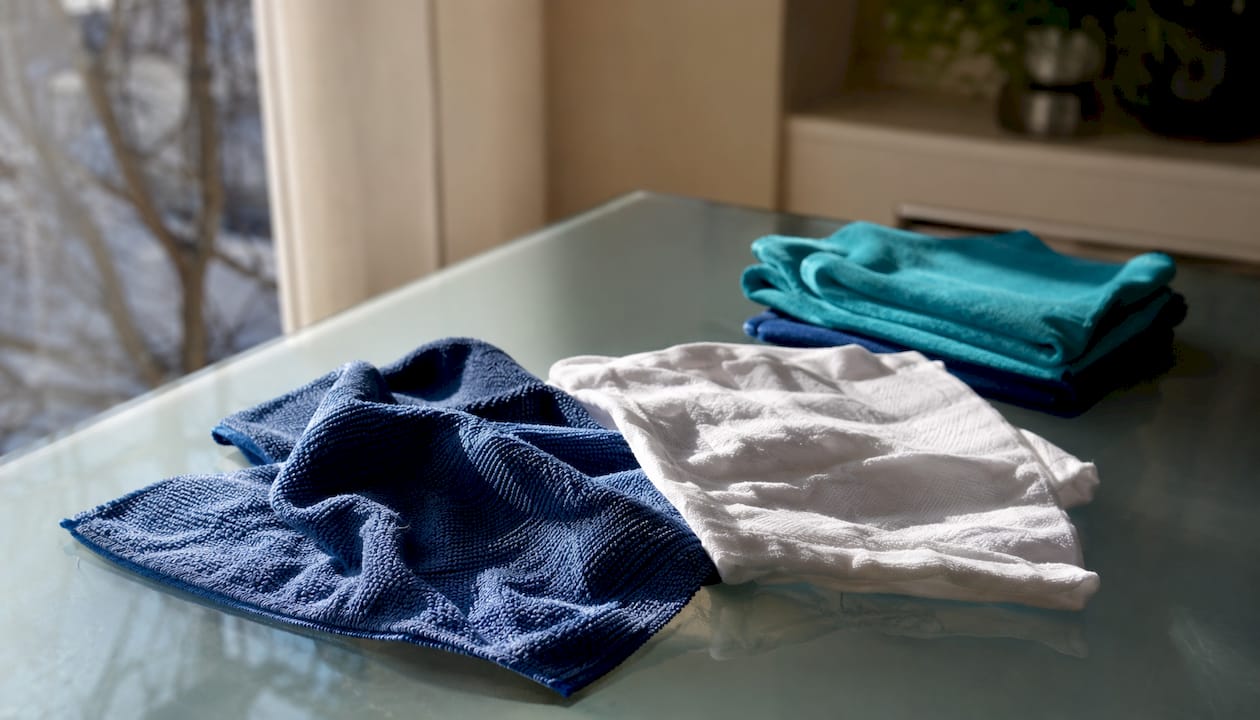
Cotton fibers have a rounded cross-section. When you wipe a surface with a cotton cloth, the fibers push dirt instead of capturing it. It works well for absorbing liquids and scrubbing hard, but on smooth surfaces, it tends to redistribute fine particles and leave lint.
Microfiber, typically composed of ~80% polyester and 20% polyamide, has ultrafine fibers with a bristled structure visible under a microscope. This structure creates electrostatic and van der Waals forces that attract and retain particles, bacteria, and grease within the mesh. The result: dirt gets trapped in the cloth, not on the surface.
Practical implications:
- On smooth surfaces (glass, stainless steel, lacquered), microfiber leaves a lint-free finish; cotton may leave residues.
- On rough or porous surfaces, the intimate contact needed for van der Waals forces is reduced, which decreases microfiber effectiveness.
- Microfiber is sensitive to heat above 60–90 °C (depending on the product); cotton tolerates higher temperatures and bleach without degrading.
Professional tip: When folding a microfiber cloth into quarters, you get four clean sides per cloth. Change sides as soon as one becomes saturated — don’t wait for the cloth to look visibly dirty.
Practical comparison: when to choose each one
| Dimension | Microfiber | Cotton |
|---|---|---|
| Mode of action | Mechanical capture + electrostatic forces; retains particles in the mesh | Friction and gross absorption; pushes and absorbs |
| Best for | Glass, mirrors, stainless steel, electronics, furniture, fine dust | Spills, wet floors, heavy scrubs |
| Risk/limitations | Can trap fibers on porous/rough surfaces; does not absorb large volumes | Leaves lint; redistributes fine particles; not suitable for delicate finishes |
| Washing care | No fabric softener; neutral detergent; max. 60 °C; air dry or low temperature | Tolerates hot water and bleach; can wash with other textiles |
| Durability/cost | Higher initial investment; quality cloths (high grammages) withstand hundreds of washes | Low cost; shorter lifespan; starts to shed lint after several washes |
| When to request from the provider | Delicate surfaces, mark-free finish, chemical reduction | Absorption of large spills, rough stone floors, scrubs with strong products |
The Rutala/UNC study demonstrated significant reductions in microbial load with microfiber, and that adding disinfectant did not substantially improve results when using microfiber. Microfiber removes a high percentile of bacteria with just water, which reduces the use of chemicals in premium cleanings.
Which fabric to use on each surface in the house
Glass and mirrors: fine microfiber, S-shaped movements from top to bottom. Cotton sheds lint that becomes visible against the light.
Electronics and screens: dry or slightly damp microfiber. Never cotton, which scratches anti-reflective coatings.
Varnished wood and lacquers: soft microfiber, without excessive pressure. On raw or porous wood, prefer damp cotton to avoid trapping fibers in the pores, as recommended in our tips for cleaning interior doors.
Natural stone (marble, limestone): microfiber with neutral water for regular maintenance. On rough or textured stone, cotton for scrubs with specific products.
Kitchen countertops (stainless steel, quartz, ceramics): microfiber for grease and finishing; cotton for large spills before the final finish.
Smooth floors (porcelain, vinyl): microfiber to sweep dry dust; damp cotton or cotton mop to rinse after product.
Biological spills or large volumes of liquid: cotton absorbs faster. After absorption, microfiber for disinfecting and finishing.
Professional tip: In post-renovation cleanings, where there is fine construction dust, use high grammage microfiber (high grammages) and change cloths for each room. Construction dust quickly clogs the mesh and a saturated cloth redistributes rather than captures.
How to wash and maintain microfiber and cotton cloths
Proper washing is where many services fail, even when using the right materials.
For microfiber:
- Wash separately from any cotton textiles — cotton lint clogs the microfiber mesh.
- Use neutral detergent in reduced quantity; never fabric softener.
- Maximum recommended temperature: 40–60 °C (check the product label).
- Air dry or tumble dry at low temperature; excessive heat deforms the fibers.
- Never use fabric softener: it coats the fibers, blocks the bristled structure, and nullifies the electrostatic capacity.
For cotton:
- Tolerates hot water (60–90 °C) and bleach when necessary for disinfection.
- Can wash with other cottons, but separate by usage area (kitchen/bathroom).
- Dry in the sun whenever possible; UV radiation has an additional disinfecting effect.
Hygiene checklist for premium residences:
- Cloths labeled by area: never use the bathroom cloth in the kitchen.
- Replace microfiber cloths after contact with toilets, even if washed.
- Wash after each cleaning session, do not accumulate dirty cloths between visits.
- To reduce the release of microplastics during washing, use a specialized washing bag (like the Guppyfriend) that captures loose microfibers.
How Cleaning Point applies these materials in professional protocols
Cleaning Point uses microfiber as a precision tool and cotton for heavy work, with documented protocols covering washing, labeling, and cloth changes between rooms.
In practice, the workflow in a deep cleaning follows this logic:
- Dedicated microfiber cloths by area (kitchen, bathroom, living room), identified by color.
- Cloth change between each room; never the same cloth in two distinct areas.
- Separate washing after each visit, without fabric softener, using neutral detergent.
- Cotton cloths reserved for spills, rough stone floors, and scrubs with high pH products.
- Digital post-service report confirming the applied protocols.
The professional approach is not about choosing between microfiber or cotton — it’s about knowing when to use each and ensuring that washing does not nullify what the cloth did during cleaning. Written protocols and trained teams are what separate a premium service from a common cleaning.
The Cleaning Point team receives specific training on these protocols, resulting in reduced risk of cross-contamination and consistent finishing on each visit. The detailed checklists by area are available for consultation.
Professional tip: Ask your provider to show how they identify cloths by area. If they don’t have a color or label system, it’s a sign that hygiene protocols are not formalized.
What to ask when hiring a premium domestic cleaning in Lisbon
Three questions you should ask before confirming any service:
- "What materials do you use for delicate surfaces like glass and electronics?"
- "How do you wash microfiber cloths? Do you use fabric softener?"
- "Do you have dedicated cloths for kitchen and bathroom, or do you use the same ones?"
Additional questions to validate the level of service:
- Do you change cloths between rooms during the same visit?
- How often do you replace cloths (not just wash them)?
- Do you have a written protocol for biological spills?
- Do you provide a report or checklist after the service?
Red flags:
- Cloths visibly stained or odorous upon arrival.
- Inability to answer the question about fabric softener.
- Absence of any identification system by area.
- A single bucket of water for the entire house.
Quick script to use when contacting a provider: "I request microfiber cloths for delicate surfaces and cotton cloths for spills. Do you confirm washing without fabric softener and cloths separated by area?" A technical and immediate response is the first sign of a serious service.
Key conclusions
Microfiber is the primary choice for precision and hygiene; cotton is the indispensable complement for heavy absorption — and the difference between the two only materializes with correct washing protocols.
| Point | Details |
|---|---|
| Microfiber for precision | Captures particles through electrostatic forces; ideal for glass, electronics, and polished surfaces. |
| Cotton for absorption | Better choice for large spills, wet floors, and scrubs with strong products. |
| Washing without fabric softener | Fabric softener blocks the structure of microfiber and nullifies its effectiveness; always wash with neutral detergent. |
| Dedicated cloths by area | Kitchen and bathroom require separate cloths to avoid cross-contamination. |
| Cleaning Point in Lisbon | Applies documented microfiber and cotton protocols with digital checklists and post-service reports. |
What practice teaches about these two materials
There is a trend in the domestic cleaning market to treat microfiber as a universal solution. It is not. Microfiber is extraordinarily effective on smooth surfaces and in removing fine particles, but it loses performance on porous surfaces, does not absorb large volumes, and degrades quickly if washed with fabric softener. Those who use it without understanding these limitations end up with cloths that look new but no longer capture anything.
Cotton, on the other hand, is often dismissed as "outdated." But for an oil spill on a stone countertop or scrubbing a terrace floor, no microfiber can replace the gross absorption of a good-quality cotton cloth. The error is not in the material: it’s in using the wrong one at the wrong time.
What truly distinguishes a premium service is not the material you bring home, but the protocols that ensure that material is clean, identified, and applied correctly on each surface. Without this, the choice between microfiber and cotton is irrelevant.
Cleaning Point and the protocols that make a difference in Lisbon
Those seeking a premium domestic cleaning in Lisbon do not just want a clean house: they want the assurance that the materials used protect their surfaces and that the cloths arrive sanitized at each visit.
Cleaning Point incorporates microfiber and cotton with documented protocols in all its services: from the Signature Deep Cleaning, where each room has dedicated cloths and a digital report, to the regular home care with a consistent team and verifiable checklists. The team is multilingual, access is managed discreetly, and any issues are resolved quickly. To book or clarify doubts about the protocols applied in your home, schedule a cleaning directly on the website.
Frequently asked questions
Does microfiber clean better than cotton?
It depends on the surface. Microfiber is superior on glass, electronics, and polished surfaces, removing fine particles and bacteria more effectively; cotton surpasses it in absorbing large volumes of liquid.
Can I wash microfiber cloths with fabric softener?
No. Fabric softener coats the fibers and blocks the bristled structure that gives microfiber its capturing ability; always wash with neutral detergent and without fabric softener.
How often should microfiber cloths be replaced?
Quality cloths with high grammages withstand multiple washes, but should be replaced when they start to shed lint, lose absorption, or have a persistent odor after washing.
What should I ask my cleaning service about the cloths they use?
Ask if they wash microfiber separately from cotton, if they use fabric softener, and if they have dedicated cloths by area. An immediate technical response is a sign of formalized protocols.
Does Cleaning Point use microfiber in all services?
Yes. Cleaning Point applies microfiber for delicate surfaces and finishes, and cotton for heavy absorption, with documented washing and labeling protocols by area in all services in Lisbon.