Lacquered white doors: how to clean without damaging

Microfiber cloth, warm water, and a few drops of neutral detergent are the basis for the best way to clean interior doors. That's it. The safest way to clean lacquered white doors doesn't require special products or complicated techniques: remove dust with a dry cloth, wipe with a slightly damp cloth and the mild solution, rinse with another damp cloth, and dry immediately. No soaking, no scrubbing hard.
The problem is that white doors get dirty easily, and the temptation to use what's at hand, whether it's a harsh multipurpose product, a kitchen sponge, or bleach, is real. These shortcuts come at a cost: yellowing, loss of shine, and in more severe cases, swelling of the door due to excessive moisture. For persistent stains or widespread yellowing, home cleaning has its limits, and a professional team like Cleaning Point saves time and avoids irreversible damage.
- Basic method: dry microfiber → warm water solution with neutral detergent → rinse → dry immediately
- Risk of wrong products: yellowing, scratches, loss of shine, swelling of wood
- When to call professionals: stains that won't come out, widespread yellowing, post-renovation situations
Index
- What materials and products should you have on hand before starting?
- How to clean white doors: step-by-step routine
- How to remove difficult stains and yellowing?
- What should you never use on lacquered white doors
- How to keep white doors without needing frequent deep cleans?
- When is it worth calling a professional team?
- Key takeaways
- My perspective on white doors and home cleaning
- Frequently asked questions
What materials and products should you have on hand before starting?
Having the right equipment avoids half the problems. For regular cleaning of lacquered doors, the essentials are simple:
- Two clean microfiber cloths (one for washing, another for drying)
- Bucket with warm water
- Neutral detergent (mild dish soap or Castile soap works well)
- Non-abrasive sponge for dirtier areas
- Cotton swabs or soft-bristled brush for corners and joints
For spot stains, it's also good to have diluted white vinegar in the appropriate cleaning water ratio and very diluted isopropyl alcohol for pen or marker marks. Always test any of these in a hidden area of the door, like the inside face near the baseboard.
There are also professional sprays with film-forming waxes, like Brillman from Instaquim, that clean, shine, and leave a protective layer that reduces dust accumulation. They are useful for periodic maintenance but should be used judiciously: if applied incorrectly, they leave greasy residues that attract even more dirt. It's better to reserve them for when you know exactly the finish of your door.

How to clean white doors: step-by-step routine
The recommended operational sequence is always the same, regardless of frequency:
- Remove dust with a dry microfiber cloth, wiping from top to bottom. Never start with a damp cloth, as the dust mixes with the water and forms a paste that scratches the lacquer.
- Prepare the solution with warm water and two to three drops of neutral detergent. The water should not be hot, as heat can affect the finish.
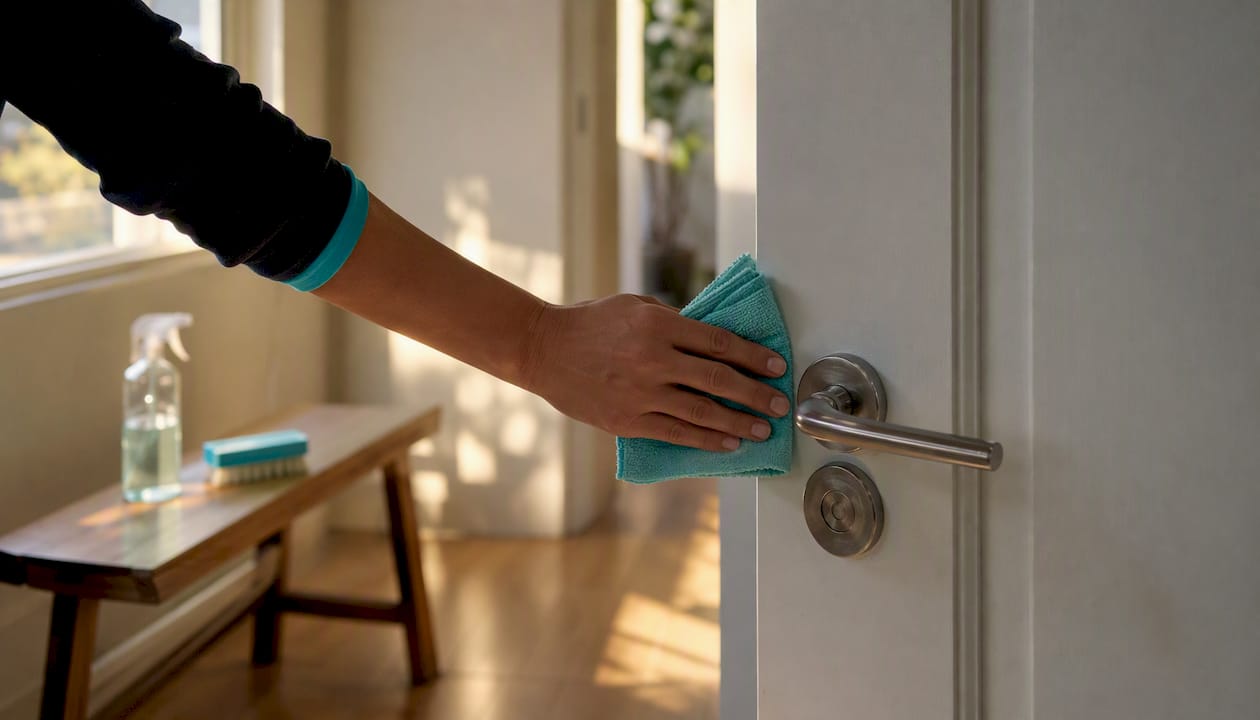
- Clean the surface with the slightly damp cloth, using gentle circular motions. Never soak the cloth, which should only be slightly damp to the touch.
- Rinse with a second damp and clean cloth, without solution, to remove any detergent residue.
- Dry immediately with a dry cloth. Do not let the door air dry, as water marks quickly settle on the white lacquer.
Pay special attention to edges, joints, and handles. Use a soft-bristled brush or cotton swabs to remove accumulated dust in these areas without scratching. The hardware can be cleaned with the same damp cloth, but dry them separately to avoid moisture migrating into the wood.
Professional tip: When drying corners and frames, fold the microfiber cloth into four and use the folded tip to reach into recesses. This avoids water marks and doesn't leave loose threads on the lacquer.
How to remove difficult stains and yellowing?
Not all dirt comes off with the basic routine. Each type of stain requires a different approach.
Grease and fingerprints: slightly more concentrated neutral detergent, applied directly to the cloth and not on the door. Let it act for thirty seconds and remove with gentle motions. Rinse and dry.
Paint or marker: very diluted isopropyl alcohol in water, applied with cotton. Always test in a hidden area first, as alcohol can remove shine or slightly alter the tone of the lacquer, depending on the finish. If the test goes well, apply with short motions and dry immediately afterward.
Yellowing: a mild solution of warm water with diluted white vinegar can reduce superficial yellowed stains. Apply with a damp cloth, let it act for a minute, and rinse well. Dry immediately. Vinegar is acidic and should not remain in contact with the lacquer for long.
There are signs that indicate the stain is beyond what home cleaning can resolve:
- Persistent discoloration after two or three attempts
- Localized loss of shine, with a dull appearance
- Surface with irregular texture or visible peeling
- Damage to the wood beneath the finish
In these cases, professional intervention is the safest route.
What should you never use on lacquered white doors
Some products seem harmless but destroy the lacquer in just a few uses. Soft cloths, non-abrasive sponges, and neutral soap are the right choices; everything listed below is the opposite:
- Bleach: oxidizes the lacquer and causes irreversible yellowing, even diluted
- Acetone: dissolves the lacquer finish and leaves dull white stains
- Concentrated ammonia (found in many glass products): attacks the lacquer layer and alters the color
- Abrasive sponges or steel wool: permanently scratch the surface
- Harsh multipurpose products (with high concentrations of alcohol, chlorine, or solvents): degrade the shine and can cause peeling
- Soaked cloths: excessive moisture penetrates the joints and causes swelling of the wood leaf, with irreversible stains on the finish
The practical rule is simple: if you wouldn't use the product on a delicate painted surface, don't use it on a lacquered door.
How to keep white doors without needing frequent deep cleans?
Prevention is more effective than any stain removal technique. A simple maintenance schedule makes a difference:
Weekly: wipe a dry microfiber cloth to remove dust. Two minutes per door is enough.
Monthly: clean with the warm water and neutral detergent solution, following the five steps described above. Include handles and hardware.
Quarterly: inspect joints, hinges, and frames. Use a soft-bristled brush to remove embedded dust. Check for signs of moisture or peeling near the baseboard.
In addition to frequency, there are preventive measures that significantly reduce work. Controlling humidity and reducing direct sunlight exposure slows yellowing and preserves shine longer. Blinds or curtains in brighter rooms protect effortlessly. In high-traffic areas, like the entrance or hallway, small rubber protectors on the edges of the door prevent impact marks.
Professional tip: Do not lean shopping bags, backpacks, or damp clothes against the doors. Prolonged contact with damp materials or leather strips leaves marks that basic cleaning cannot remove.
When is it worth calling a professional team?
There are situations where continuing to try at home worsens the problem. Consider hiring professionals when:
- Yellowing covers a large area and does not respond to diluted vinegar
- There are deep scratches or visible peeling
- Stains persist after two or three attempts with the correct methods
- The door has been exposed to prolonged moisture (infiltration, flooding, recent renovation)
- Post-renovation cleaning left paint, putty, or plaster dust residues on the surface
A professional team assesses the type of finish before choosing products, uses technical solutions with protective film without the risk of harsh solvents, and, when necessary, polishes or retouches without causing additional damage. The result is different from any home cleaning, not because of the force applied, but because of the knowledge of the material.
Cleaning Point offers deep cleaning and post-renovation cleaning in Lisbon, with detailed checklists that include doors, hardware, and finishes. For those who want to keep the doors and the rest of the house without worrying about frequencies and products, the recurring cleaning service is the most practical option.

Key takeaways
Lacquered white doors maintain their shine with a simple routine: microfiber, neutral detergent, and immediate drying are the three pillars of any safe cleaning.
| Point | Details |
|---|---|
| Safe basic method | Dry microfiber, warm water solution with neutral detergent, rinse and dry immediately. |
| Products to avoid | Bleach, acetone, ammonia, abrasive sponges, and soaked cloths irreversibly damage the lacquer. |
| Difficult stains | Diluted vinegar for yellowing; very diluted alcohol for markers, always with prior testing in a hidden area. |
| Recommended frequency | Weekly dusting, monthly cleaning with detergent, quarterly inspection of joints and hardware. |
| When to call professionals | Widespread yellowing, deep scratches, persistent stains, or post-renovation situations. |
My perspective on white doors and home cleaning
There is a repeating pattern: people reach the point of wanting to replace doors when, in most cases, the problem is not the door. It's the product they used to clean it.
Yellowing from bleach, fine scratches from abrasive sponges, dull lacquer from glass products with ammonia. All of this is avoidable with basic information. What seems most underestimated in this topic is humidity. Not the wrong product, but the cloth that is too wet. The water that remains in the joints for hours, especially in homes with little ventilation, causes more damage than any aggressive detergent used once.
The other thing no one mentions: corridor and entrance doors accumulate dirt differently than bedroom doors. Traffic, contact with hands, bags, and clothing, and proximity to the outside create a wear pattern that basic regular cleaning cannot keep up with alone. In these cases, periodic deep cleaning, done by those who know the finishes, prolongs the life of the door and avoids premature re-lacquering that costs much more.
For those in Lisbon who want a no-obligation assessment, Cleaning Point can schedule a visit and tell exactly what the door needs.
Frequently asked questions
Why do white doors turn yellow over time?
Yellowing results mainly from direct sunlight exposure, the natural oxidation of the lacquer, and the use of products with bleach or ammonia. Reducing direct light and using only neutral detergent significantly delays this process.
How often should I clean lacquered white doors?
A weekly pass with dry microfiber and a monthly cleaning with warm water and neutral detergent solution are sufficient for regular maintenance, according to good practices for cleaning lacquered doors.
Can I use vinegar to clean lacquered white doors?
Yes, but always diluted (one cup per bucket of water) and never in prolonged contact with the lacquer. Rinse and dry immediately after application to avoid damage to the finish.
What to do if the door has deep scratches or peeling?
Deep scratches and peeling are beyond home cleaning. In these cases, it is best to contact a professional to assess whether it is possible to polish and touch up or if the door needs re-lacquering.
Can I use multipurpose cleaning products on lacquered doors?
It depends on the composition. Products with ammonia, chlorine, or solvents damage the lacquer. Only use products with neutral pH and always check the label before applying to a lacquered surface.